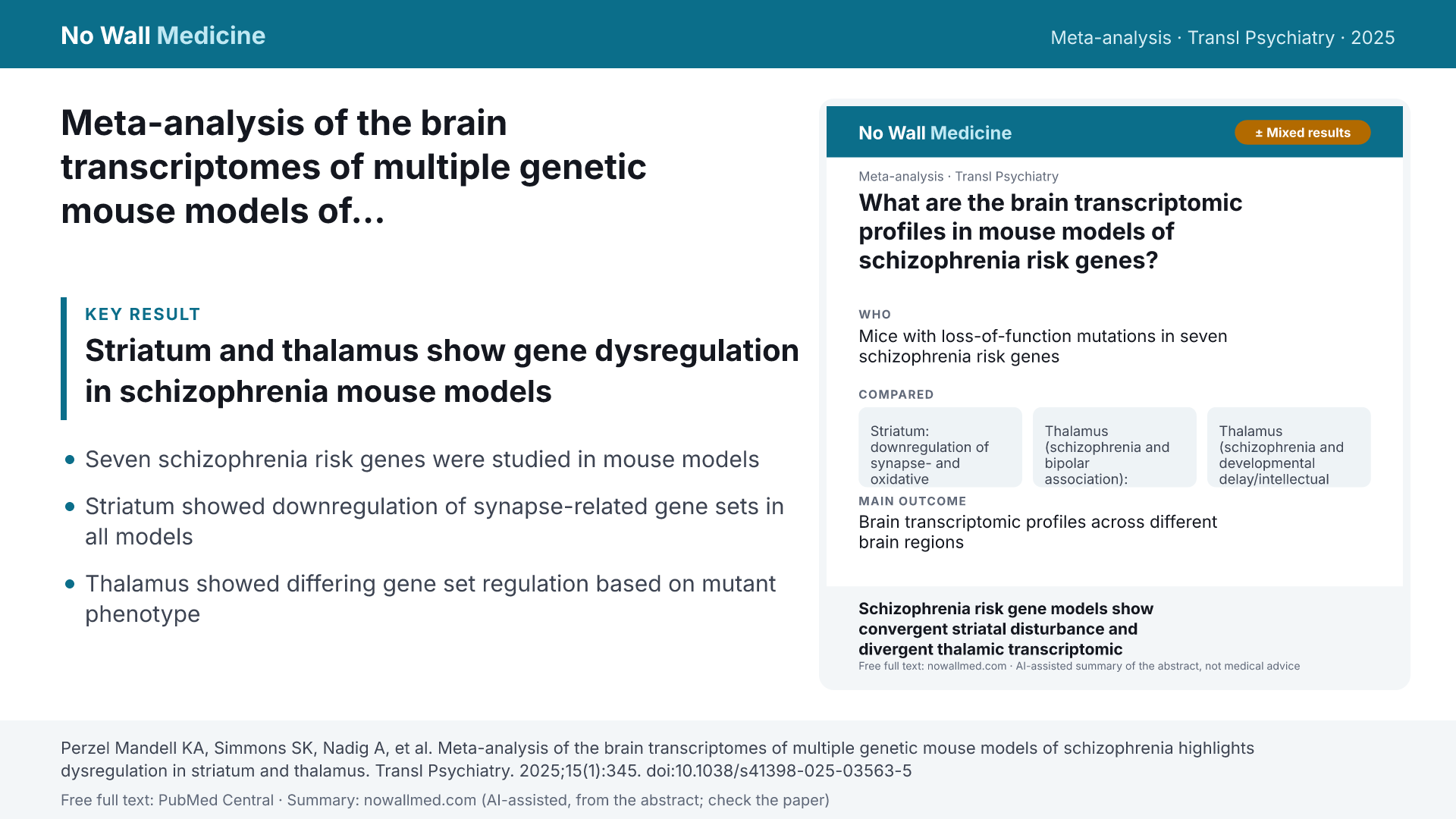
Meta-analysis of the brain transcriptomes of multiple genetic mouse models of schizophrenia highlights dysregulation in striatum and thalamus
Key result: Striatum and thalamus show gene dysregulation in schizophrenia mouse models
Meta-analysisMixed results
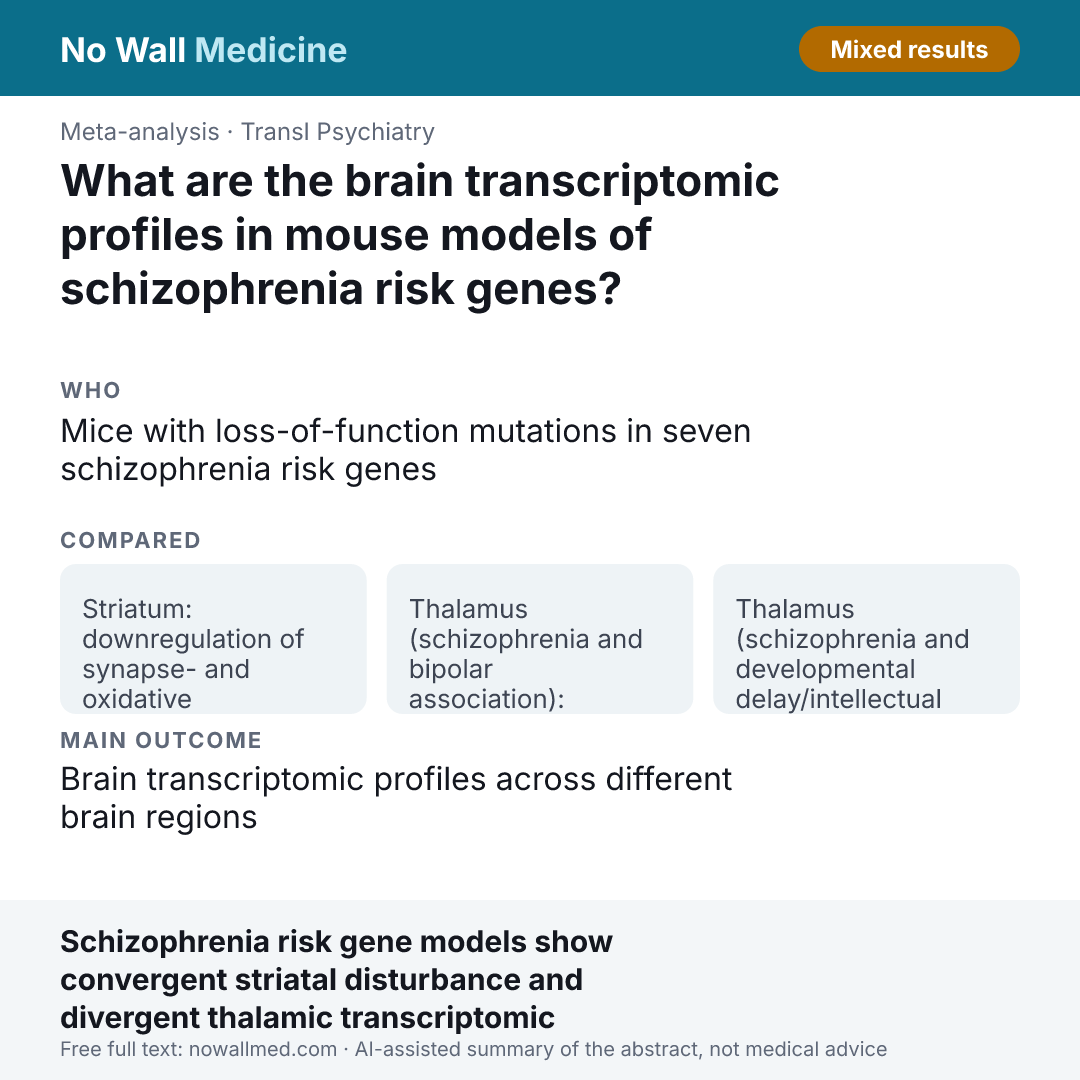
What are the brain transcriptomic profiles in mouse models of schizophrenia risk genes?
Who
Mice with loss-of-function mutations in seven schizophrenia risk genes
Compared
Striatum: downregulation of synapse- and oxidative phosphorylation-related gene sets
Thalamus (schizophrenia and bipolar association): synapse-related gene sets were upregulated
Thalamus (schizophrenia and developmental delay/intellectual disability): synapse-related gene sets were downregulated
Main outcome
Brain transcriptomic profiles across different brain regions
Bottom line: Schizophrenia risk gene models show convergent striatal disturbance and divergent thalamic transcriptomic phenotypes.
Transl Psychiatry · 2025-09-29 · Save PNG
Key points
- Seven schizophrenia risk genes were studied in mouse models.
- Striatum showed downregulation of synapse-related gene sets in all models.
- Thalamus showed differing gene set regulation based on mutant phenotype.
Discussion prompts
- Would these patients look like yours? Who was left out?
- Is the main outcome one that matters to patients?
- Is the difference large enough to change what you do?
Cite: Perzel Mandell KA, Simmons SK, Nadig A, et al. Meta-analysis of the brain transcriptomes of multiple genetic mouse models of schizophrenia highlights dysregulation in striatum and thalamus. Transl Psychiatry. 2025;15(1):345. doi:10.1038/s41398-025-03563-5
Free full text: PubMed Central · Summary and visual abstract: nowallmed.com/a/meta-analysis-of-the-brain-transcriptomes-of-multiple-genetic-mouse-ygy2u3/ (AI-assisted from the abstract; check the paper before relying on it).