Minimally invasive radical hysterectomy was associated with higher rates of bladder and ureteral injuries
Meta-analysis reveals higher intraoperative urologic complication rates in minimally invasive radical hysterectomy compared to abdominal radical hysterectomy
Meta-analysis of 35 studiesHarm found
Are intraoperative urologic complication rates higher in minimally invasive radical hysterectomy than abdominal radical hysterectomy?
Who
Patients undergoing radical hysterectomy
Compared
Minimally invasive radical hysterectomy
Abdominal radical hysterectomy
Main outcome
Incidence of intraoperative urologic complications
Result: odds ratio 2.412 (95% CI 1.995-2.916)
Bottom line: Minimally invasive radical hysterectomy is associated with higher risks of intraoperative urologic, bladder, and ureteral injuries.
Int J Surg · 2024-11-01Download image
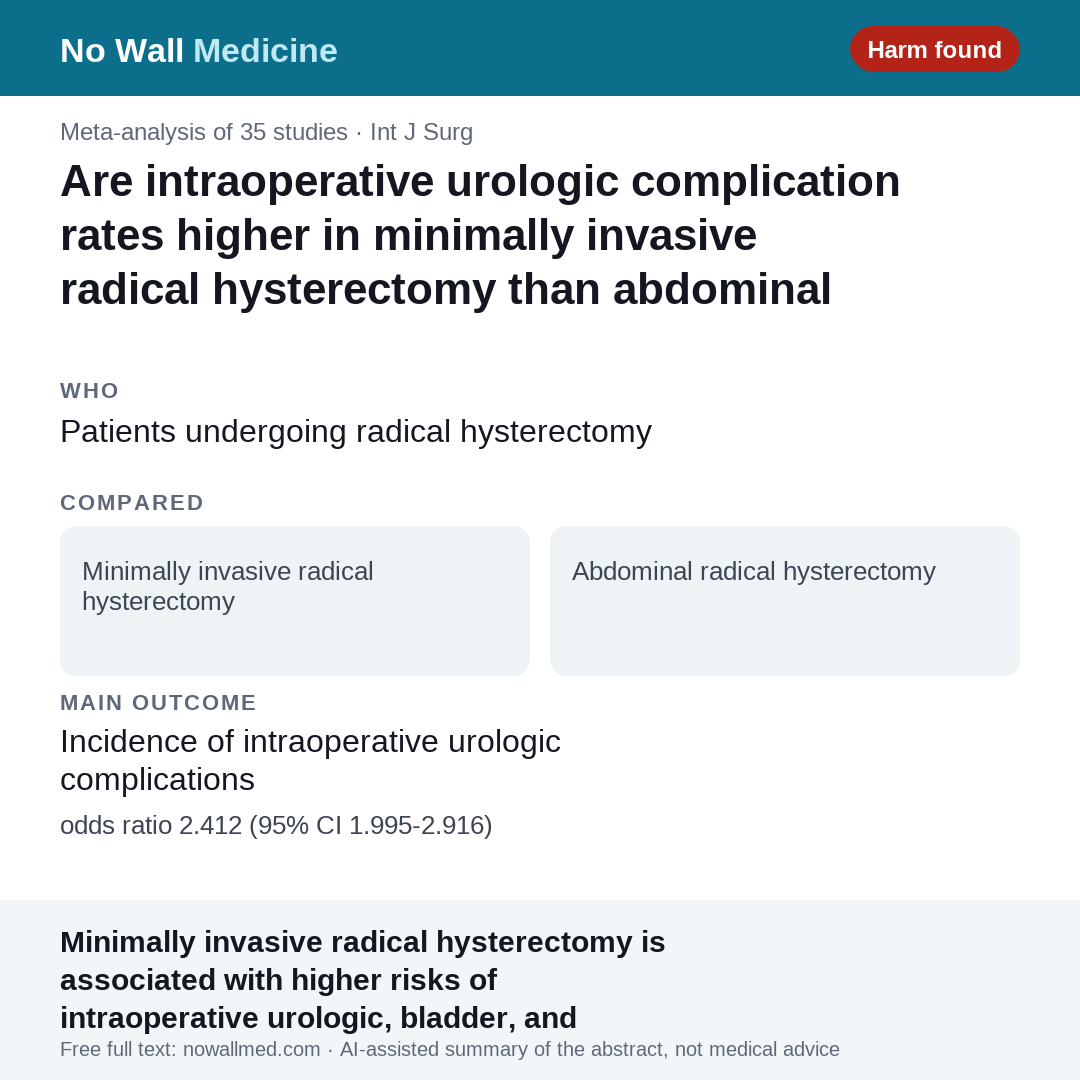
Clinical question: Are intraoperative urologic complication rates higher in minimally invasive radical hysterectomy than abdominal radical hysterectomy?
Why it matters: It was unknown how the incidence of bladder and ureteral injuries compares between minimally invasive and abdominal approaches for radical hysterectomy.
Key points
- Researchers analyzed 35 studies to compare intraoperative urologic complications between minimally invasive radical hysterectomy and abdominal radical hysterectomy.
- Minimally invasive radical hysterectomy was associated with higher risks of urologic complications (OR=2.412, 95% CI: 1.995-2.916, P <0.001).
- The risk was higher for bladder injuries (OR=2.109, 95% CI: 1.567-2.839, P <0.01) and ureteral injuries (OR=2.549, 95% CI: 1.992-3.262, P <0.001).
Headline and key points written with AI from the paper’s abstract, with every number checked against it. Read the paper before relying on them.
Was this summary helpful?
Subject terms
Cite this article
Hwang JH, Kim B. Meta-analysis reveals higher intraoperative urologic complication rates in minimally invasive radical hysterectomy compared to abdominal radical hysterectomy. Int J Surg. 2024. doi:10.1097/JS9.0000000000001980
Spotted a mistake? Suggest a correction
Top studies every Monday
The week’s key trials and guidelines in your specialties, plus any topics you follow. By email, free.
Get the weekly digest