Blood sugar levels influence how much bone density increases with active vitamin D treatment
Metabolic status modifies skeletal response to active vitamin D: A post hoc analysis of the DPVD randomized trial
Post hoc cohort analysis of a randomized trialBenefit found
Does glycemic trajectory modify skeletal response to eldecalcitol in individuals with prediabetes?
Who
1164
Individuals with prediabetes
Compared
4.6%Eldecalcitol group progressing to type 2 diabetes
7.3%Eldecalcitol group with persistent prediabetes
9.2%Eldecalcitol group regressing to normoglycemia
Placebo group: no significant differences
Main outcome
3-year percentage change in lumbar spine bone mineral density
Bottom line: Eldecalcitol increases lumbar spine bone mineral density more effectively in individuals with more favorable glycemic trajectories.
J Clin Endocrinol Metab · 2026-09-29Download image
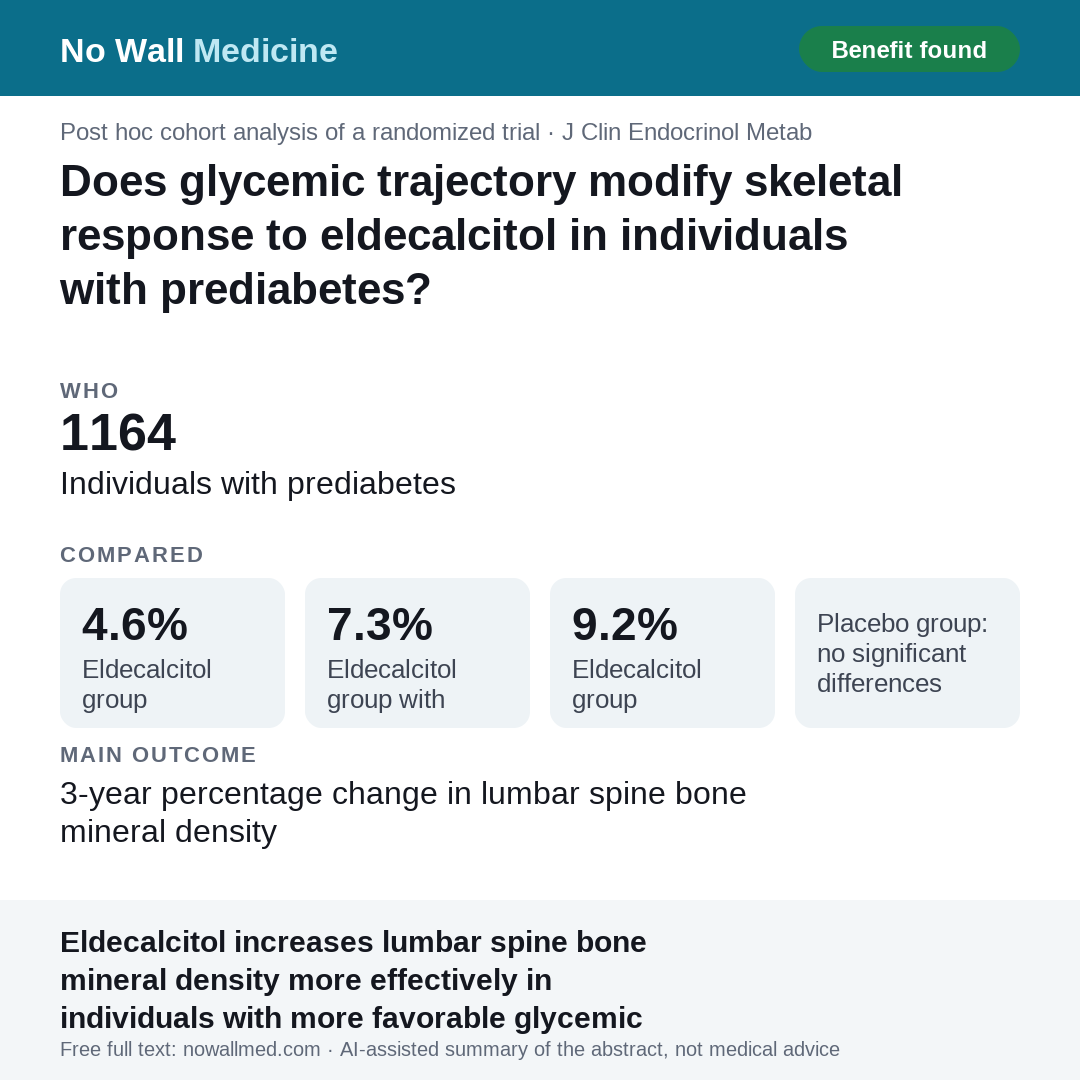
Clinical question: Does glycemic trajectory modify skeletal response to eldecalcitol in individuals with prediabetes?
Why it matters: The reason for the varying individual responses to active vitamin D therapy in bone mineral density remains unexplained.
Key points
- Researchers analyzed 1,164 individuals with prediabetes to see how bone mineral density changed over three years during a vitamin D trial.
- In the group receiving eldecalcitol, bone density increases were 4.6% for those progressing to type 2 diabetes, 7.3% for persistent prediabetes, and 9.2% for those returning to normal blood sugar.
- A lower baseline HbA1c, a measure of average blood sugar, was independently associated with a greater increase in bone mineral density.
Headline and key points written with AI from the paper’s abstract, with every number checked against it. Read the paper before relying on them.
Spotted a mistake? Suggest a correction