Human sperm stem cell development involves a metabolic shift from oxygen use to anaerobic metabolism
Metabolic transitions define spermatogonial stem cell maturation
Obstetrics & GynecologyAdult and pediatric
Meta-analysis of single-cell RNA sequencing datasetsBenefit found
Do spermatogonia undergo metabolic changes during prepubertal development?
Who
Human spermatogonia from embryonic stages to 25 years of age · Human, mouse, and pig models
Compared
Human primordial germ cells and prepubertal spermatogonia: enrichment of oxidative phosphorylation-associated genes
Adult human spermatogonia: downregulated oxidative phosphorylation-associated genes
Main outcome
Metabolic phenotype and transitions during spermatogonial stem cell maturation
Bottom line: Human spermatogonial stem cell development involves a metabolic transition from oxidative phosphorylation to anaerobic metabolism after age 11.
Limitation: Human prepubertal tissue samples are scarce, leading to a low number of samples per age.
Hum Reprod · 2022-07-21Download image
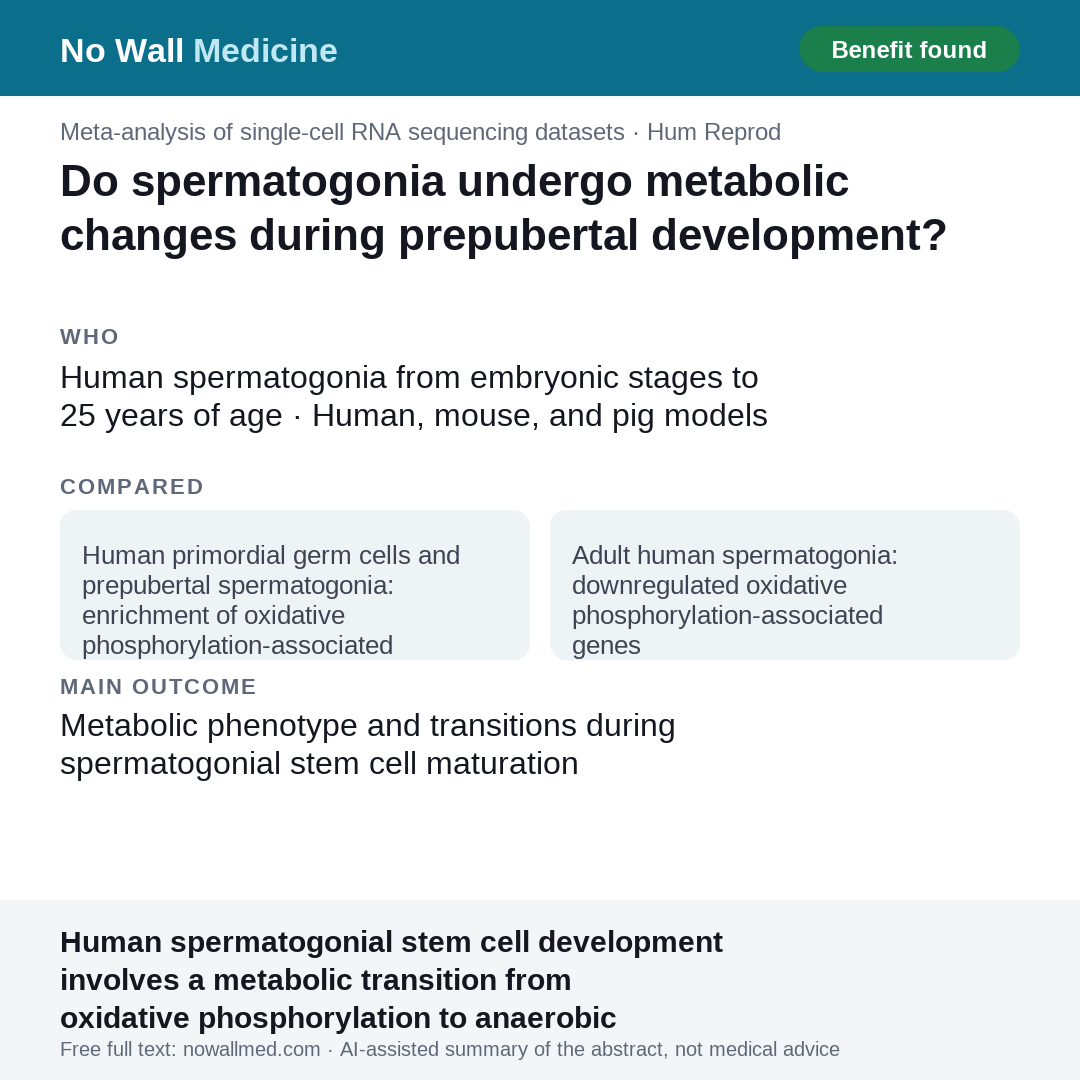
Clinical question: Do spermatogonia undergo metabolic changes during prepubertal development?
Why it matters: It was unknown when or if a metabolic transition occurs in human spermatogonial stem cells during development.
Key points
- Researchers analyzed human, mouse, and pig datasets to map the metabolic development of spermatogonial stem cells from embryonic stages to 25 years of age.
- Human primordial germ cells and prepubertal spermatogonia show high oxidative phosphorylation, which is downregulated at the onset of puberty (P < 0.0001).
- In humans, this metabolic transition at puberty was associated with a drastic change in cell shape at 11 years of age (P < 0.0001).
Limitation the authors note: Human prepubertal tissue samples are scarce, leading to a low number of samples per age group.
Headline and key points written with AI from the paper’s abstract, with every number checked against it. Read the paper before relying on them.
Topics
Cite this article
Voigt AL, Dardari R, Su L, Lara NLM, Sinha S, Jaffer A. Metabolic transitions define spermatogonial stem cell maturation. Hum Reprod. 2022. doi:10.1093/humrep/deac157
Spotted a mistake? Suggest a correction
Top studies every Monday
The week’s key trials and guidelines in your specialties, plus any topics you follow. By email, free.
Get the weekly digest