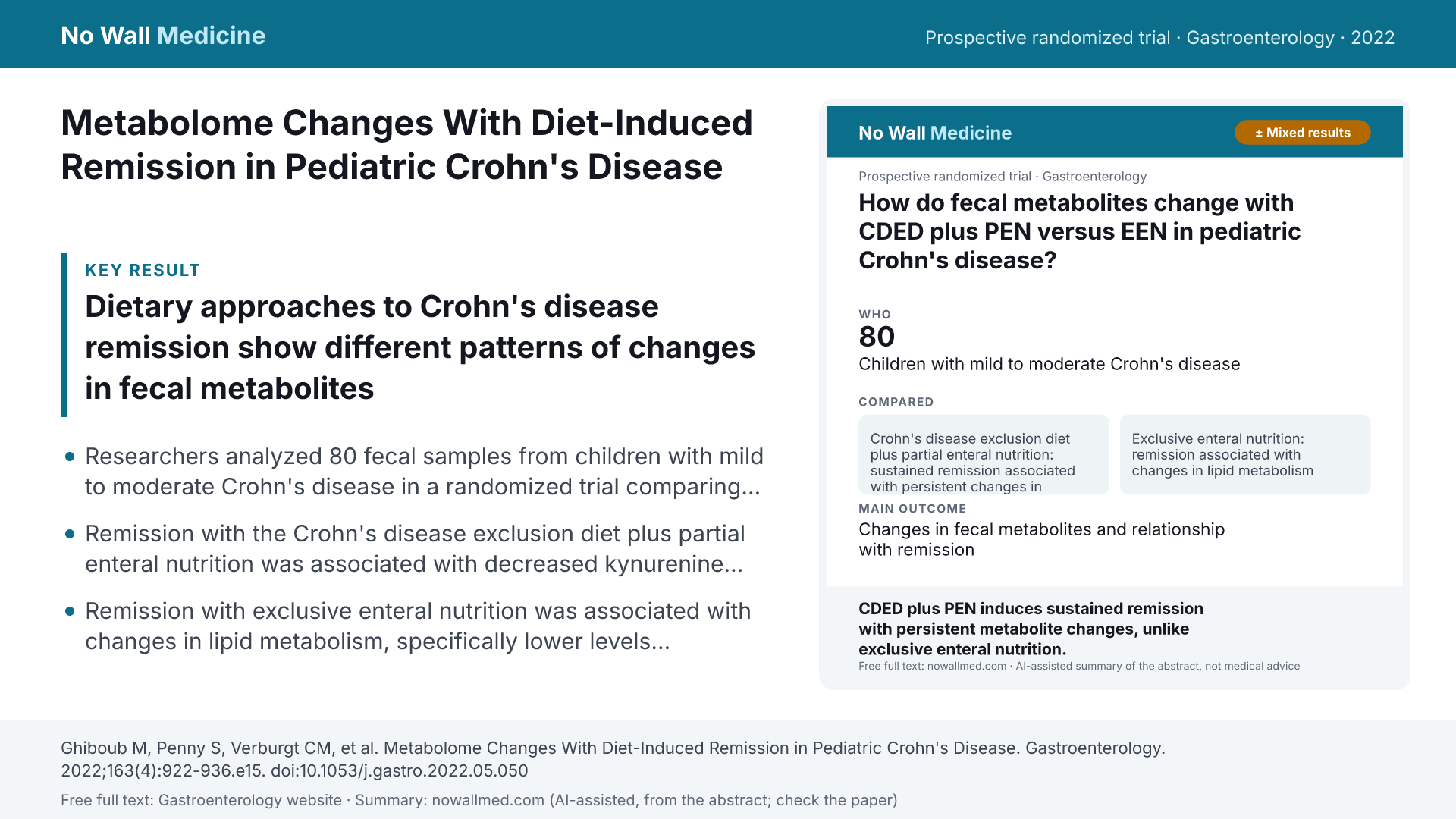
Dietary approaches to Crohn's disease remission show different patterns of changes in fecal metabolites
Metabolome Changes With Diet-Induced Remission in Pediatric Crohn's Disease
Prospective randomized trialMixed results
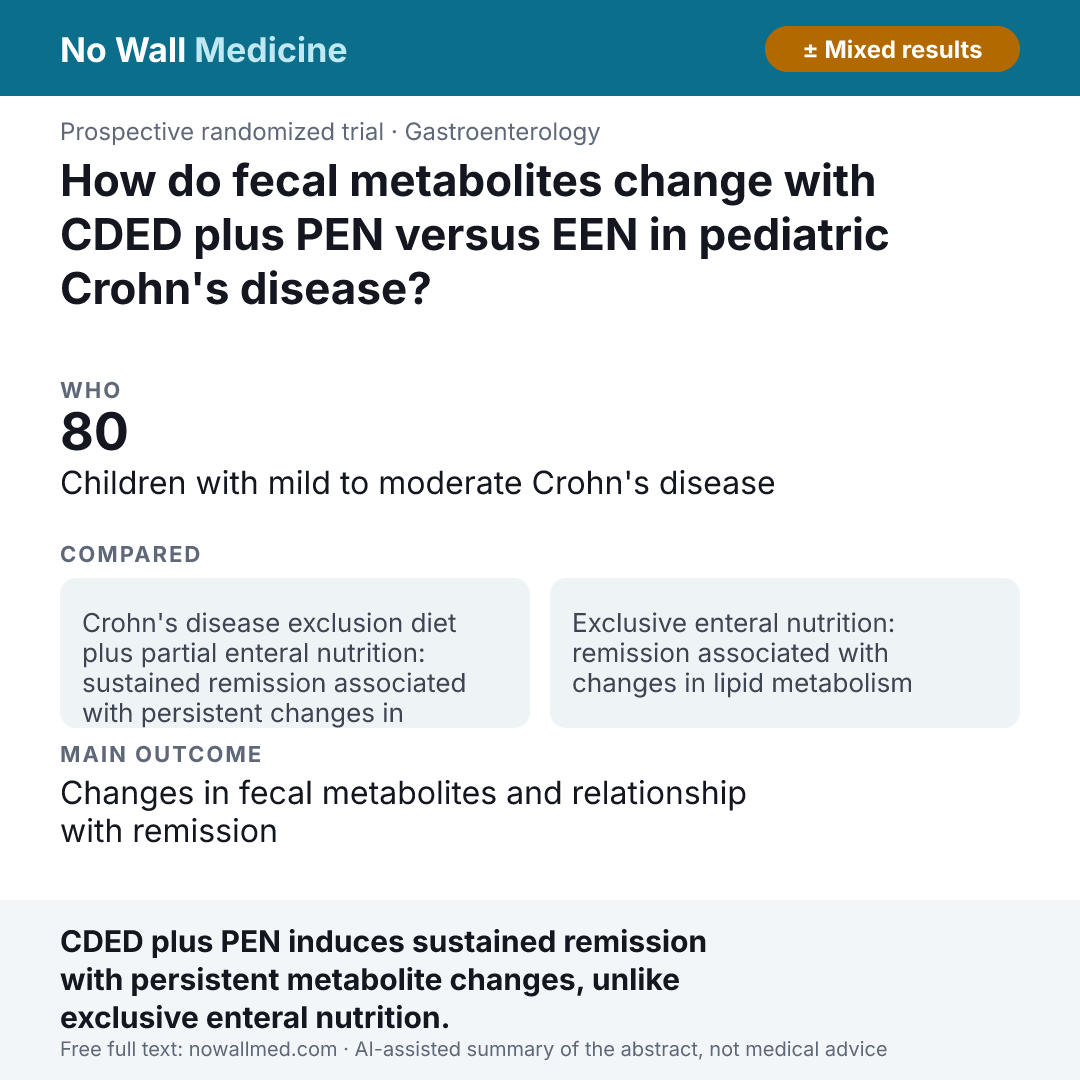
How do fecal metabolites change with CDED plus PEN versus EEN in pediatric Crohn's disease?
Who
80
Children with mild to moderate Crohn's disease
Compared
Crohn's disease exclusion diet plus partial enteral nutrition: sustained remission associated with persistent changes in metabolites
Exclusive enteral nutrition: remission associated with changes in lipid metabolism
Main outcome
Changes in fecal metabolites and relationship with remission
Bottom line: CDED plus PEN induces sustained remission with persistent metabolite changes, unlike exclusive enteral nutrition.
Gastroenterology · 2022-06-07 · Save PNG
Clinical question: How do fecal metabolites change with CDED plus PEN versus EEN in pediatric Crohn's disease?
Key points
- Researchers analyzed 80 fecal samples from children with mild to moderate Crohn's disease in a randomized trial comparing two dietary treatments.
- Remission with the Crohn's disease exclusion diet plus partial enteral nutrition was associated with decreased kynurenine and succinate synthesis and increased N-α-acetyl-arginine.
- Remission with exclusive enteral nutrition was associated with changes in lipid metabolism, specifically lower levels of ceramides.
Headline and key points written with AI from the paper’s abstract, with every number checked against it. Read the paper before relying on them.
Was this summary helpful?
Subject terms
Headline, design, result, key points, caveat and citation as plain text.
Cite this article
Ghiboub M, Penny S, Verburgt CM, et al. Metabolome Changes With Diet-Induced Remission in Pediatric Crohn's Disease. Gastroenterology. 2022;163(4):922-936.e15. doi:10.1053/j.gastro.2022.05.050
Spotted a mistake? Suggest a correction