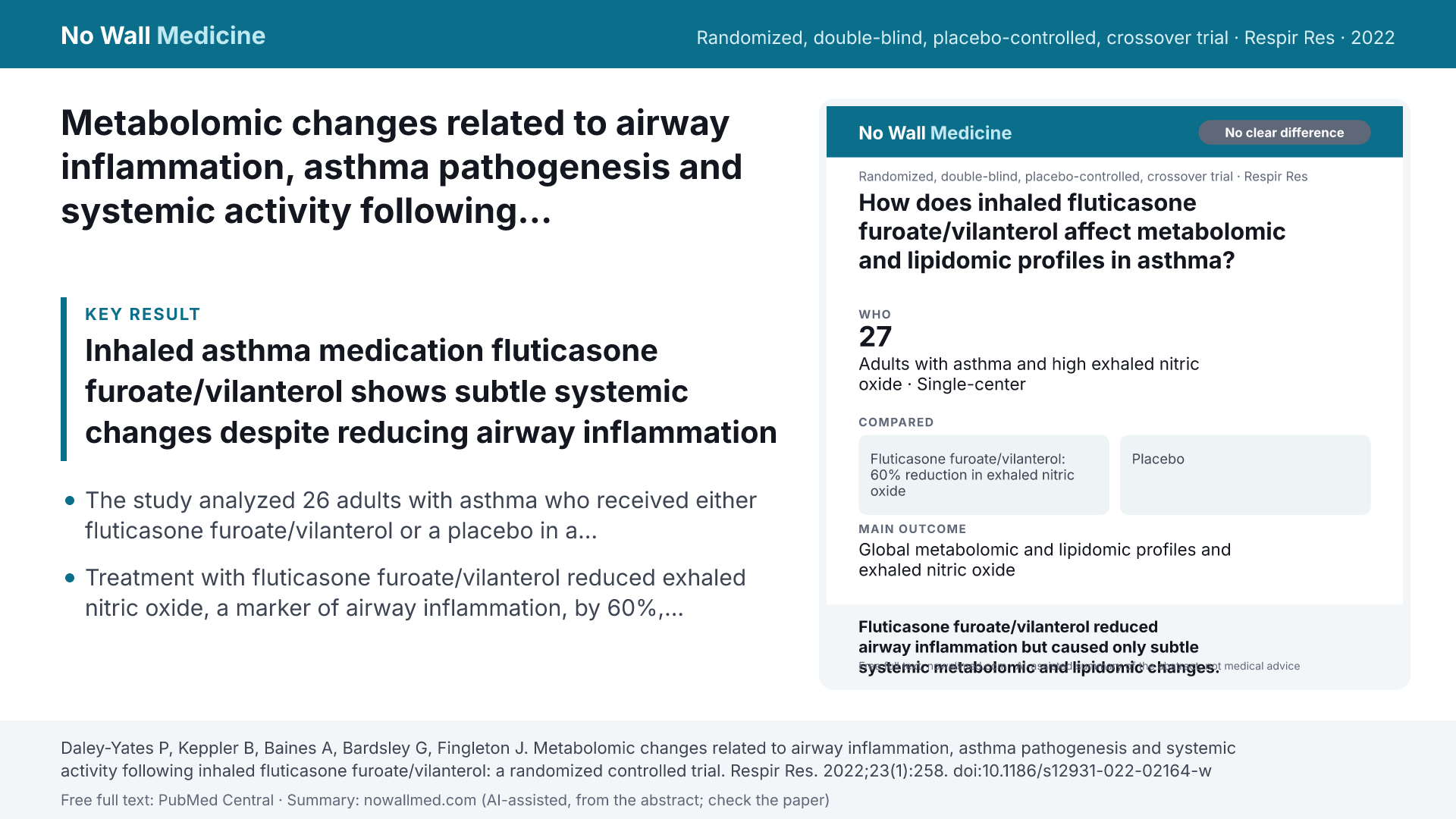
Inhaled asthma medication fluticasone furoate/vilanterol shows subtle systemic changes despite reducing airway inflammation
Metabolomic changes related to airway inflammation, asthma pathogenesis and systemic activity following inhaled fluticasone furoate/vilanterol: a randomized controlled trial
Randomized, double-blind, placebo-controlled, crossover trialNo clear difference
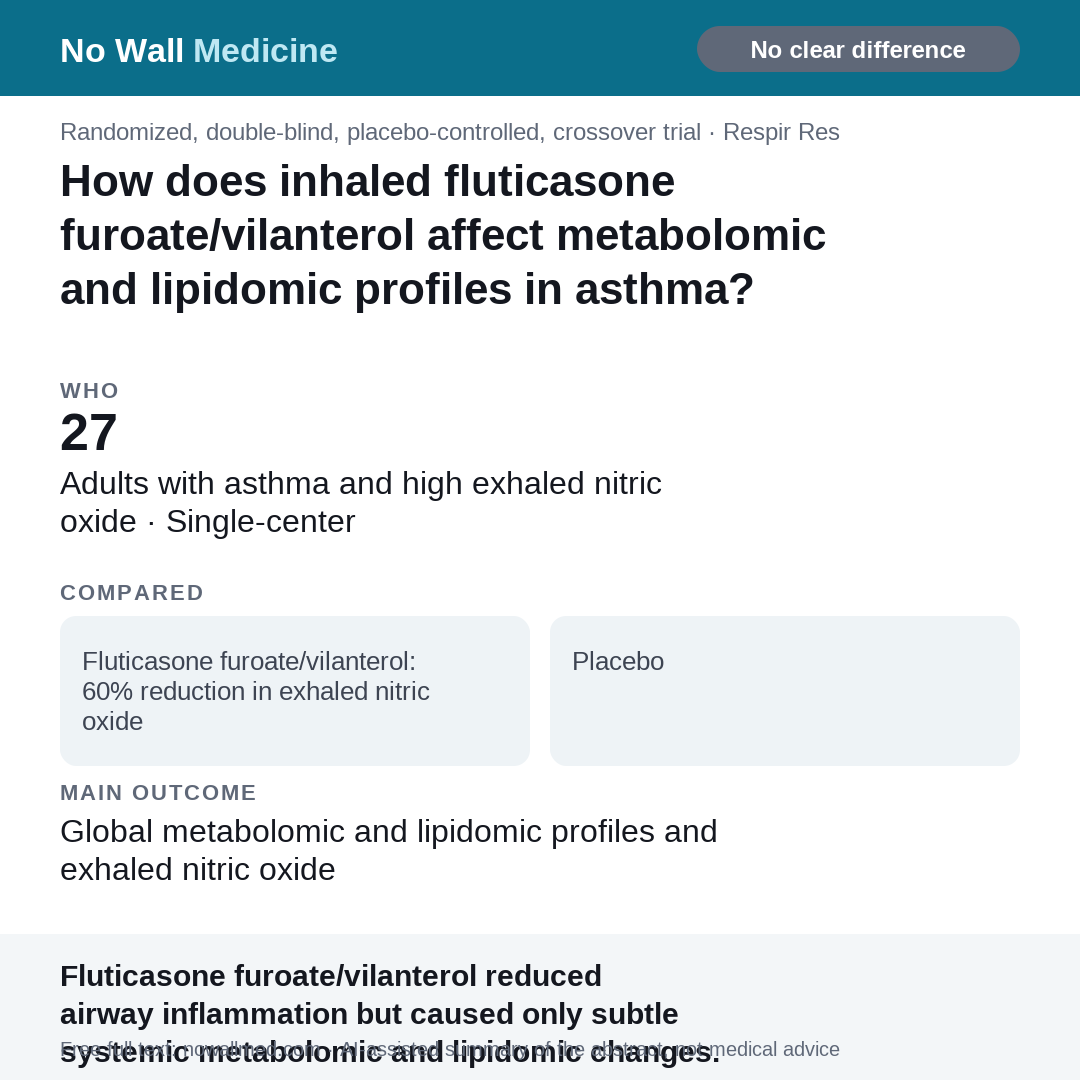
How does inhaled fluticasone furoate/vilanterol affect metabolomic and lipidomic profiles in asthma?
Who
27
Adults with asthma and high exhaled nitric oxide · Single-center
Compared
Fluticasone furoate/vilanterol: 60% reduction in exhaled nitric oxide
Placebo
Main outcome
Global metabolomic and lipidomic profiles and exhaled nitric oxide
Bottom line: Fluticasone furoate/vilanterol reduced airway inflammation but caused only subtle systemic metabolomic and lipidomic changes.
Respir Res · 2022-09-20Download image
Clinical question: How does inhaled fluticasone furoate/vilanterol affect metabolomic and lipidomic profiles in asthma?
Why it matters: It was unknown how inhaled fluticasone furoate/vilanterol affects the global metabolomic and lipidomic profiles or if these changes correlate with airway inflammation.
Key points
- The study analyzed 26 adults with asthma who received either fluticasone furoate/vilanterol or a placebo in a crossover trial.
- Treatment with fluticasone furoate/vilanterol reduced exhaled nitric oxide, a marker of airway inflammation, by 60%, but caused only subtle changes in blood metabolites.
- Significant metabolite changes compared to placebo were 2.1% at T1, 6.7% at T2, and 11.8% at T3.
Limitation the authors note: The study was a single-center trial with 27 randomized participants.
Headline and key points written with AI from the paper’s abstract, with every number checked against it. Read the paper before relying on them.
Was this summary helpful?
Subject terms
Cite this article
Daley-Yates P, Keppler B, Baines A, Bardsley G, Fingleton J. Metabolomic changes related to airway inflammation, asthma pathogenesis and systemic activity following inhaled fluticasone furoate/vilanterol: a randomized controlled trial. Respir Res. 2022. doi:10.1186/s12931-022-02164-w
Spotted a mistake? Suggest a correction