Metabolomic Changes Upon Conjugated Linoleic Acid Supplementation and Predictions of Body Composition Responsiveness
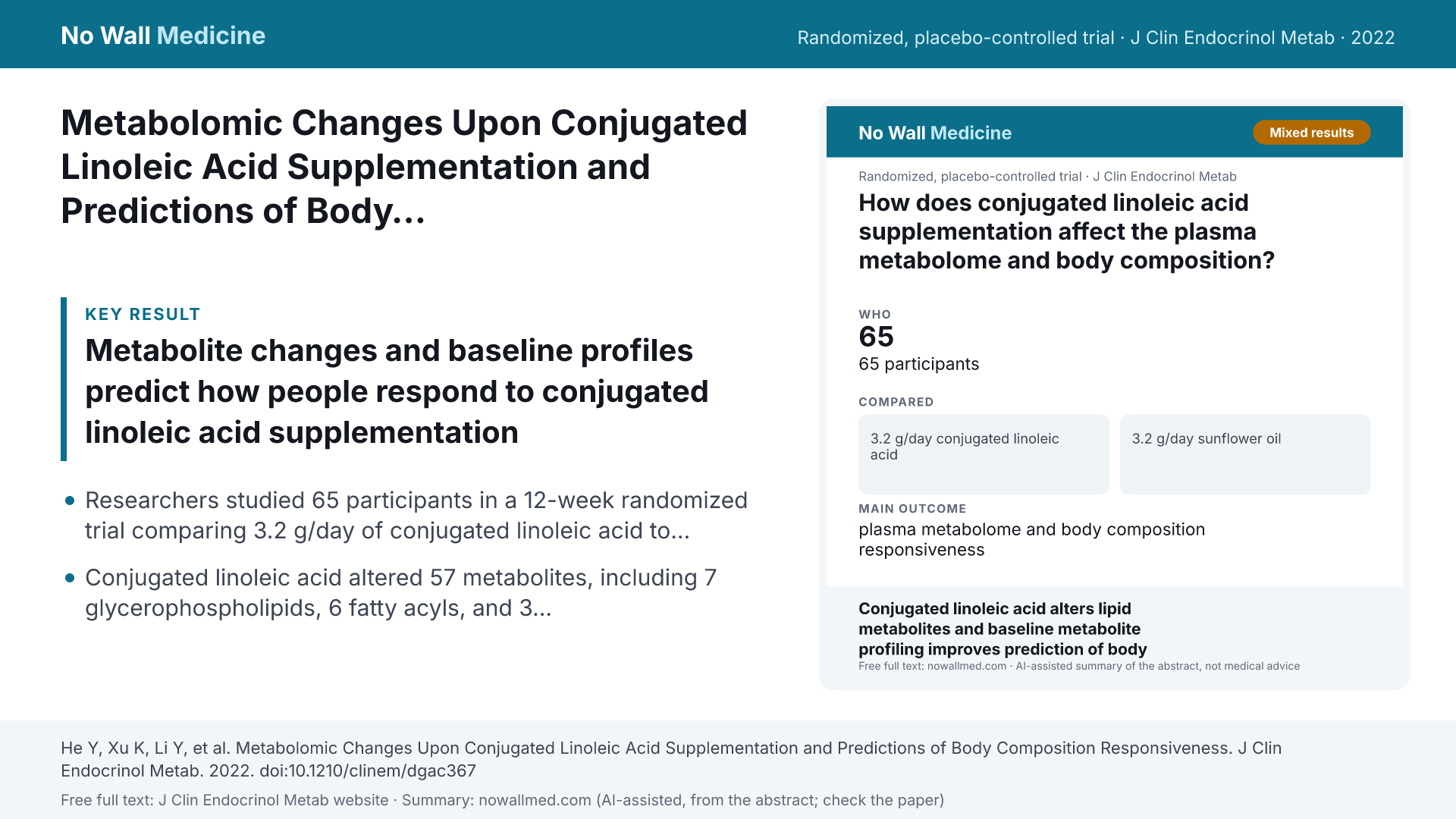
Key result: Metabolite changes and baseline profiles predict how people respond to conjugated linoleic acid supplementation
Randomized, placebo-controlled trialMixed results
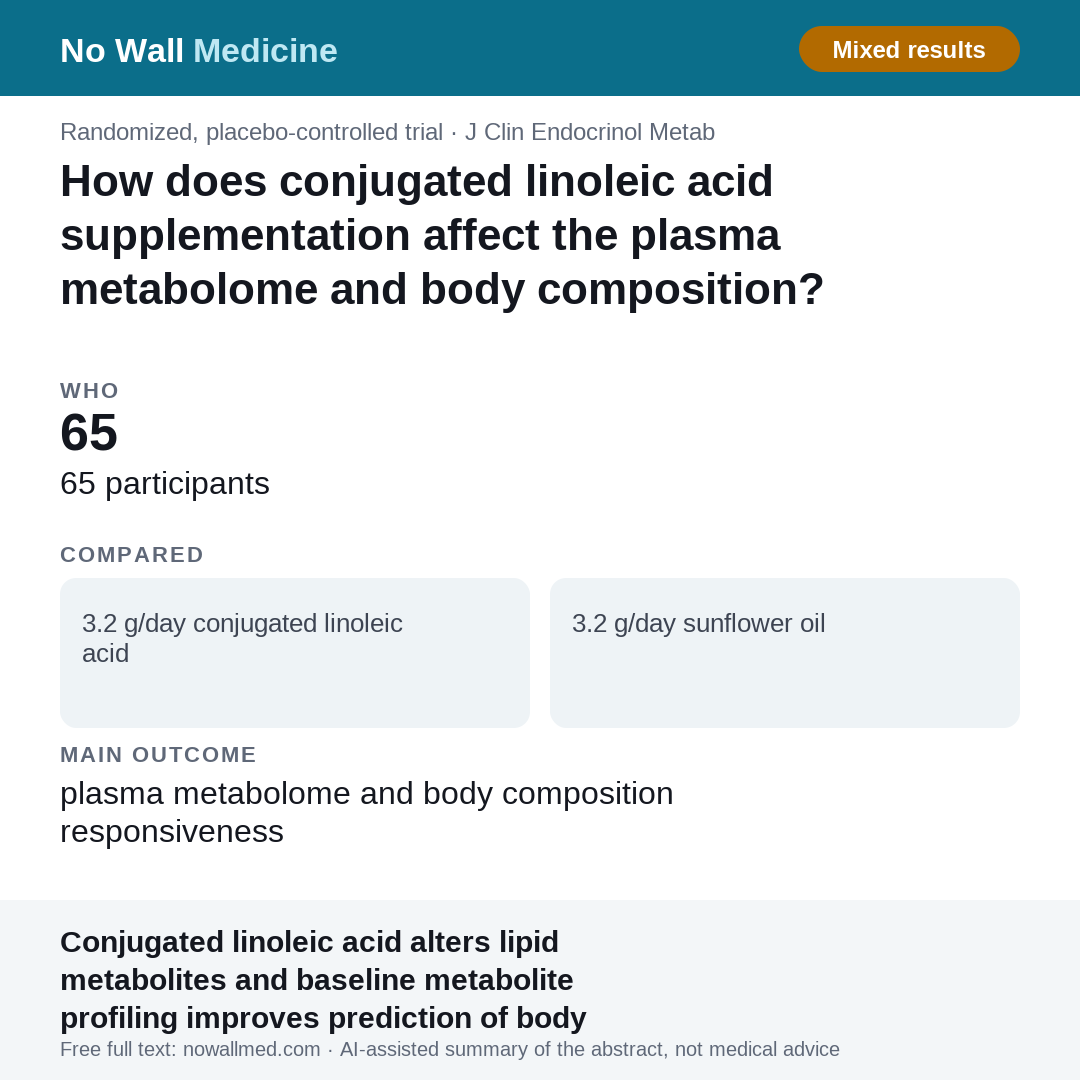
How does conjugated linoleic acid supplementation affect the plasma metabolome and body composition?
Who
65
65 participants
Compared
3.2 g/day conjugated linoleic acid
3.2 g/day sunflower oil
Main outcome
plasma metabolome and body composition responsiveness
Bottom line: Conjugated linoleic acid alters lipid metabolites and baseline metabolite profiling improves prediction of body composition responsiveness.
J Clin Endocrinol Metab · 2022-06-16Download image
Key points
- Researchers studied 65 participants in a 12-week randomized trial comparing 3.2 g/day of conjugated linoleic acid to 3.2 g/day of sunflower oil.
- Conjugated linoleic acid altered 57 metabolites, including 7 glycerophospholipids, 6 fatty acyls, and 3 sphingolipids, compared to the placebo group.
- Baseline metabolite panels predicted favorable responses in waist circumference and total fat mass more accurately than conventional variables.
Why it matters: The biological mechanisms by which conjugated linoleic acid affects body composition in humans are not clear.
Discussion prompts
- Would these patients look like yours? Who was left out?
- Is the main outcome one that matters to patients?
- Is the difference large enough to change what you do?
Cite: He Y, Xu K, Li Y, et al. Metabolomic Changes Upon Conjugated Linoleic Acid Supplementation and Predictions of Body Composition Responsiveness. J Clin Endocrinol Metab. 2022. doi:10.1210/clinem/dgac367
Free full text: J Clin Endocrinol Metab website · Summary and visual abstract: nowallmed.com/a/metabolomic-changes-upon-conjugated-linoleic-acid-supplementation-and-54k0dd/ (AI-assisted from the abstract; check the paper before relying on it).