Home-based metacognitive therapy reduced anxiety and depression in patients undergoing cardiac rehabilitation
Metacognitive therapy home-based self-help for anxiety and depression in cardiovascular disease patients in the UK: A single-blind randomised controlled trial
Single-blind, multi-centre, two-arm randomized controlled trialBenefit found
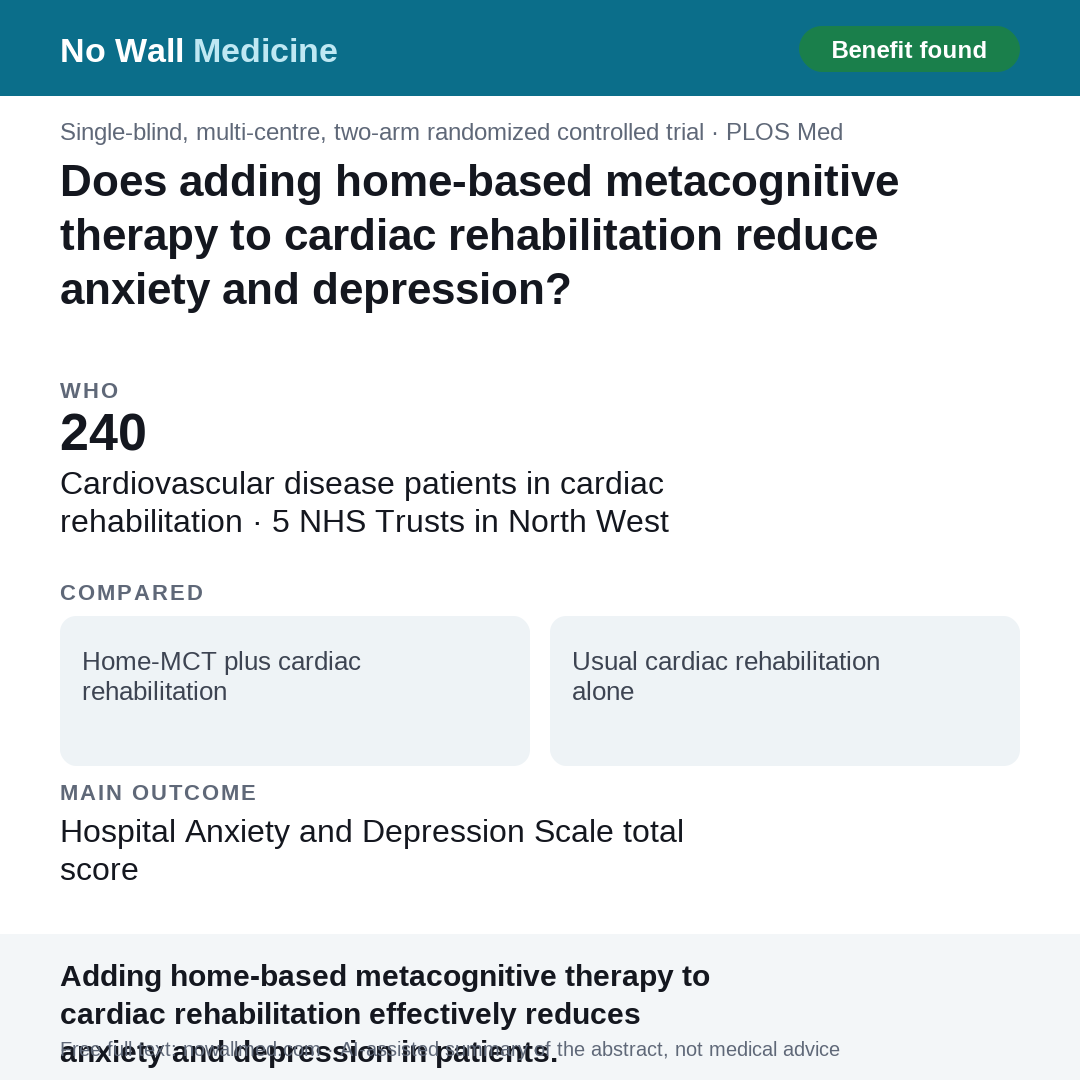
Does adding home-based metacognitive therapy to cardiac rehabilitation reduce anxiety and depression?
Who
240
Cardiovascular disease patients in cardiac rehabilitation · 5 NHS Trusts in North West England
Compared
Home-MCT plus cardiac rehabilitation
Usual cardiac rehabilitation alone
Main outcome
Hospital Anxiety and Depression Scale total score
Result: adjusted mean difference = -2.64 [-4.49 to -0.78]
Bottom line: Adding home-based metacognitive therapy to cardiac rehabilitation effectively reduces anxiety and depression in patients.
Limitation: The absence of longer term follow-up data.
PLOS Med · 2023-01-31Download image
Clinical question: Does adding home-based metacognitive therapy to cardiac rehabilitation reduce anxiety and depression?
Why it matters: Current psychological interventions in cardiac rehabilitation have small effects and limited access to home-based support for patients with anxiety and depression.
Key points
- Researchers studied 240 patients in the UK, comparing usual cardiac rehabilitation to cardiac rehabilitation plus home-based metacognitive therapy, a type of self-help psychological treatment.
- At the 4-month follow-up, the metacognitive therapy group had significantly lower total Hospital Anxiety and Depression Scale scores (adjusted mean difference = -2.64 [-4.49 to -0.78], p = 0.005).
- The intervention group also showed improvements in post-traumatic stress symptoms (standardised mean difference = 0.51), with 19% of the therapy group lost to follow-up compared to 3% in the usual care group.
Limitation the authors note: The main limitation is the absence of longer term (e.g., 12-month) follow-up data.
Headline and key points written with AI from the paper’s abstract, with every number checked against it. Read the paper before relying on them.
Was this summary helpful?
Subject terms
Cite this article
Wells A, Reeves D, Heal C, Fisher P, Doherty P, Davies L. Metacognitive therapy home-based self-help for anxiety and depression in cardiovascular disease patients in the UK: A single-blind randomised controlled trial. PLOS Med. 2023. doi:10.1371/journal.pmed.1004161
Spotted a mistake? Suggest a correction
Top studies every Monday
The week’s key trials and guidelines in your specialties, plus any topics you follow. By email, free.
Get the weekly digest