Methodologic implications for rehabilitation research: Differences in heart rate variability introduced by respiration
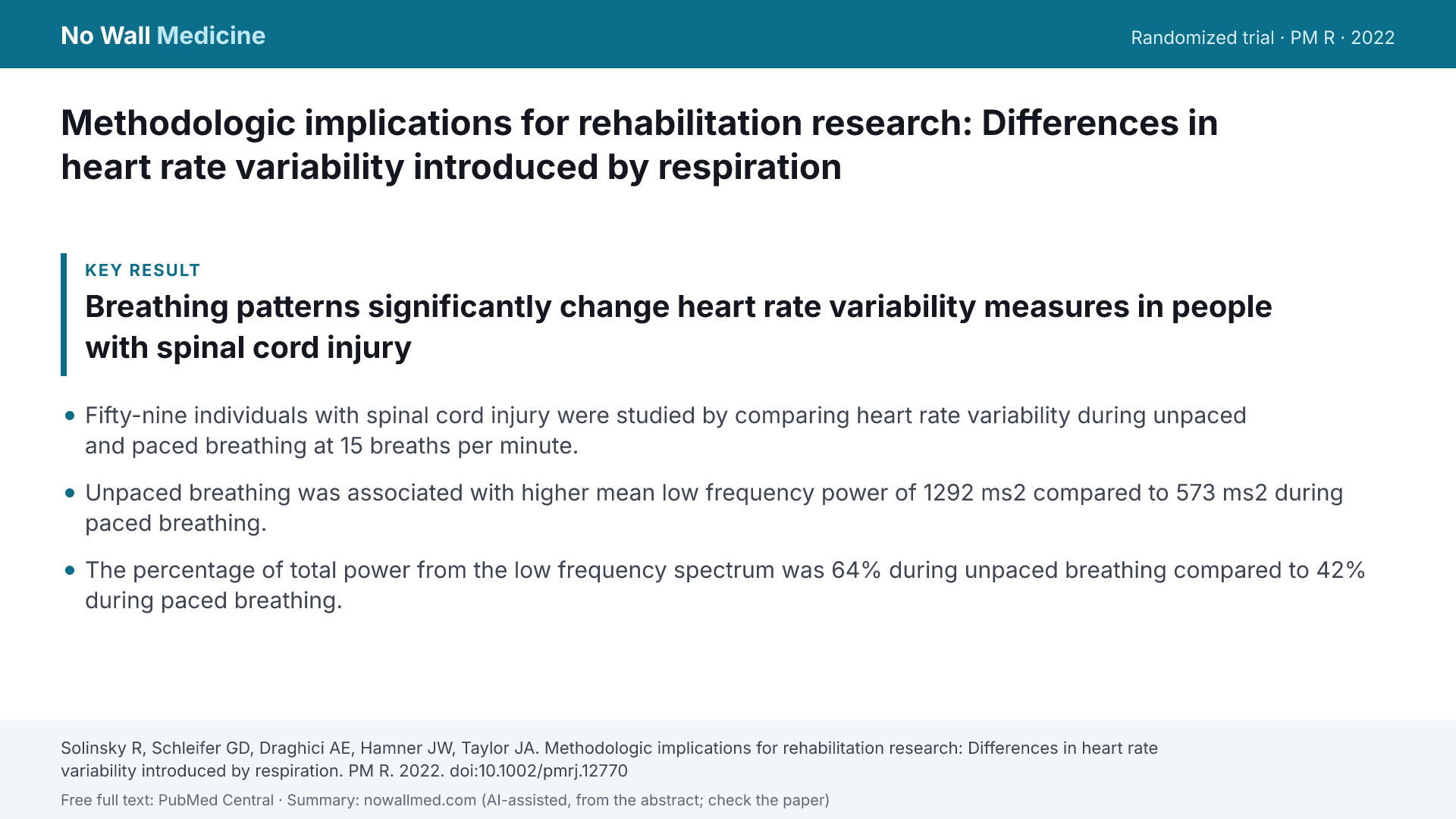
Key result: Breathing patterns significantly change heart rate variability measures in people with spinal cord injury
Key points
- Fifty-nine individuals with spinal cord injury were studied by comparing heart rate variability during unpaced and paced breathing at 15 breaths per minute.
- Unpaced breathing was associated with higher mean low frequency power of 1292 ms2 compared to 573 ms2 during paced breathing.
- The percentage of total power from the low frequency spectrum was 64% during unpaced breathing compared to 42% during paced breathing.
Why it matters: The effects of respiration on heart rate variability, a measure of autonomic nervous system activity, are rarely accounted for in rehabilitation medicine research.
Discussion prompts
- Would these patients look like yours? Who was left out?
- Is the main outcome one that matters to patients?
- Is the difference large enough to change what you do?
Cite: Solinsky R, Schleifer GD, Draghici AE, Hamner JW, Taylor JA. Methodologic implications for rehabilitation research: Differences in heart rate variability introduced by respiration. PM R. 2022. doi:10.1002/pmrj.12770
Free full text: PubMed Central · Summary and visual abstract: nowallmed.com/a/methodologic-implications-for-rehabilitation-research-differences-in-17ygyl8/ (AI-assisted from the abstract; check the paper before relying on it).