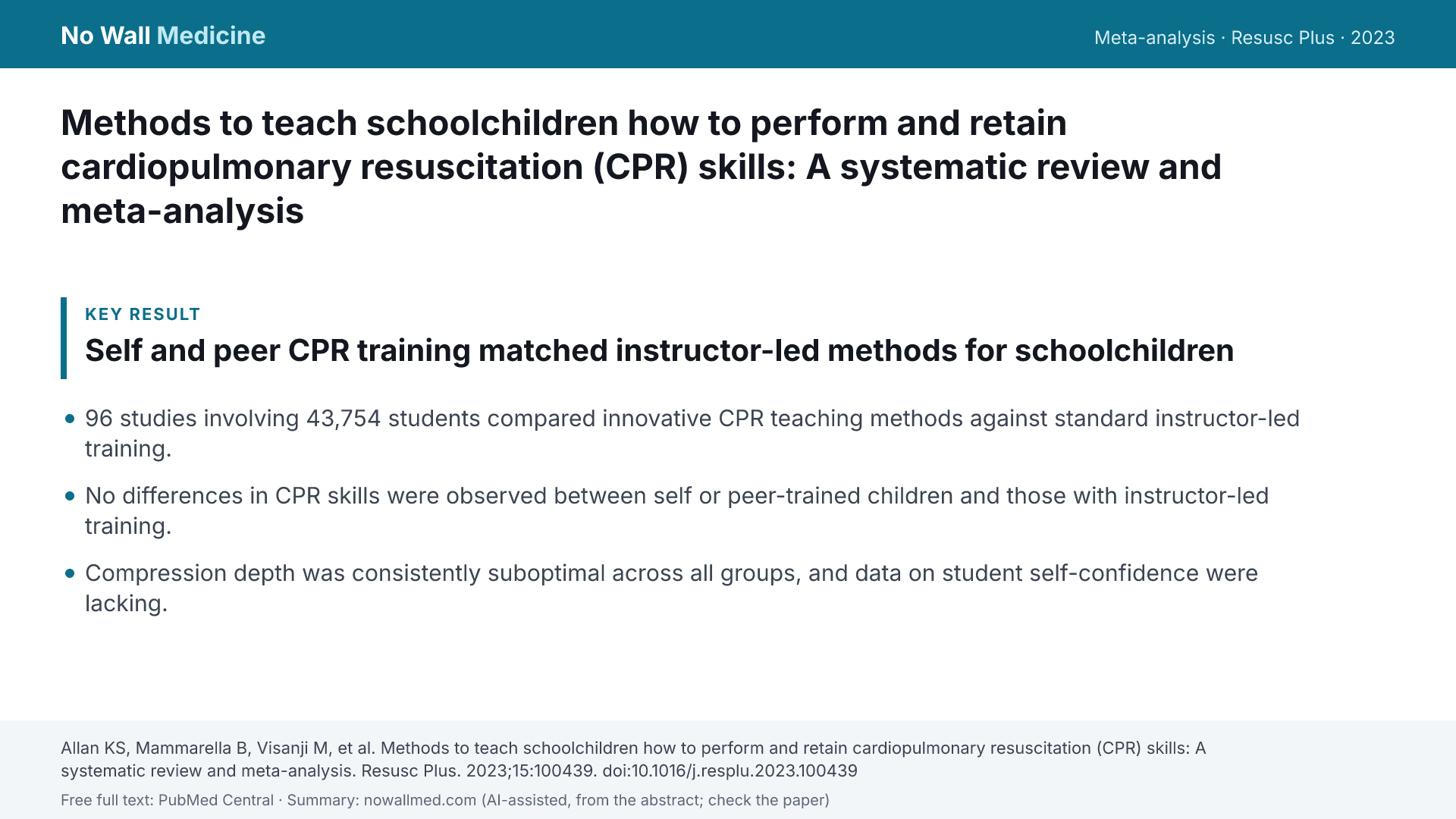
Innovative teaching methods for cardiopulmonary resuscitation skills were as effective as instructor-led training in schoolchildren
Methods to teach schoolchildren how to perform and retain cardiopulmonary resuscitation (CPR) skills: A systematic review and meta-analysis
Systematic review and meta-analysisNo clear difference
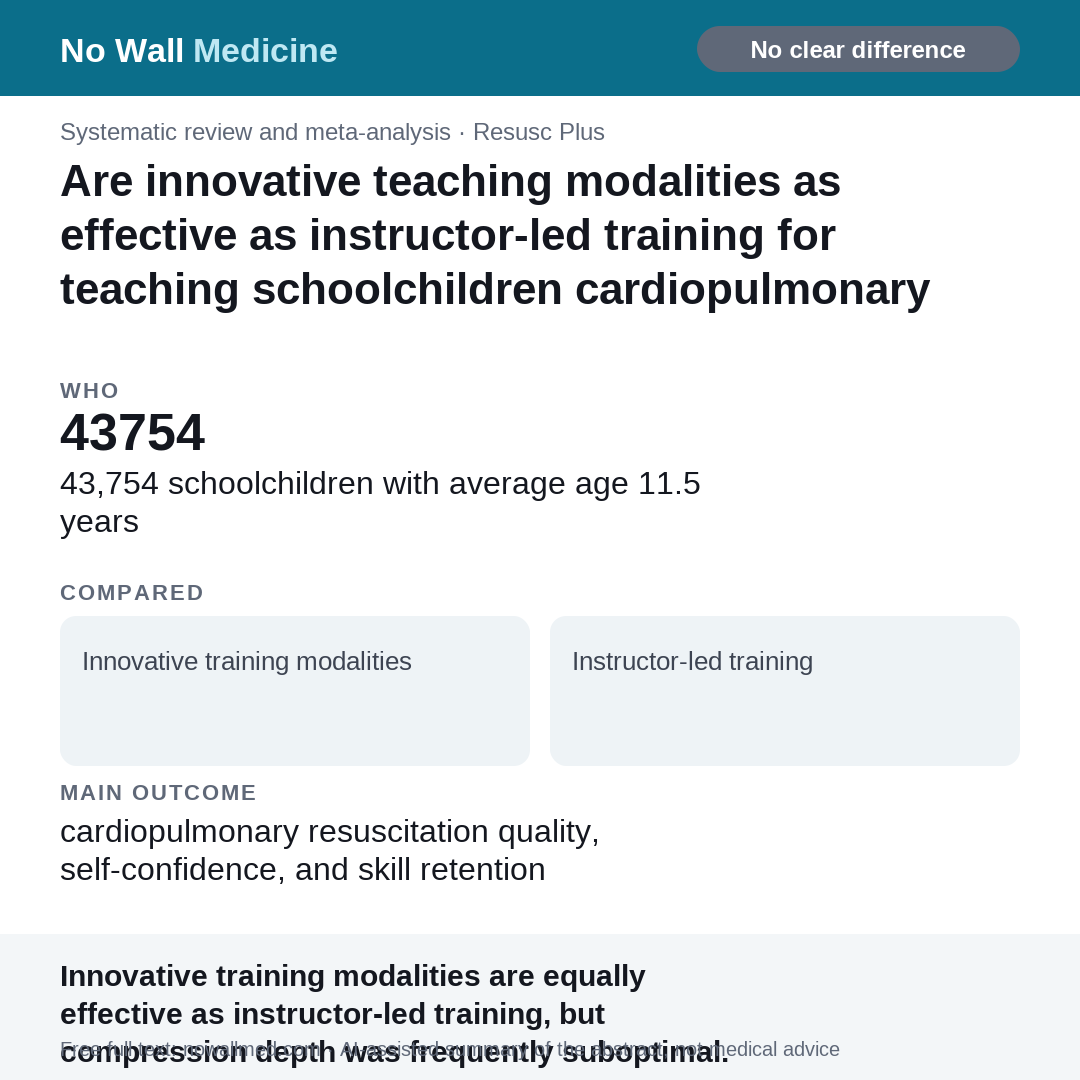
Are innovative teaching modalities as effective as instructor-led training for teaching schoolchildren cardiopulmonary resuscitation?
Who
43754
43,754 schoolchildren with average age 11.5 years
Compared
Innovative training modalities
Instructor-led training
Main outcome
cardiopulmonary resuscitation quality, self-confidence, and skill retention
Bottom line: Innovative training modalities are equally effective as instructor-led training, but compression depth was frequently suboptimal.
Limitation: Unable to evaluate the impact of novel training modalities on student self-confidence due to lack of data.
Resusc Plus · 2023-08-10Download image
Clinical question: Are innovative teaching modalities as effective as instructor-led training for teaching schoolchildren cardiopulmonary resuscitation?
Why it matters: The most effective way to train schoolchildren in cardiopulmonary resuscitation skills is currently unknown.
Key points
- Researchers analyzed 96 studies involving 43,754 students with an average age of 11.5 ± 0.9 years to compare different cardiopulmonary resuscitation training methods.
- No differences were observed in cardiopulmonary resuscitation skills immediately after training or within ≤ 3 months between children using self-training, peer-training, or instructor-led training.
- While hands-on practical training showed statistically significant differences in compression depth and rate compared to nonpractical training, these differences were not clinically relevant.
Limitation the authors note: Due to lack of data, the researchers were unable to evaluate the impact of novel training modalities on student self-confidence.
Headline and key points written with AI from the paper’s abstract, with every number checked against it. Read the paper before relying on them.
Was this summary helpful?
Cite this article
Allan KS, Mammarella B, Visanji M, Moglica E, Sadeghlo N, O'Neil E. Methods to teach schoolchildren how to perform and retain cardiopulmonary resuscitation (CPR) skills: A systematic review and meta-analysis. Resusc Plus. 2023. doi:10.1016/j.resplu.2023.100439
Spotted a mistake? Suggest a correction
Top studies every Monday
The week’s key trials and guidelines in your specialties, plus any topics you follow. By email, free.
Get the weekly digest