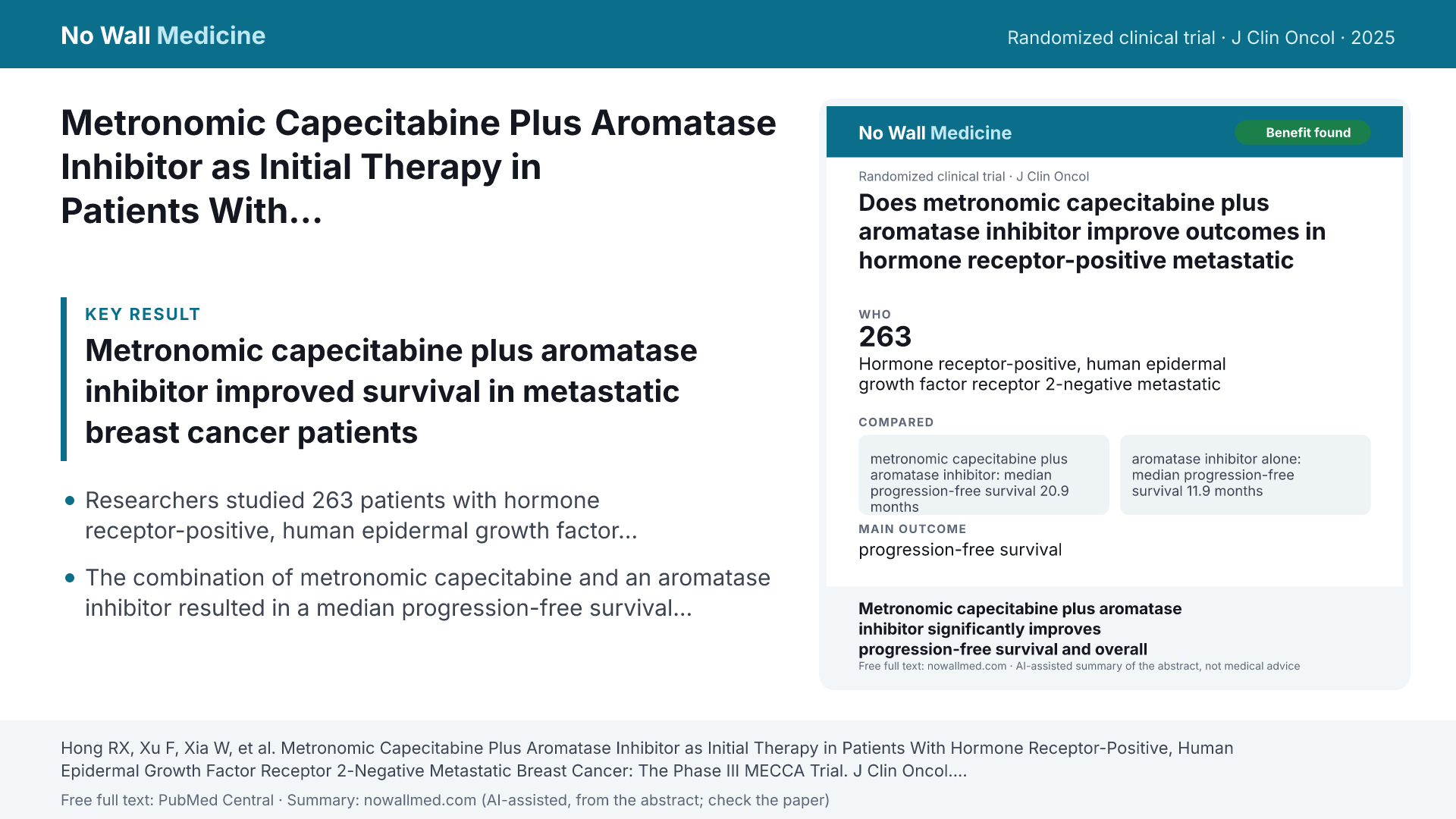
Metronomic capecitabine plus aromatase inhibitor improved survival in metastatic breast cancer patients
Metronomic Capecitabine Plus Aromatase Inhibitor as Initial Therapy in Patients With Hormone Receptor-Positive, Human Epidermal Growth Factor Receptor 2-Negative Metastatic Breast Cancer: The Phase III MECCA Trial
Randomized clinical trialBenefit found
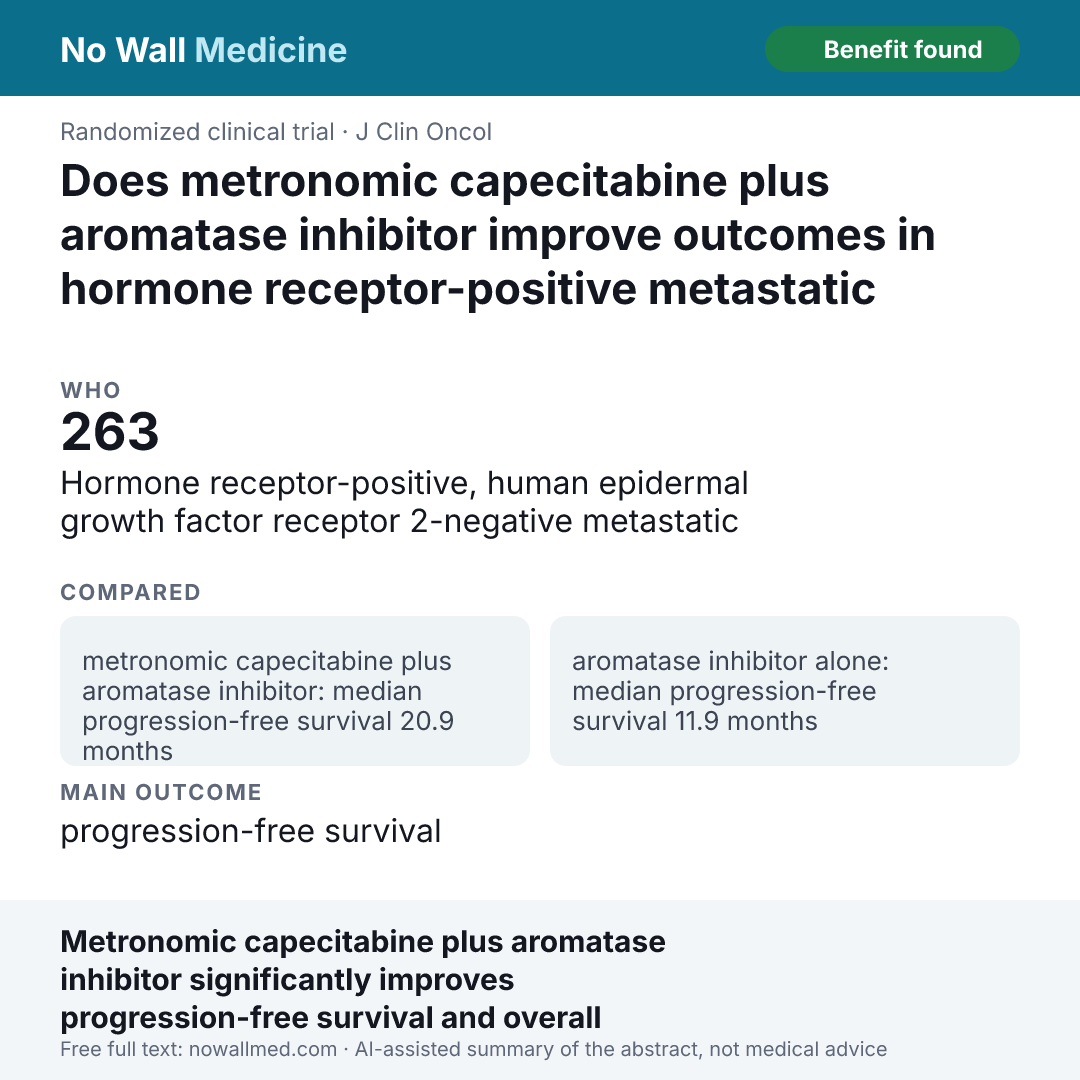
Does metronomic capecitabine plus aromatase inhibitor improve outcomes in hormone receptor-positive metastatic breast cancer?
Who
263
Hormone receptor-positive, human epidermal growth factor receptor 2-negative metastatic breast cancer patients · 12 centers in China
Compared
metronomic capecitabine plus aromatase inhibitor: median progression-free survival 20.9 months
aromatase inhibitor alone: median progression-free survival 11.9 months
Main outcome
progression-free survival
Result: hazard ratio 0.58 (95% CI 0.43 to 0.76)
Bottom line: Metronomic capecitabine plus aromatase inhibitor significantly improves progression-free survival and overall survival in hormone receptor-positive metastatic breast cancer.
J Clin Oncol · 2025-01-02 · Save PNG
Clinical question: Does metronomic capecitabine plus aromatase inhibitor improve outcomes in hormone receptor-positive metastatic breast cancer?
Why it matters: The effects of metronomic chemotherapy combined with endocrine therapy have not been established through a randomized phase III clinical trial.
Key points
- Researchers studied 263 patients with hormone receptor-positive, human epidermal growth factor receptor 2-negative metastatic breast cancer who had not received previous systemic therapy.
- The combination of metronomic capecitabine and an aromatase inhibitor resulted in a median progression-free survival of 20.9 months compared to 11.9 months for aromatase inhibitor alone.
- Grade 3 adverse events occurred in 15.1% of patients receiving the combination treatment, with the most common side effects being palmar-plantar erythrodysesthesia and peripheral neuropathy.
Headline and key points written with AI from the paper’s abstract, with every number checked against it. Read the paper before relying on them.
Was this summary helpful?
Subject terms
Headline, design, result, key points, caveat and citation as plain text.
Cite this article
Hong RX, Xu F, Xia W, et al. Metronomic Capecitabine Plus Aromatase Inhibitor as Initial Therapy in Patients With Hormone Receptor-Positive, Human Epidermal Growth Factor Receptor 2-Negative Metastatic Breast Cancer: The Phase III MECCA Trial. J Clin Oncol. 2025;43(11):1314-1324. doi:10.1200/JCO.24.00938
Spotted a mistake? Suggest a correction