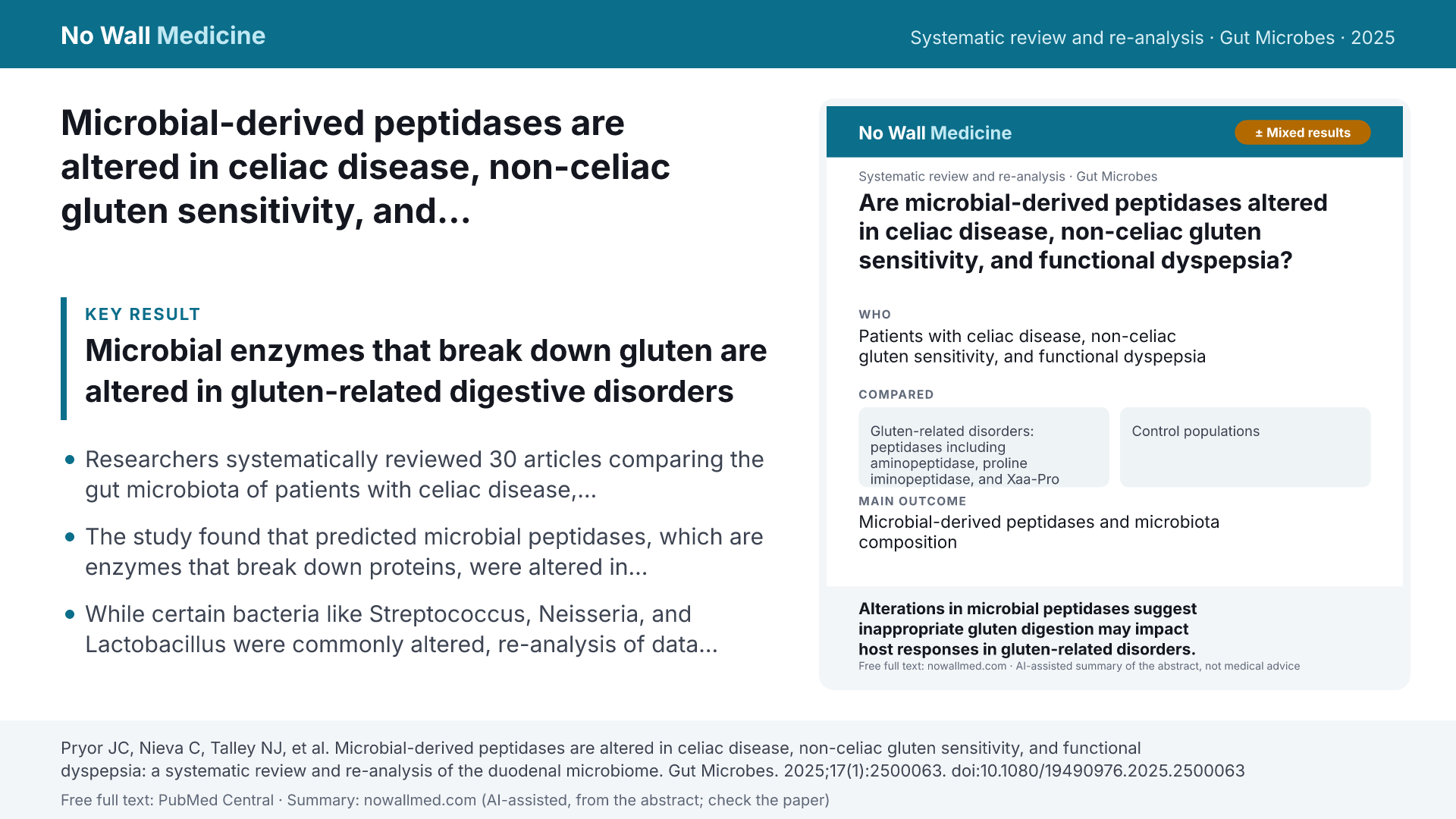
Microbial enzymes that break down gluten are altered in gluten-related digestive disorders
Microbial-derived peptidases are altered in celiac disease, non-celiac gluten sensitivity, and functional dyspepsia: a systematic review and re-analysis of the duodenal microbiome
Systematic review and re-analysisMixed results
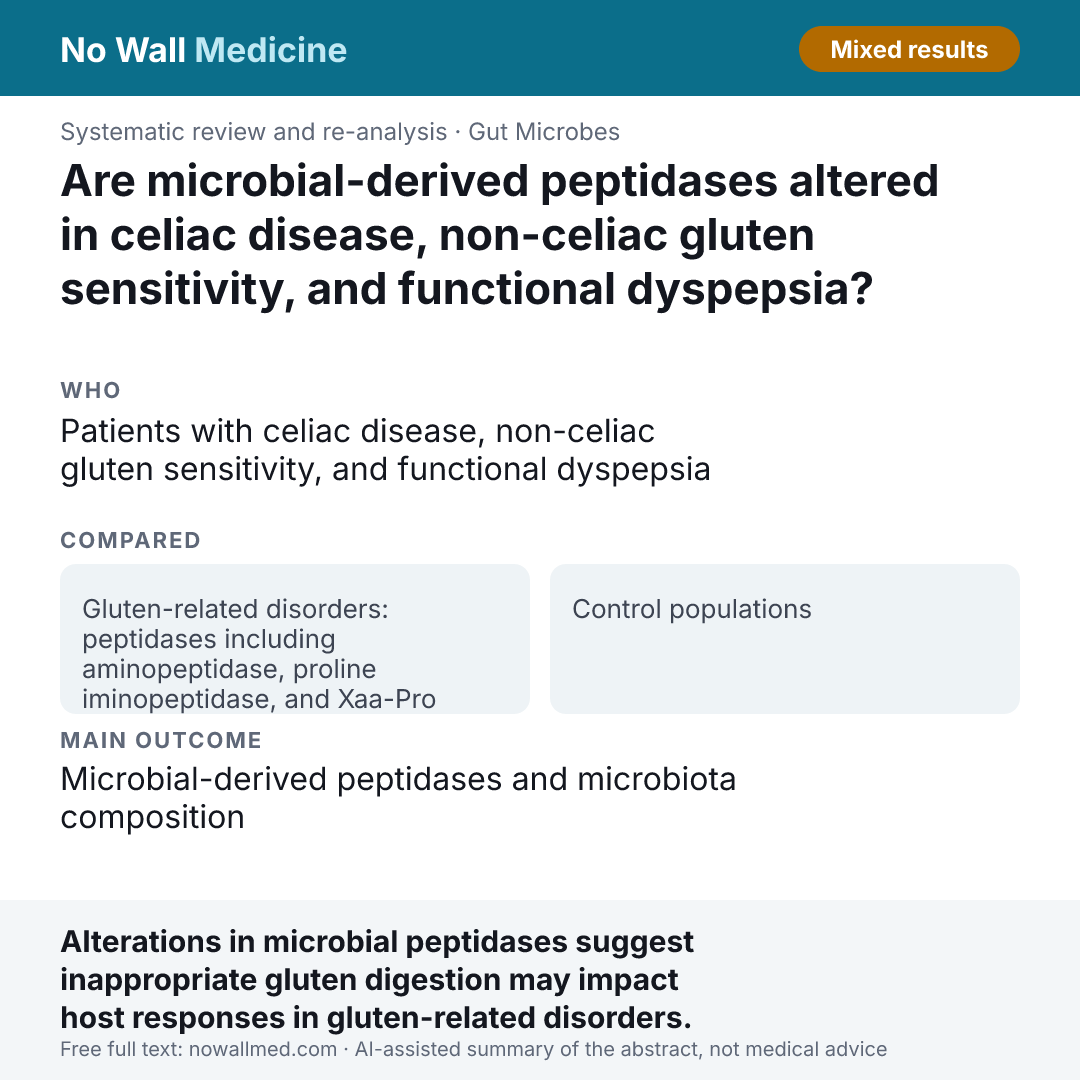
Are microbial-derived peptidases altered in celiac disease, non-celiac gluten sensitivity, and functional dyspepsia?
Who
Patients with celiac disease, non-celiac gluten sensitivity, and functional dyspepsia
Compared
Gluten-related disorders: peptidases including aminopeptidase, proline iminopeptidase, and Xaa-Pro dipeptidase are altered
Control populations
Main outcome
Microbial-derived peptidases and microbiota composition
Bottom line: Alterations in microbial peptidases suggest inappropriate gluten digestion may impact host responses in gluten-related disorders.
Limitation: Re-analysis of duodenal 16S rRNA data did not identify any consistent differentially abundant taxa.
Gut Microbes · 2025-05-09 · Save PNG
Clinical question: Are microbial-derived peptidases altered in celiac disease, non-celiac gluten sensitivity, and functional dyspepsia?
Key points
- Researchers systematically reviewed 30 articles comparing the gut microbiota of patients with celiac disease, non-celiac gluten sensitivity, and functional dyspepsia to healthy controls.
- The study found that predicted microbial peptidases, which are enzymes that break down proteins, were altered in celiac disease, non-celiac gluten sensitivity, and functional dyspepsia.
- While certain bacteria like Streptococcus, Neisseria, and Lactobacillus were commonly altered, re-analysis of data from five articles did not identify any consistent differences in specific bacterial types.
Headline and key points written with AI from the paper’s abstract, with every number checked against it. Read the paper before relying on them.
Was this summary helpful?
Subject terms
Headline, design, result, key points, caveat and citation as plain text.
Cite this article
Pryor JC, Nieva C, Talley NJ, et al. Microbial-derived peptidases are altered in celiac disease, non-celiac gluten sensitivity, and functional dyspepsia: a systematic review and re-analysis of the duodenal microbiome. Gut Microbes. 2025;17(1):2500063. doi:10.1080/19490976.2025.2500063
Spotted a mistake? Suggest a correction