Fecal microbiota transplantation was associated with a 43% objective response rate in cancer patients
Microbiota boost immunotherapy? A meta-analysis dives into fecal microbiota transplantation and immune checkpoint inhibitors
Meta-analysis of 10 studiesBenefit found
Does fecal microbiota transplantation enhance the efficacy of immune checkpoint inhibitors in cancer?
Who
164
Patients with solid tumors
Compared
60%anti-PD-1 and anti-CTLA-4 therapies
37%anti-PD-1 monotherapy
Main outcome
objective response rate
Result: pooled objective response rate 43% (95% CI: 0.35-0.51)
Bottom line: Fecal microbiota transplantation may enhance the efficacy of immune checkpoint inhibitors in patients with solid tumors.
Limitation: larger-scale randomized controlled trials with long-term follow-up are required
BMC Med · 2025-06-09Download image
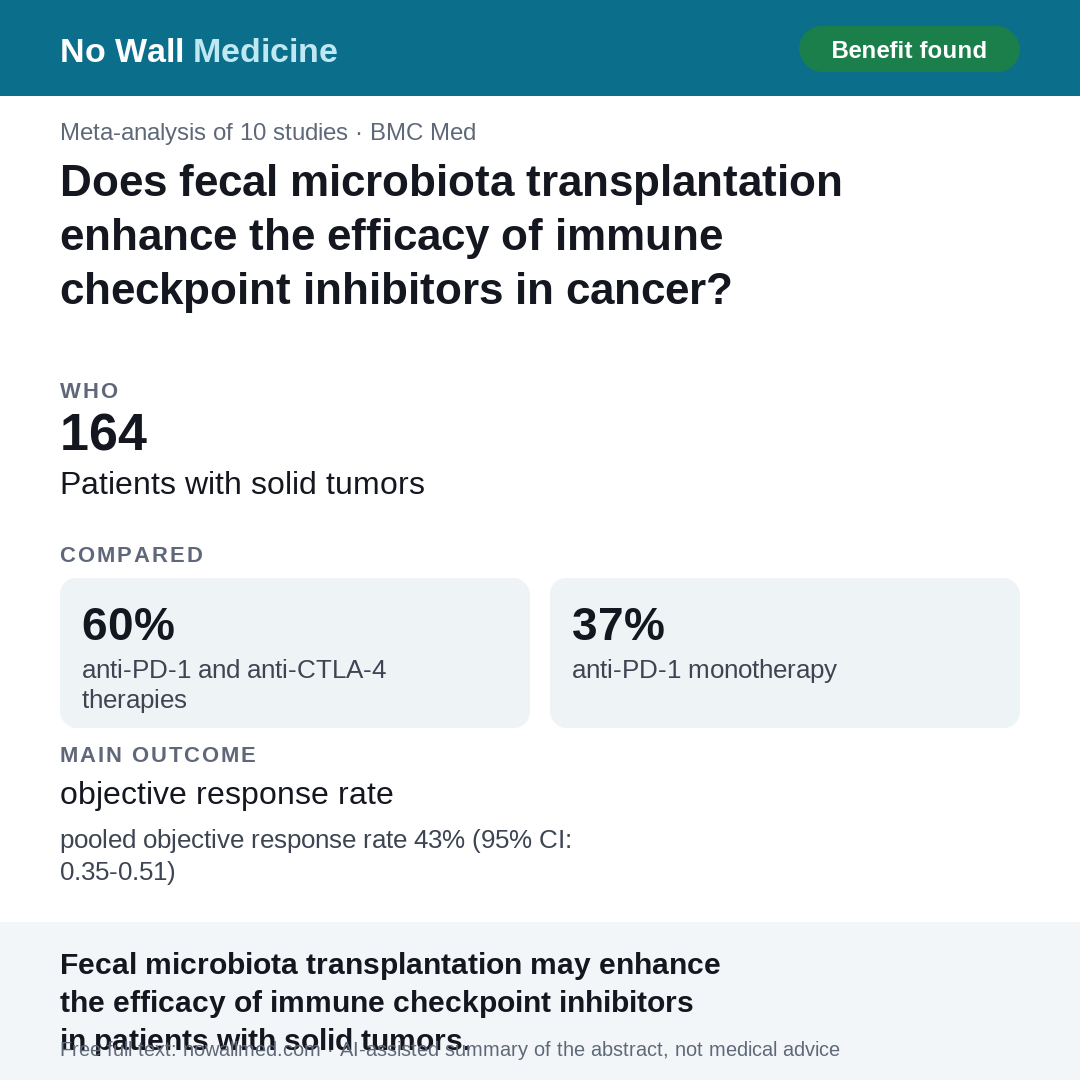
Clinical question: Does fecal microbiota transplantation enhance the efficacy of immune checkpoint inhibitors in cancer?
Why it matters: The effectiveness of immune checkpoint inhibitors is limited, and researchers are investigating if altering the gut microbiome through fecal microbiota transplantation can enhance their therapeutic effects.
Key points
- Researchers analyzed 10 studies involving 164 patients with solid tumors receiving fecal microbiota transplantation, which is the transfer of stool from a healthy donor, alongside immune checkpoint inhibitors.
- The pooled objective response rate, which measures the proportion of patients whose tumor shrinks, was 43% (95% CI: 0.35-0.51).
- Combining anti-PD-1 and anti-CTLA-4 therapies was associated with a 60% response rate compared to 37% for anti-PD-1 monotherapy (P = 0.01).
Limitation the authors note: The authors state that larger-scale randomized controlled trials with long-term follow-up are required to confirm and optimize treatment protocols.
Headline and key points written with AI from the paper’s abstract, with every number checked against it. Read the paper before relying on them.
Topics
Cite this article
Lin A, Huang L, Jiang A, Zhu L, Mou W, Li Y. Microbiota boost immunotherapy? A meta-analysis dives into fecal microbiota transplantation and immune checkpoint inhibitors. BMC Med. 2025. doi:10.1186/s12916-025-04183-y
Spotted a mistake? Suggest a correction
Top studies every Monday
The week’s key trials and guidelines in your specialties, plus any topics you follow. By email, free.
Get the weekly digest