Microlearning improved delirium knowledge in hospital clinicians
Microlearning to teach geriatric principles in hospitals: a systematic review and meta-analysis
Systematic review and meta-analysisBenefit found
Is microlearning effective for teaching geriatric principles to hospital-based clinicians?
Who
Hospital-based medical, nursing and allied health clinicians · Hospital settings
Compared
Microlearning interventions
Control
Main outcome
Educational outcomes across Kirkpatrick model levels
Result: standardized mean difference 0.80 (95% CI 0.49 to 1.10)
Bottom line: Microlearning is an effective educational intervention for learning geriatric medicine principles, especially delirium knowledge.
Limitation: Further research is needed to assess impact on patient outcomes.
Age Ageing · 2026-05-17Download image
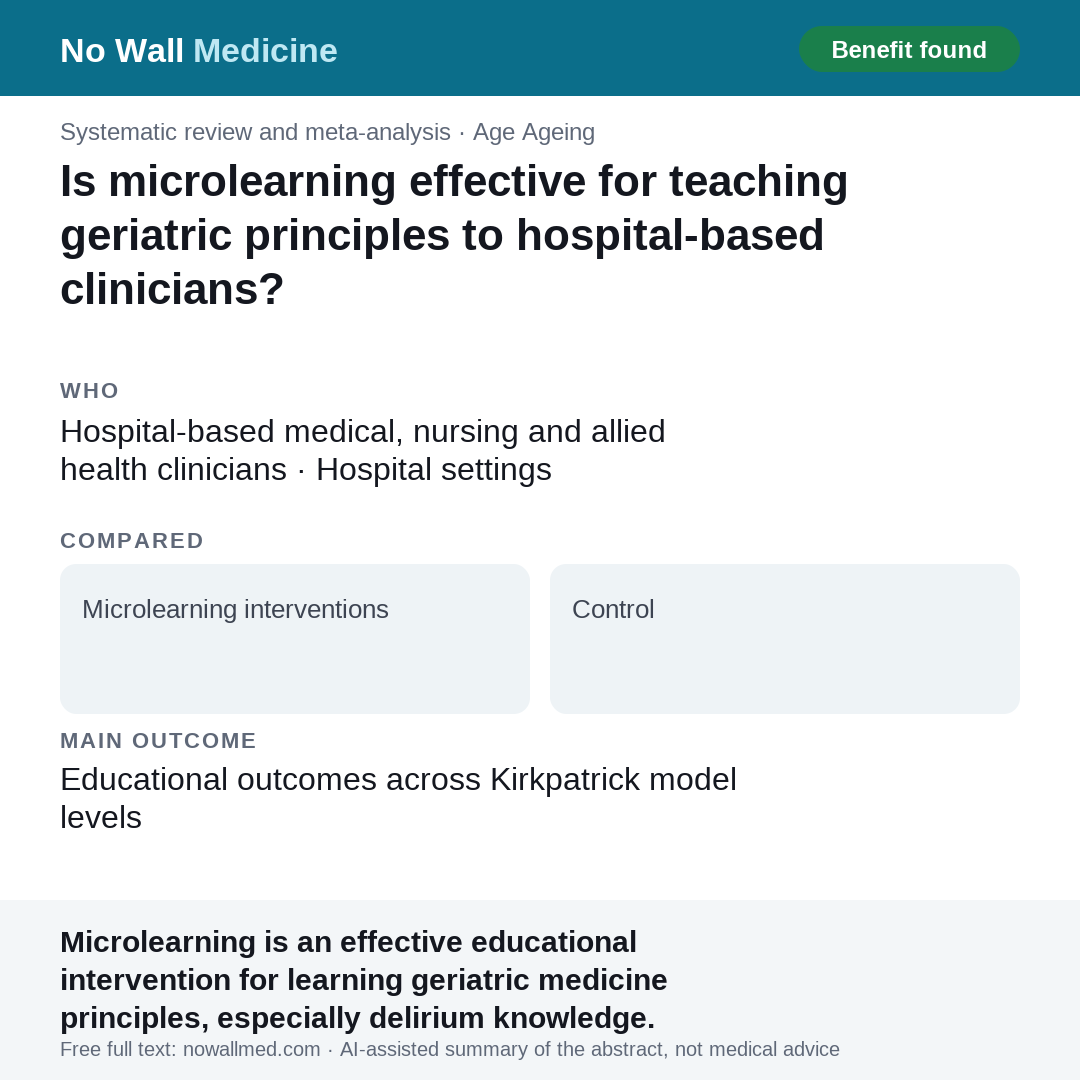
Clinical question: Is microlearning effective for teaching geriatric principles to hospital-based clinicians?
Why it matters: Hospital-based education in geriatric medicine is often limited in availability and accessibility
Key points
- 15 studies of microlearning for hospital clinicians were reviewed.
- 90% of educational outcomes showed positive results, with 30% statistically significant.
- Delirium knowledge improved significantly with microlearning, SMD 0.80.
Limitation the authors note: Most included studies were pre-post implementation studies, which may have limitations in establishing causality
Headline and key points written with AI from the paper’s abstract, with every number checked against it. Read the paper before relying on them.
Topics
Spotted a mistake? Suggest a correction