Mifepristone administration was associated with improved insulin sensitivity in adipose and liver tissue
Mifepristone Improves Adipose Tissue Insulin Sensitivity in Insulin Resistant Individuals
Randomized, double-blinded, placebo-controlled, crossover studyBenefit found
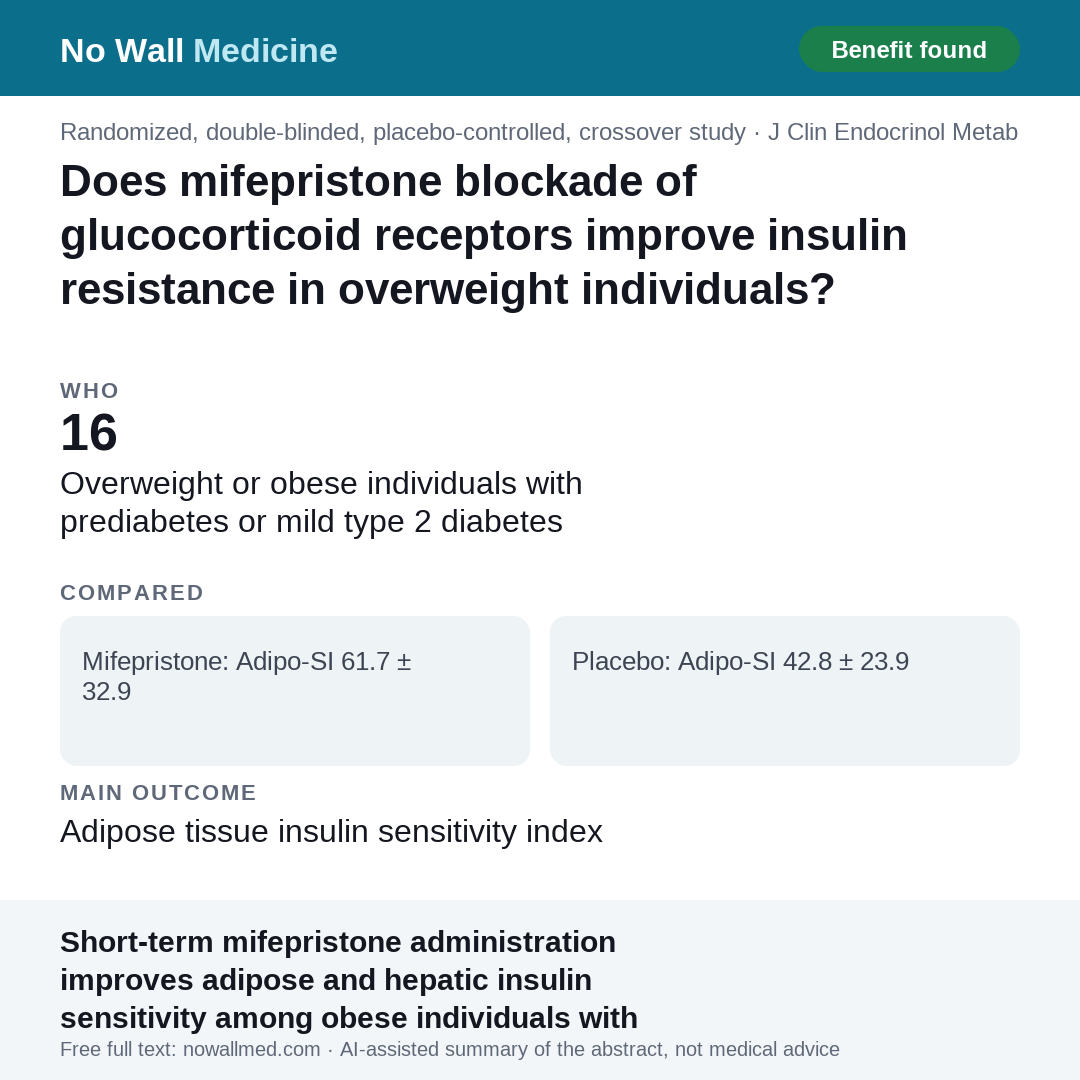
Does mifepristone blockade of glucocorticoid receptors improve insulin resistance in overweight individuals?
Who
16
Overweight or obese individuals with prediabetes or mild type 2 diabetes
Compared
Mifepristone: Adipo-SI 61.7 ± 32.9
Placebo: Adipo-SI 42.8 ± 23.9
Main outcome
Adipose tissue insulin sensitivity index
Bottom line: Short-term mifepristone administration improves adipose and hepatic insulin sensitivity among obese individuals with hyperglycemia.
J Clin Endocrinol Metab · 2021-01-29Download image
Clinical question: Does mifepristone blockade of glucocorticoid receptors improve insulin resistance in overweight individuals?
Why it matters: It was unknown if blocking glucocorticoid receptors, the proteins that bind cortisol, could improve insulin resistance in people with obesity and glucose intolerance.
Key points
- The study involved 16 overweight or obese individuals with prediabetes or mild type 2 diabetes who received either mifepristone or a placebo.
- Mifepristone administration was associated with an increase in adipose tissue insulin sensitivity index (61.7 ± 32.9 vs 42.8 ± 23.9; P = 0.002) and a decrease in adipose tissue insulin resistance (49.9 ± 45.9 vs 65.5 ± 43.8; P = 0.004).
- Mifepristone did not alter whole-body glucose disposal indices, including the insulin sensitivity index, Matsuda index, or oral glucose insulin sensitivity index.
Headline and key points written with AI from the paper’s abstract, with every number checked against it. Read the paper before relying on them.
Was this summary helpful?
Subject terms
Cite this article
Gubbi S, Muniyappa R, Sharma ST, Grewal S, McGlotten R, Nieman LK. Mifepristone Improves Adipose Tissue Insulin Sensitivity in Insulin Resistant Individuals. J Clin Endocrinol Metab. 2021. doi:10.1210/clinem/dgab046
Spotted a mistake? Suggest a correction
Top studies every Monday
The week’s key trials and guidelines in your specialties, plus any topics you follow. By email, free.
Get the weekly digest