Mirikizumab treatment was associated with changes in genes linked to ulcerative colitis activity and drug resistance
Mirikizumab Regulates Genes Involved in Ulcerative Colitis Disease Activity and Anti-TNF Resistance: Results From a Phase 2 Study
Phase 2 randomized clinical trialBenefit found
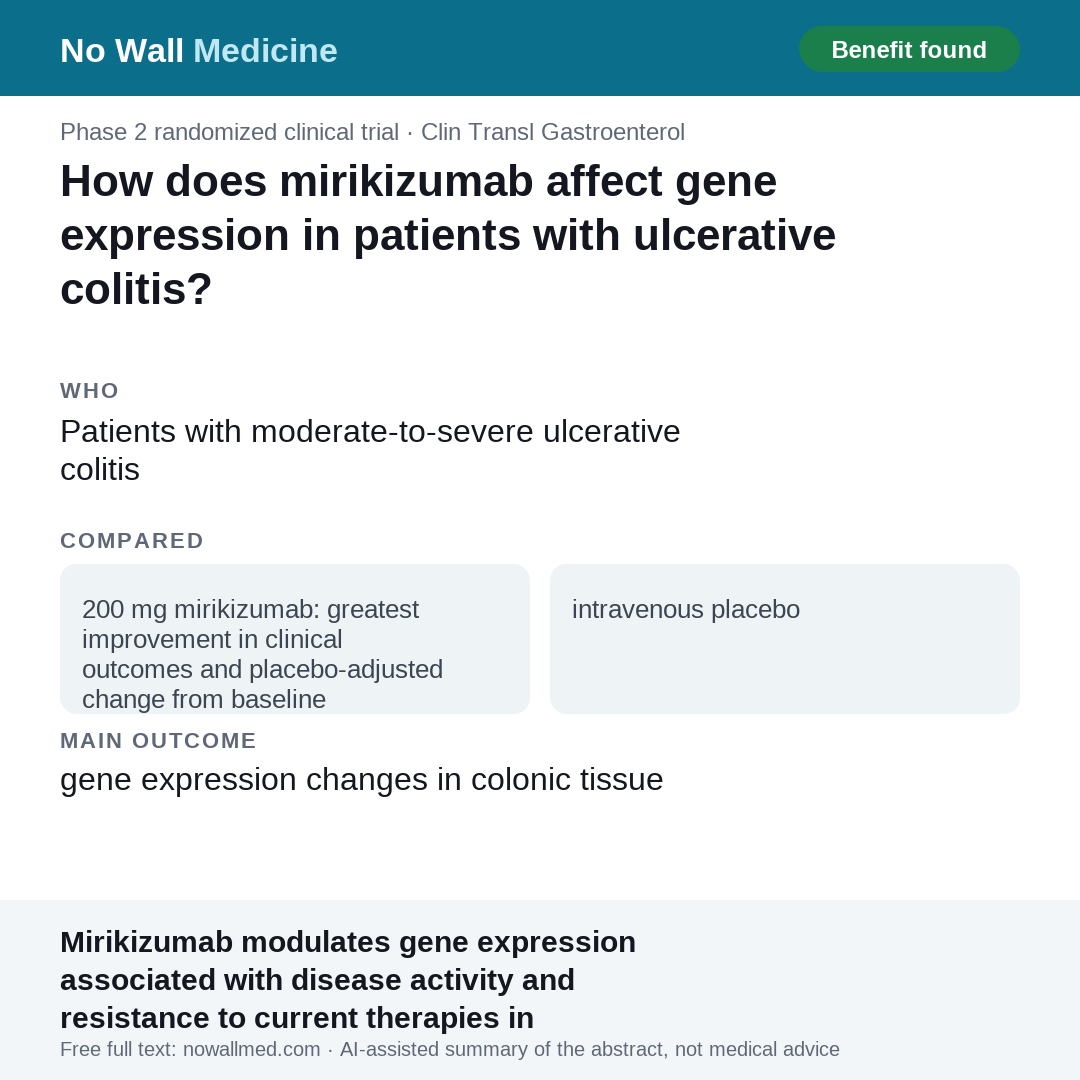
How does mirikizumab affect gene expression in patients with ulcerative colitis?
Who
Patients with moderate-to-severe ulcerative colitis
Compared
200 mg mirikizumab: greatest improvement in clinical outcomes and placebo-adjusted change from baseline
intravenous placebo
Main outcome
gene expression changes in colonic tissue
Bottom line: Mirikizumab modulates gene expression associated with disease activity and resistance to current therapies in ulcerative colitis.
Clin Transl Gastroenterol · 2023-07-01Download image
Clinical question: How does mirikizumab affect gene expression in patients with ulcerative colitis?
Why it matters: It was unknown how targeting the p19 subunit of interleukin-23 affects gene expression in the colonic tissue of patients with ulcerative colitis.
Key points
- Patients with moderate-to-severe ulcerative colitis were randomized to receive either an intravenous placebo or 3 doses of mirikizumab, a monoclonal antibody targeting interleukin-23.
- Mirikizumab treatment was associated with changes in transcripts like MMP1, MMP3, S100A8, and IL1β, which correlate with disease activity scores.
- Changes in transcripts associated with resistance to tumor necrosis factor and Janus kinase inhibitors were affected by mirikizumab treatment.
Headline and key points written with AI from the paper’s abstract, with every number checked against it. Read the paper before relying on them.
Was this summary helpful?
Subject terms
Cite this article
Steere B, Schmitz J, Powell N, Higgs R, Gottlieb K, Liu Y. Mirikizumab Regulates Genes Involved in Ulcerative Colitis Disease Activity and Anti-TNF Resistance: Results From a Phase 2 Study. Clin Transl Gastroenterol. 2023. doi:10.14309/ctg.0000000000000578
Spotted a mistake? Suggest a correction
Top studies every Monday
The week’s key trials and guidelines in your specialties, plus any topics you follow. By email, free.
Get the weekly digest