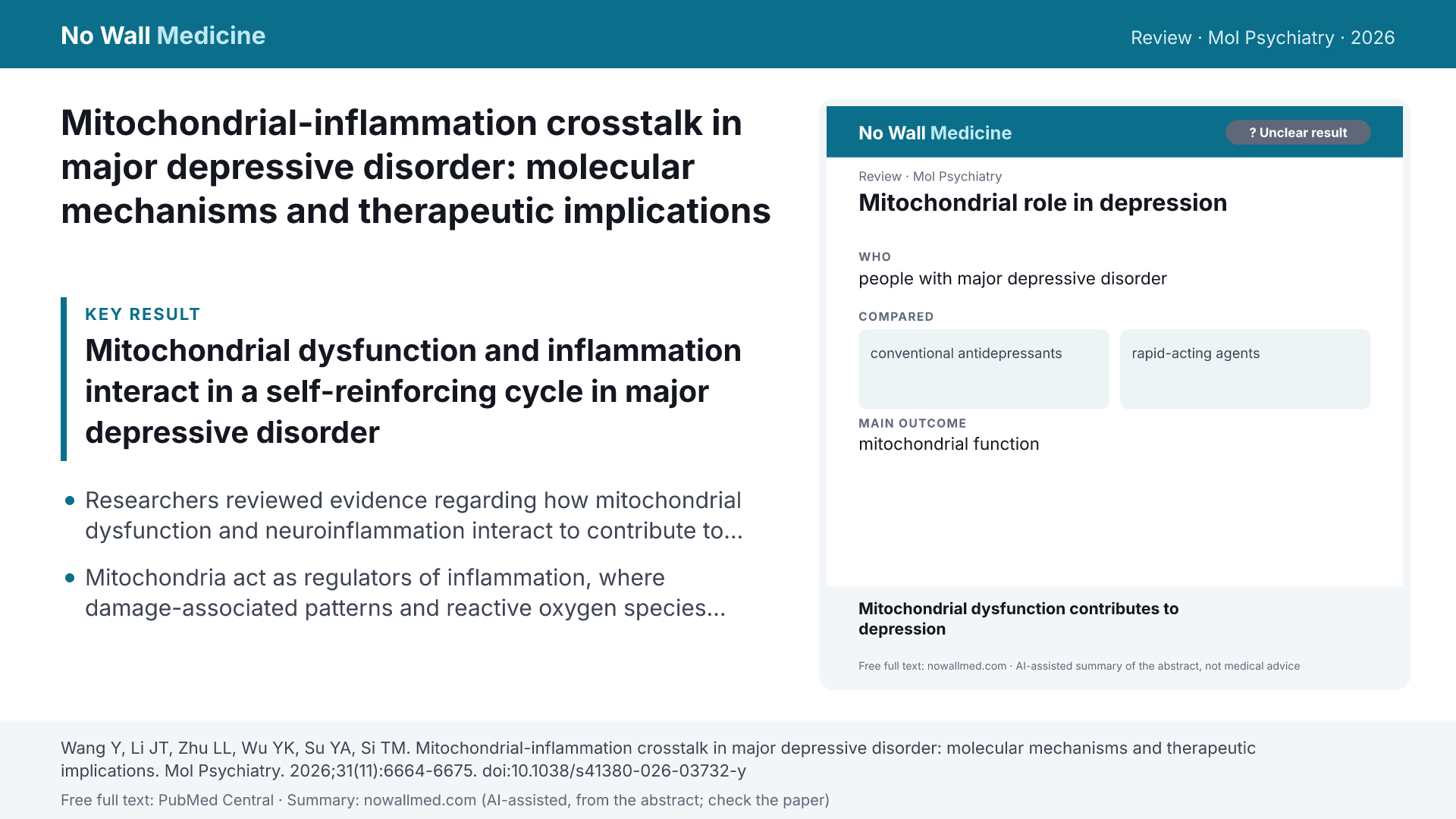
Mitochondrial dysfunction and inflammation interact in a self-reinforcing cycle in major depressive disorder
Mitochondrial-inflammation crosstalk in major depressive disorder: molecular mechanisms and therapeutic implications
ReviewUnclear result
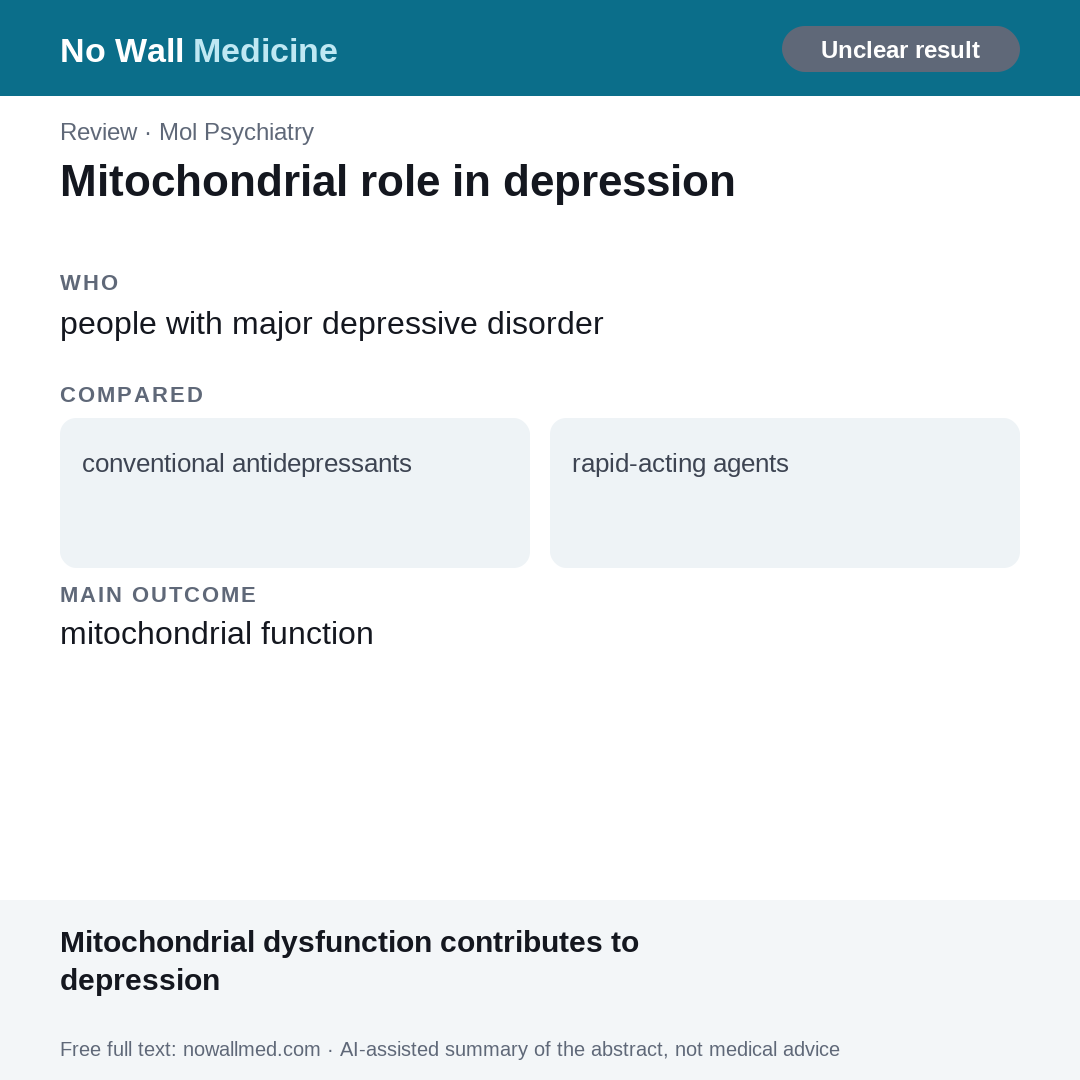
Mitochondrial role in depression
Who
people with major depressive disorder
Compared
conventional antidepressants
rapid-acting agents
Main outcome
mitochondrial function
Bottom line: Mitochondrial dysfunction contributes to depression
Mol Psychiatry · 2026-07-03Download image
Why it matters: The precise biological mechanisms underlying major depressive disorder remain incompletely understood despite its high prevalence.
Key points
- Researchers reviewed evidence regarding how mitochondrial dysfunction and neuroinflammation interact to contribute to the onset and progression of major depressive disorder.
- Mitochondria act as regulators of inflammation, where damage-associated patterns and reactive oxygen species activate immune signaling, while inflammation further compromises mitochondrial integrity.
- Conventional antidepressants gradually restore mitochondrial function, whereas rapid-acting agents like ketamine induce acute metabolic reprogramming and mitophagy to enable functional recovery.
Headline and key points written with AI from the paper’s abstract, with every number checked against it. Read the paper before relying on them.
Was this summary helpful?
Subject terms
Cite this article
Wang Y, Li JT, Zhu LL, Wu YK, Su YA, Si TM. Mitochondrial-inflammation crosstalk in major depressive disorder: molecular mechanisms and therapeutic implications. Mol Psychiatry. 2026. doi:10.1038/s41380-026-03732-y
Spotted a mistake? Suggest a correction