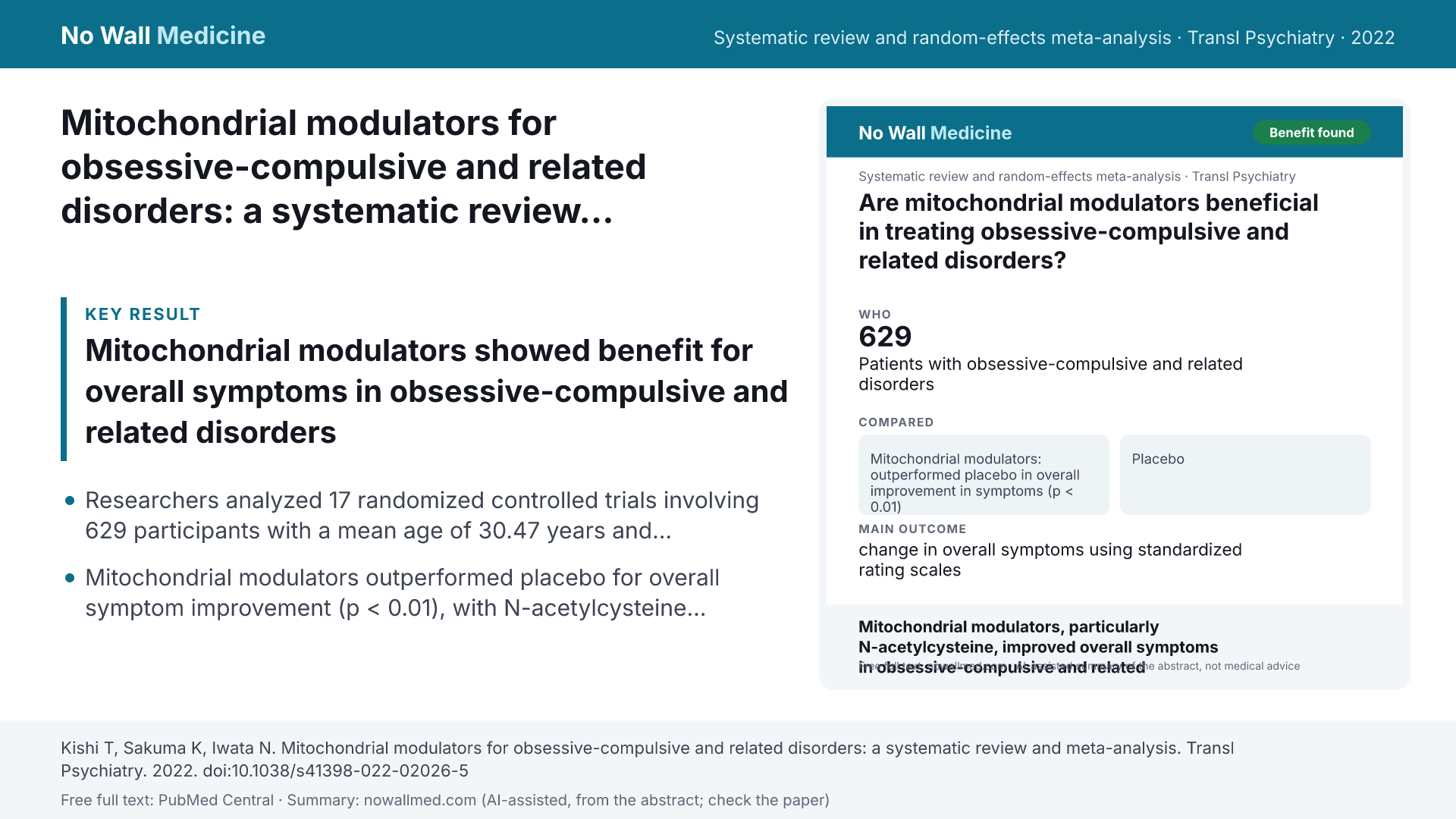
Mitochondrial modulators for obsessive-compulsive and related disorders: a systematic review and meta-analysis
Key result: Mitochondrial modulators showed benefit for overall symptoms in obsessive-compulsive and related disorders
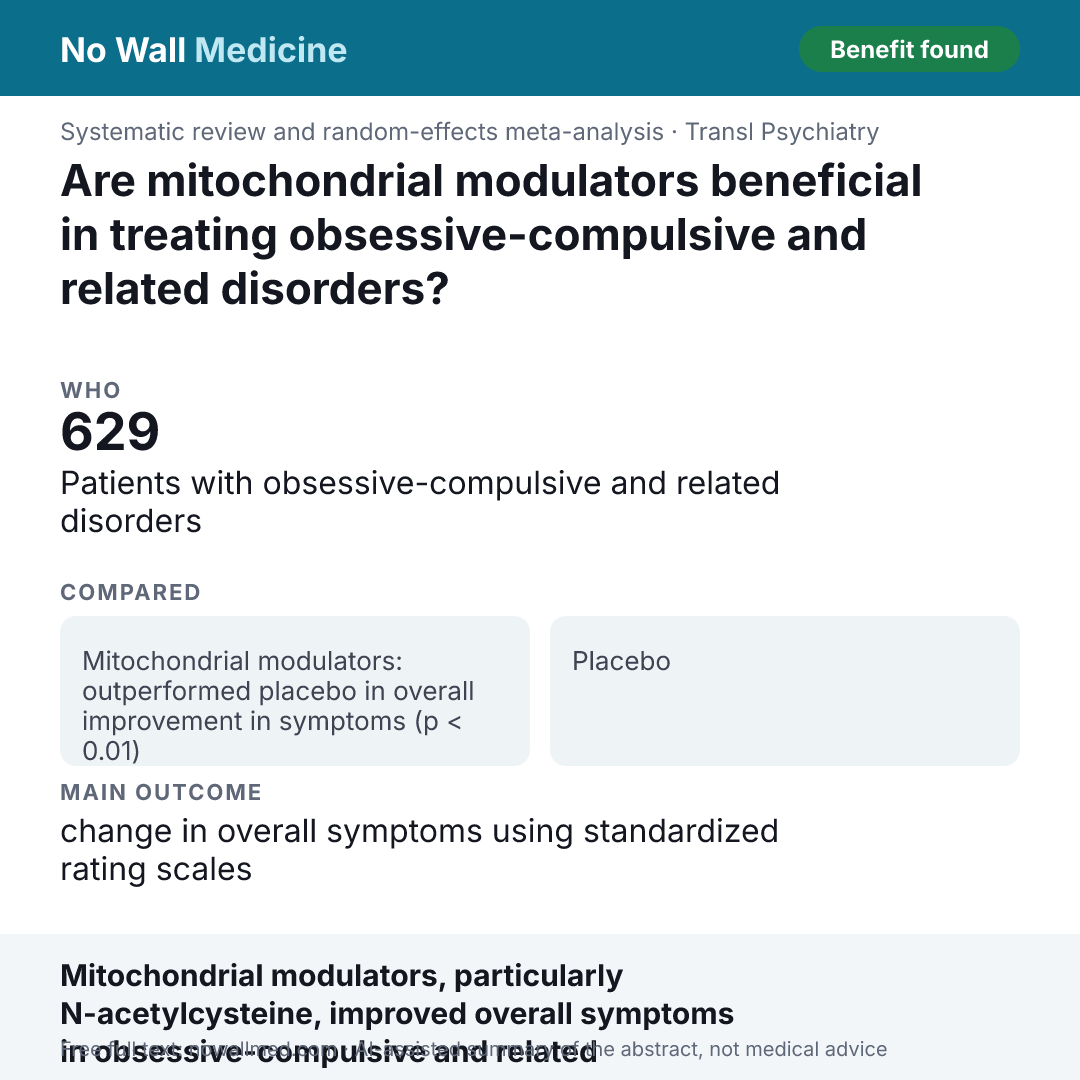
Systematic review and random-effects meta-analysisBenefit found
Are mitochondrial modulators beneficial in treating obsessive-compulsive and related disorders?
Who
629
Patients with obsessive-compulsive and related disorders
Compared
Mitochondrial modulators: outperformed placebo in overall improvement in symptoms (p < 0.01)
Placebo
Main outcome
change in overall symptoms using standardized rating scales
Bottom line: Mitochondrial modulators, particularly N-acetylcysteine, improved overall symptoms in obsessive-compulsive and related disorders.
Limitation: further study with larger samples is necessary to confirm this finding
Transl Psychiatry · 2022-06-28 · Save PNG
Key points
- Researchers analyzed 17 randomized controlled trials involving 629 participants with a mean age of 30.47 years and 72.62% female.
- Mitochondrial modulators outperformed placebo for overall symptom improvement (p < 0.01), with N-acetylcysteine and lithium showing specific benefits (p < 0.01 and p = 0.04 respectively).
- No mitochondrial modulators outperformed placebo for improving depression-related scores, disability scores, or treatment response rates.
Discussion prompts
- Would these patients look like yours? Who was left out?
- Is the main outcome one that matters to patients?
- Is the difference large enough to change what you do?
Cite: Kishi T, Sakuma K, Iwata N. Mitochondrial modulators for obsessive-compulsive and related disorders: a systematic review and meta-analysis. Transl Psychiatry. 2022. doi:10.1038/s41398-022-02026-5
Free full text: PubMed Central · Summary and visual abstract: nowallmed.com/a/mitochondrial-modulators-for-obsessive-compulsive-and-related-1ucdbar/ (AI-assisted from the abstract; check the paper before relying on it).