Paramedic breathlessness intervention trial shows feasibility but fails to meet patient recruitment targets
Mixed-methods feasibility cluster randomised controlled trial of a paramedic-administered breathlessness management intervention for acute-on-chronic breathlessness (BREATHE): study findings
Mixed-methods, feasibility cluster randomised controlled trialMixed results
Is a paramedic-administered breathlessness intervention feasible for acute-on-chronic breathlessness?
Who
13
Paramedics and patients with acute-on-chronic breathlessness
Compared
Intervention plus usual care
Usual care
Main outcome
Breathlessness intensity and conveyance to hospital
Bottom line: The intervention was acceptable and delivered with fidelity, but patient recruitment targets were not met during the pandemic.
ERJ Open Res · 2022-11-21Download image
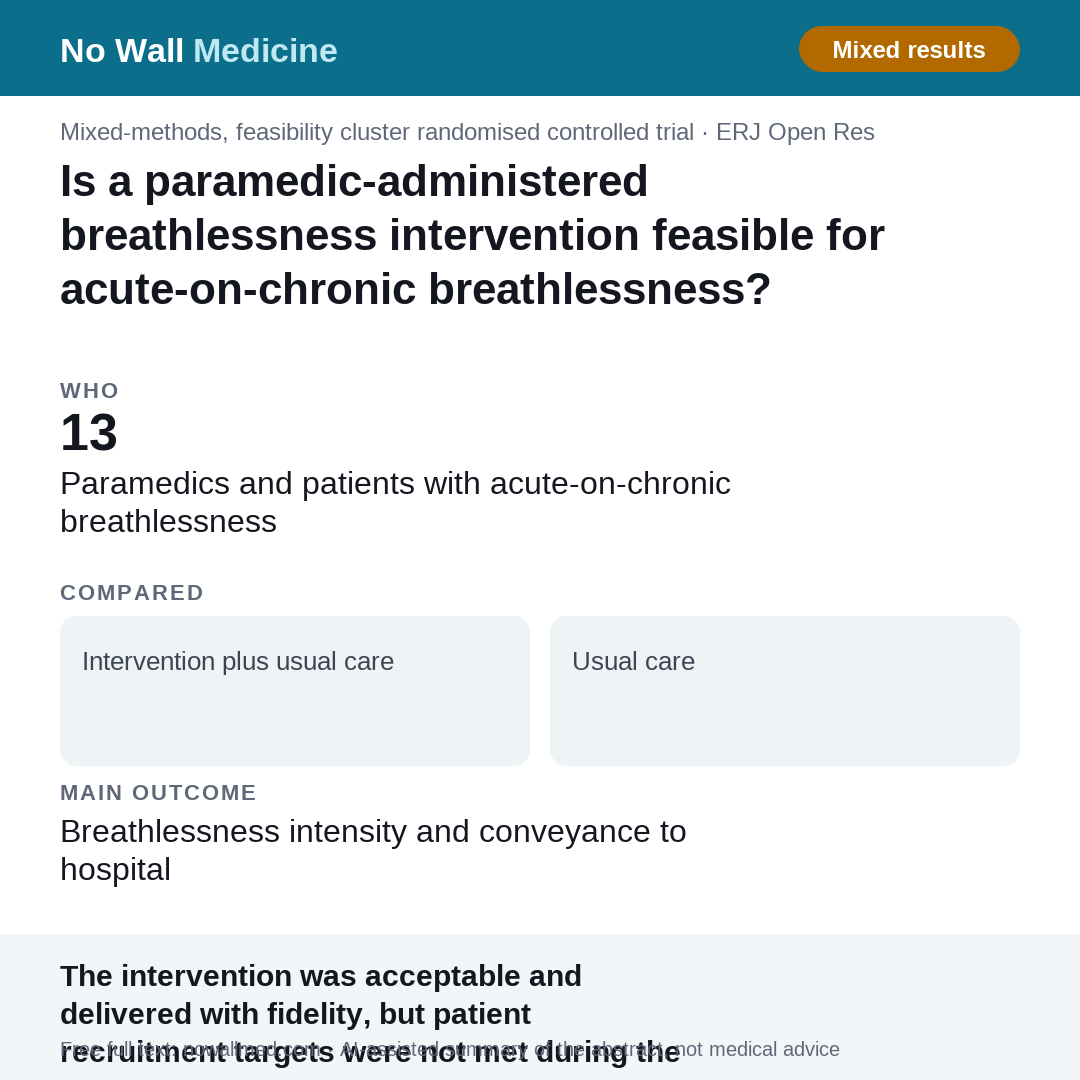
Clinical question: Is a paramedic-administered breathlessness intervention feasible for acute-on-chronic breathlessness?
Why it matters: It was unknown if a paramedic-administered, non-pharmacological intervention for acute-on-chronic breathlessness could be feasibly implemented and evaluated in a larger trial.
Key points
- Researchers conducted a feasibility cluster randomized controlled trial involving 29 paramedics to test a non-drug breathlessness management intervention.
- The study enrolled 13 patients, which did not meet the recruitment target of 36 patients.
- The intervention was delivered with fidelity and was acceptable to patients, carers, and paramedics without extending call-out time.
Limitation the authors note: Recruitment was conducted during the COVID-19 pandemic, resulting in high paramedic demands and fewer eligible patient call-outs.
Headline and key points written with AI from the paper’s abstract, with every number checked against it. Read the paper before relying on them.
Was this summary helpful?
Cite this article
Hutchinson A, Allgar V, Cohen J, Currow DC, Griffin S, Hart S. Mixed-methods feasibility cluster randomised controlled trial of a paramedic-administered breathlessness management intervention for acute-on-chronic breathlessness (BREATHE): study findings. ERJ Open Res. 2022. doi:10.1183/23120541.00257-2022
Spotted a mistake? Suggest a correction
Top studies every Monday
The week’s key trials and guidelines in your specialties, plus any topics you follow. By email, free.
Get the weekly digest