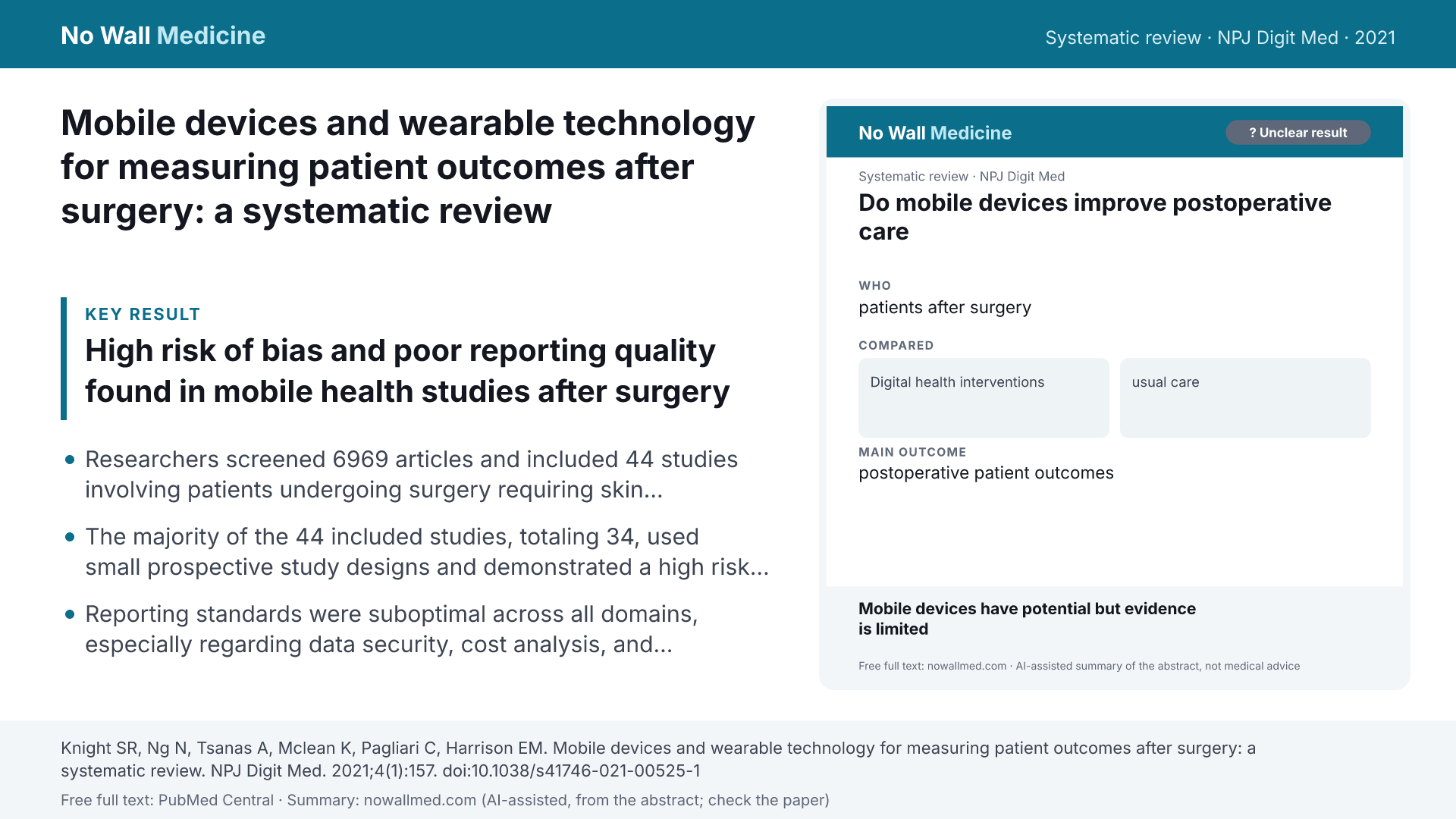
Mobile devices and wearable technology for measuring patient outcomes after surgery: a systematic review
Key result: High risk of bias and poor reporting quality found in mobile health studies after surgery
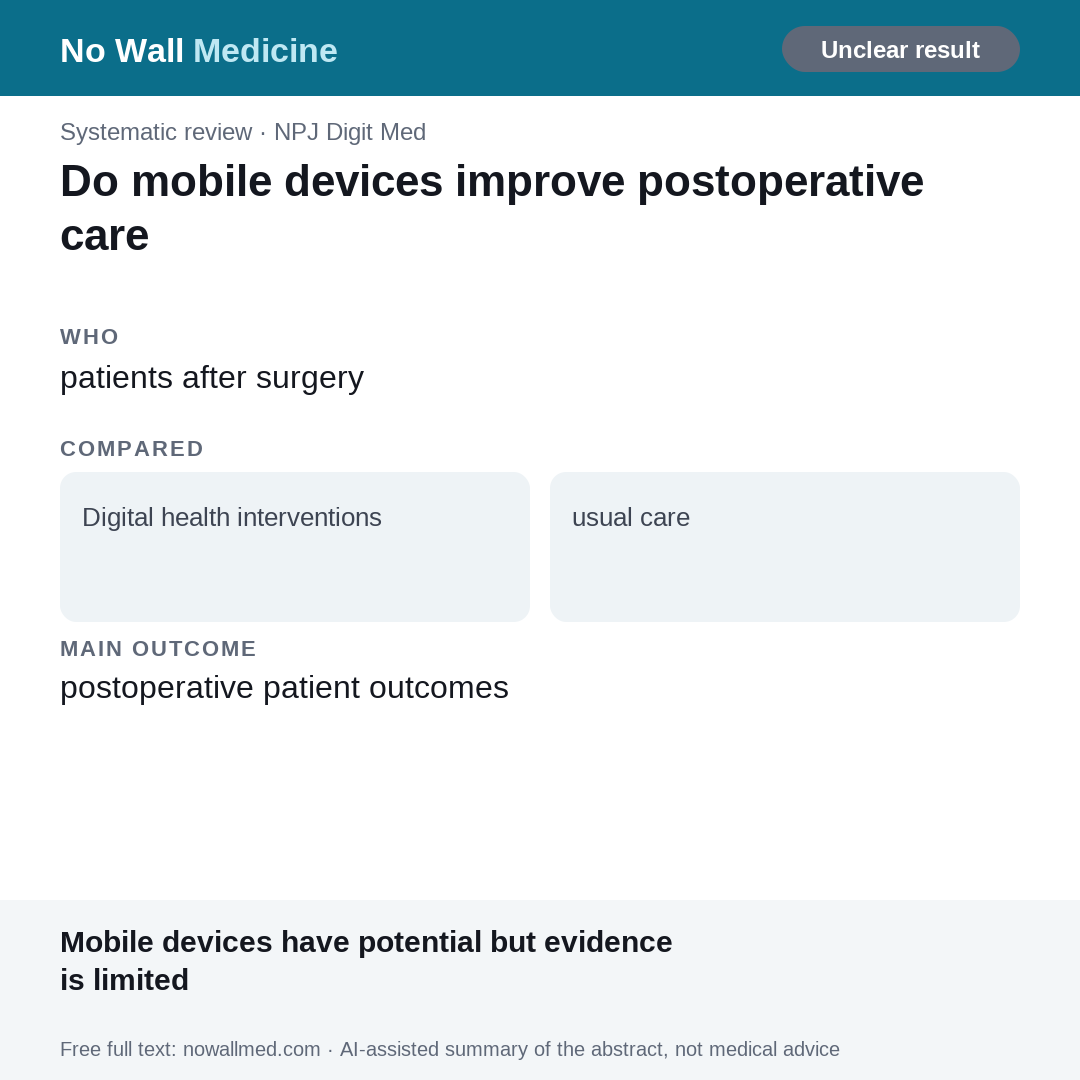
Systematic reviewUnclear result
Do mobile devices improve postoperative care
Who
patients after surgery
Compared
Digital health interventions
usual care
Main outcome
postoperative patient outcomes
Bottom line: Mobile devices have potential but evidence is limited
Limitation: suboptimal reporting standards
NPJ Digit Med · 2021-11-12Download image
Key points
- Researchers screened 6969 articles and included 44 studies involving patients undergoing surgery requiring skin incision and using digital health tools after hospital discharge.
- The majority of the 44 included studies, totaling 34, used small prospective study designs and demonstrated a high risk of bias.
- Reporting standards were suboptimal across all domains, especially regarding data security, cost analysis, and how patients were engaged prior to the studies.
Limitation the authors note: The majority of included studies were small prospective designs with a high risk of bias and suboptimal reporting standards.
Discussion prompts
- Would these patients look like yours? Who was left out?
- Is the main outcome one that matters to patients?
- Is the difference large enough to change what you do?
Cite: Knight SR, Ng N, Tsanas A, Mclean K, Pagliari C, Harrison EM. Mobile devices and wearable technology for measuring patient outcomes after surgery: a systematic review. NPJ Digit Med. 2021. doi:10.1038/s41746-021-00525-1
Free full text: PubMed Central · Summary and visual abstract: nowallmed.com/a/mobile-devices-and-wearable-technology-for-measuring-patient-outcomes-7129mt/ (AI-assisted from the abstract; check the paper before relying on it).