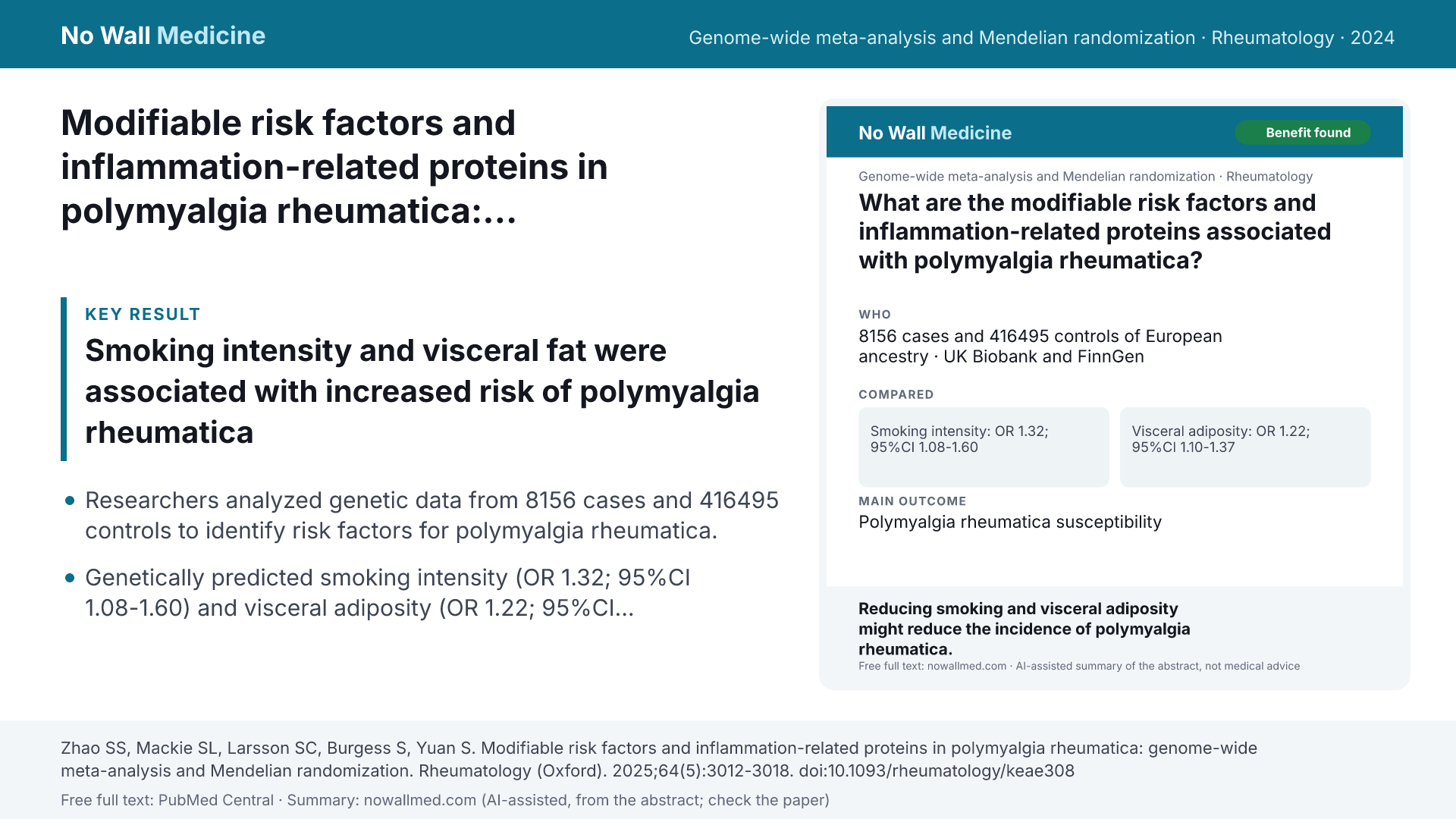
Smoking intensity and visceral fat were associated with increased risk of polymyalgia rheumatica
Modifiable risk factors and inflammation-related proteins in polymyalgia rheumatica: genome-wide meta-analysis and Mendelian randomization
Genome-wide meta-analysis and Mendelian randomizationBenefit found
What are the modifiable risk factors and inflammation-related proteins associated with polymyalgia rheumatica?
Who
8156 cases and 416495 controls of European ancestry · UK Biobank and FinnGen
Compared
Smoking intensity: OR 1.32; 95%CI 1.08-1.60
Visceral adiposity: OR 1.22; 95%CI 1.10-1.37
Main outcome
Polymyalgia rheumatica susceptibility
Bottom line: Reducing smoking and visceral adiposity might reduce the incidence of polymyalgia rheumatica.
Rheumatology · 2024-05-25Download image
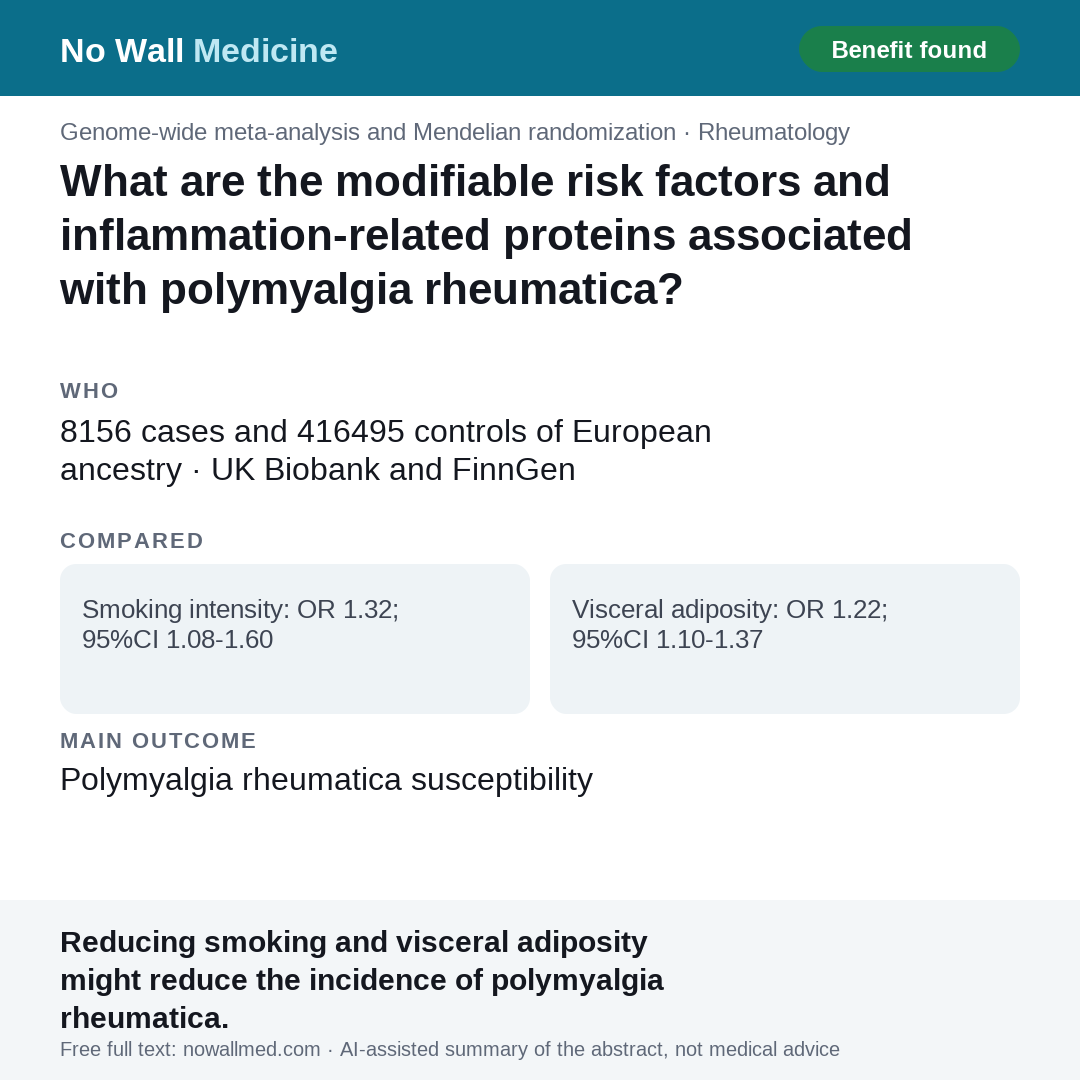
Clinical question: What are the modifiable risk factors and inflammation-related proteins associated with polymyalgia rheumatica?
Why it matters: The cause of polymyalgia rheumatica, an age-related inflammatory disease, is currently unknown.
Key points
- Researchers analyzed genetic data from 8156 cases and 416495 controls to identify risk factors for polymyalgia rheumatica.
- Genetically predicted smoking intensity (OR 1.32; 95%CI 1.08-1.60) and visceral adiposity (OR 1.22; 95%CI 1.10-1.37) were associated with disease susceptibility.
- Several proteins related to interleukin-1 signaling, including IL-36 receptor (OR 1.25), serum amyloid A2 (OR 1.06), and CXCL6 (OR 1.09), were associated with the condition.
Headline and key points written with AI from the paper’s abstract, with every number checked against it. Read the paper before relying on them.
Was this summary helpful?
Subject terms
Headline, design, result, key points, caveat and citation as plain text.
Cite this article
Zhao SS, Mackie SL, Larsson SC, Burgess S, Yuan S. Modifiable risk factors and inflammation-related proteins in polymyalgia rheumatica: genome-wide meta-analysis and Mendelian randomization. Rheumatology. 2024. doi:10.1093/rheumatology/keae308
Spotted a mistake? Suggest a correction