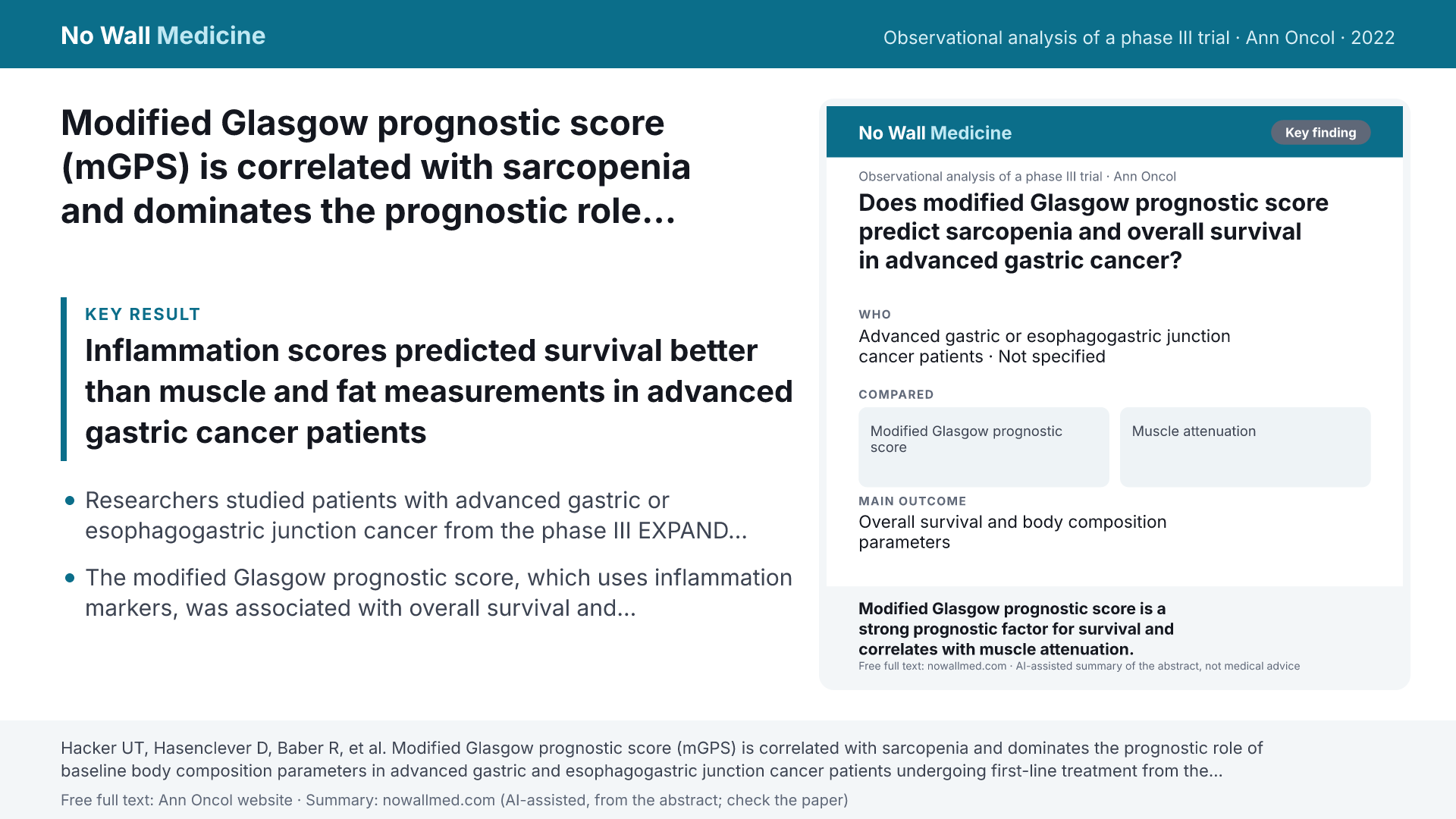
Inflammation scores predicted survival better than muscle and fat measurements in advanced gastric cancer patients
Modified Glasgow prognostic score (mGPS) is correlated with sarcopenia and dominates the prognostic role of baseline body composition parameters in advanced gastric and esophagogastric junction cancer patients undergoing first-line treatment from the phase III EXPAND trial
Observational analysis of a phase III trialBenefit found
Does modified Glasgow prognostic score predict sarcopenia and overall survival in advanced gastric cancer?
Who
Advanced gastric or esophagogastric junction cancer patients · Not specified
Compared
Modified Glasgow prognostic score
Muscle attenuation
Main outcome
Overall survival and body composition parameters
Bottom line: Modified Glasgow prognostic score is a strong prognostic factor for survival and correlates with muscle attenuation.
Ann Oncol · 2022-04-05Download image
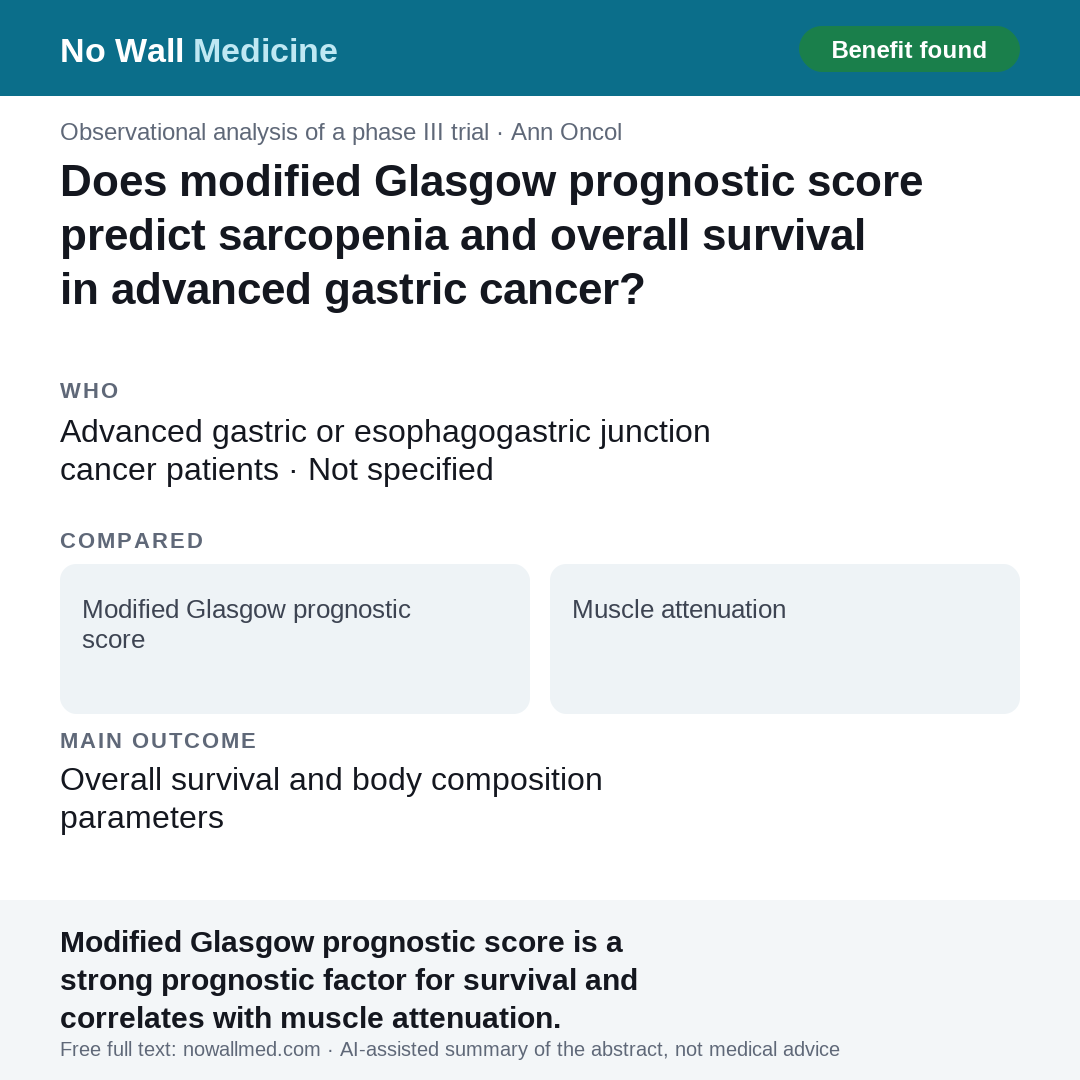
Clinical question: Does modified Glasgow prognostic score predict sarcopenia and overall survival in advanced gastric cancer?
Why it matters: It is unclear whether muscle loss or the underlying inflammatory response is the primary factor linked to survival in patients with advanced gastric cancer.
Key points
- Researchers studied patients with advanced gastric or esophagogastric junction cancer from the phase III EXPAND trial undergoing first-line chemotherapy.
- The modified Glasgow prognostic score, which uses inflammation markers, was associated with overall survival and correlated with baseline muscle attenuation (P < 0.0001).
- A decline in muscle or fat parameters during 12 weeks of treatment was not prognostic for overall survival.
Headline and key points written with AI from the paper’s abstract, with every number checked against it. Read the paper before relying on them.
Was this summary helpful?
Subject terms
Cite this article
Hacker UT, Hasenclever D, Baber R, et al. Modified Glasgow prognostic score (mGPS) is correlated with sarcopenia and dominates the prognostic role of baseline body composition parameters in advanced gastric and esophagogastric junction cancer patients undergoing first-line treatment from the phase III EXPAND trial. Ann Oncol. 2022. doi:10.1016/j.annonc.2022.03.274
Spotted a mistake? Suggest a correction