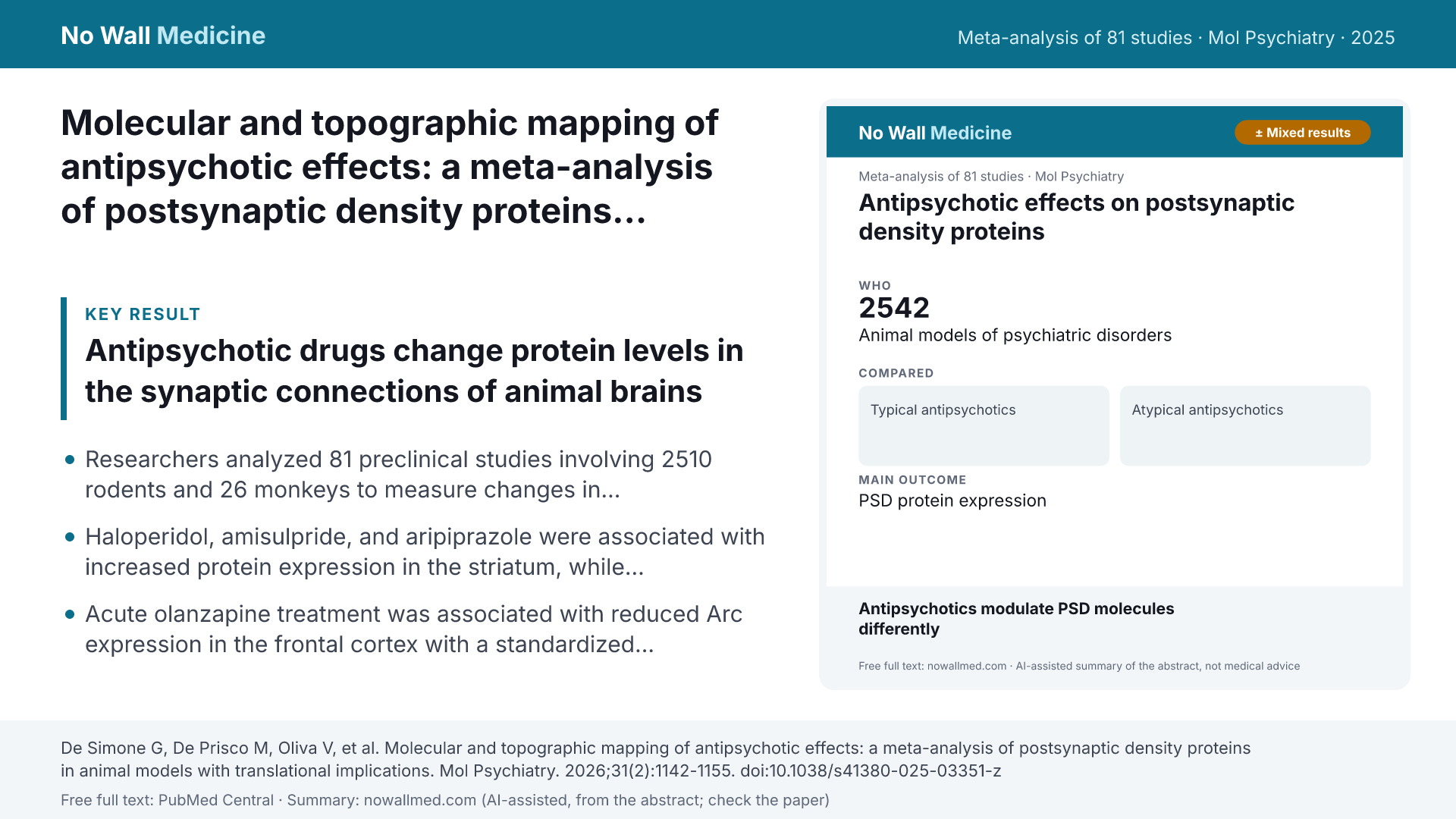
Antipsychotic drugs change protein levels in the synaptic connections of animal brains
Molecular and topographic mapping of antipsychotic effects: a meta-analysis of postsynaptic density proteins in animal models with translational implications
Meta-analysis of 81 studiesMixed results
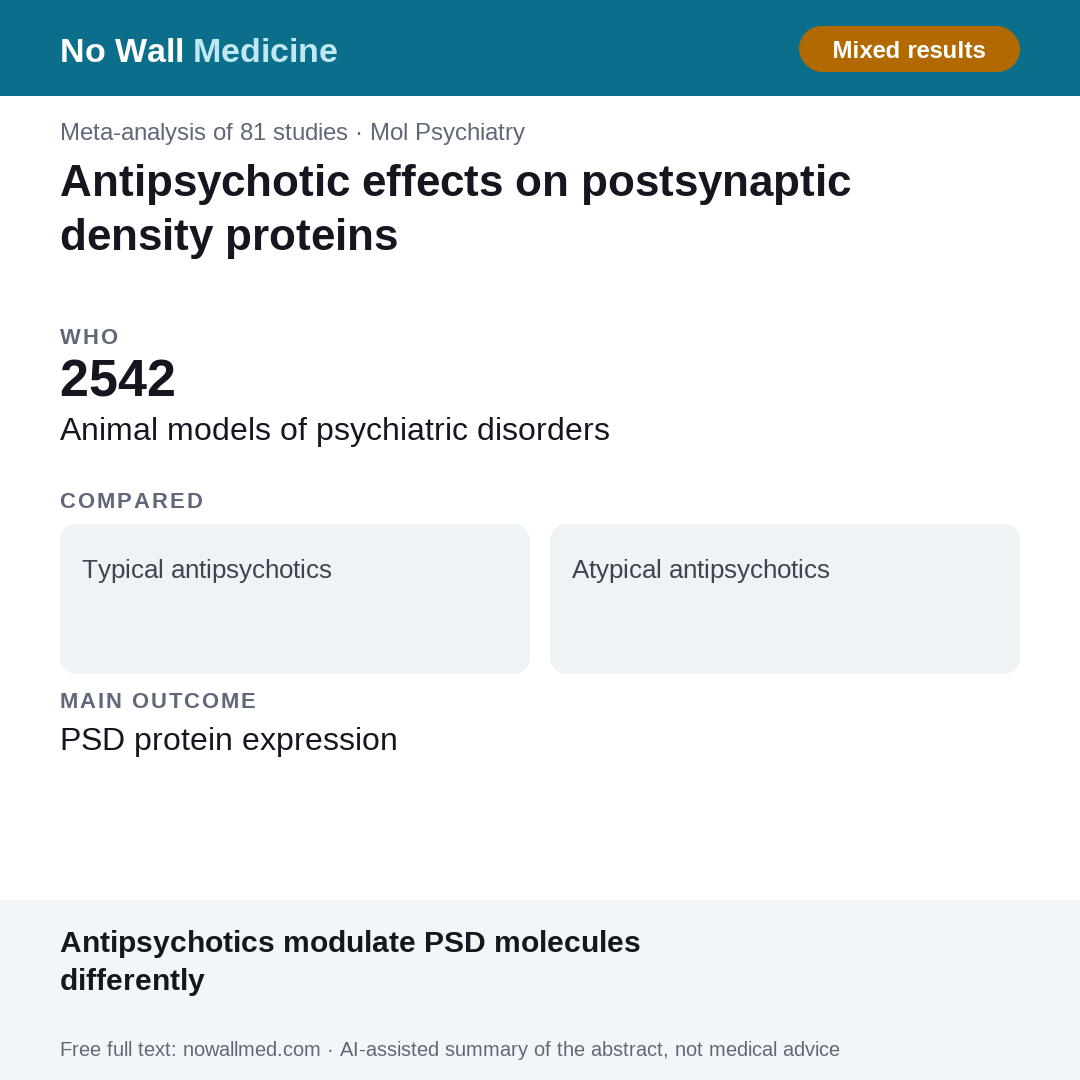
Antipsychotic effects on postsynaptic density proteins
Who
2542
Animal models of psychiatric disorders
Compared
Typical antipsychotics
Atypical antipsychotics
Main outcome
PSD protein expression
Bottom line: Antipsychotics modulate PSD molecules differently
Mol Psychiatry · 2025-11-19Download image
Why it matters: The synaptic mechanisms underlying how antipsychotic medications work remain unclear despite their primary target being dopamine receptors.
Key points
- Researchers analyzed 81 preclinical studies involving 2510 rodents and 26 monkeys to measure changes in postsynaptic density proteins, which are networks at brain synapses involved in neurotransmission.
- Haloperidol, amisulpride, and aripiprazole were associated with increased protein expression in the striatum, while clozapine increased Homer1a levels in the dorsal striatum, ventral striatum, and cingulate cortex.
- Acute olanzapine treatment was associated with reduced Arc expression in the frontal cortex with a standardized mean difference of -2.15 [95%CIs -2.7; -1.61], but chronic treatment showed opposite effects.
Headline and key points written with AI from the paper’s abstract, with every number checked against it. Read the paper before relying on them.
Was this summary helpful?
Subject terms
Cite this article
De Simone G, De Prisco M, Oliva V, et al. Molecular and topographic mapping of antipsychotic effects: a meta-analysis of postsynaptic density proteins in animal models with translational implications. Mol Psychiatry. 2025. doi:10.1038/s41380-025-03351-z
Spotted a mistake? Suggest a correction