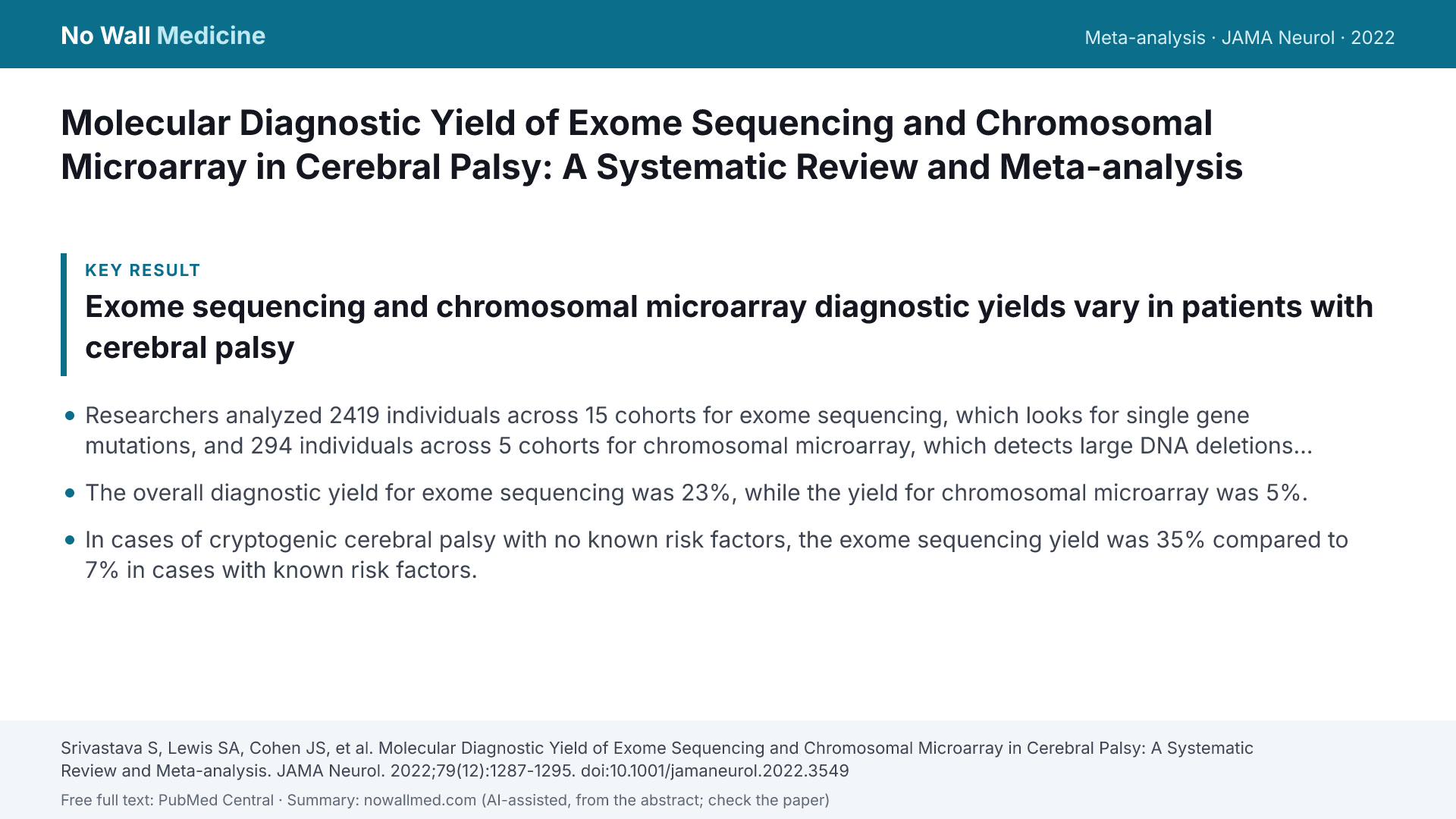
Molecular Diagnostic Yield of Exome Sequencing and Chromosomal Microarray in Cerebral Palsy: A Systematic Review and Meta-analysis
Key result: Exome sequencing and chromosomal microarray diagnostic yields vary in patients with cerebral palsy
Key points
- Researchers analyzed 2419 individuals across 15 cohorts for exome sequencing, which looks for single gene mutations, and 294 individuals across 5 cohorts for chromosomal microarray, which detects large DNA deletions or duplications.
- The overall diagnostic yield for exome sequencing was 23%, while the yield for chromosomal microarray was 5%.
- In cases of cryptogenic cerebral palsy with no known risk factors, the exome sequencing yield was 35% compared to 7% in cases with known risk factors.
Discussion prompts
- Would these patients look like yours? Who was left out?
- Is the main outcome one that matters to patients?
- Is the difference large enough to change what you do?
Cite: Srivastava S, Lewis SA, Cohen JS, et al. Molecular Diagnostic Yield of Exome Sequencing and Chromosomal Microarray in Cerebral Palsy: A Systematic Review and Meta-analysis. JAMA Neurol. 2022;79(12):1287-1295. doi:10.1001/jamaneurol.2022.3549
Free full text: PubMed Central · Summary and visual abstract: nowallmed.com/a/molecular-diagnostic-yield-of-exome-sequencing-and-chromosomal-q3udp6/ (AI-assisted from the abstract; check the paper before relying on it).