MAPK pathway mutations were associated with better outcomes for binimetinib in ovarian cancer patients
Molecular Results and Potential Biomarkers Identified from the Phase 3 MILO/ENGOT-ov11 Study of Binimetinib versus Physician Choice of Chemotherapy in Recurrent Low-Grade Serous Ovarian Cancer
Phase 3 randomized trial post hoc analysisBenefit found
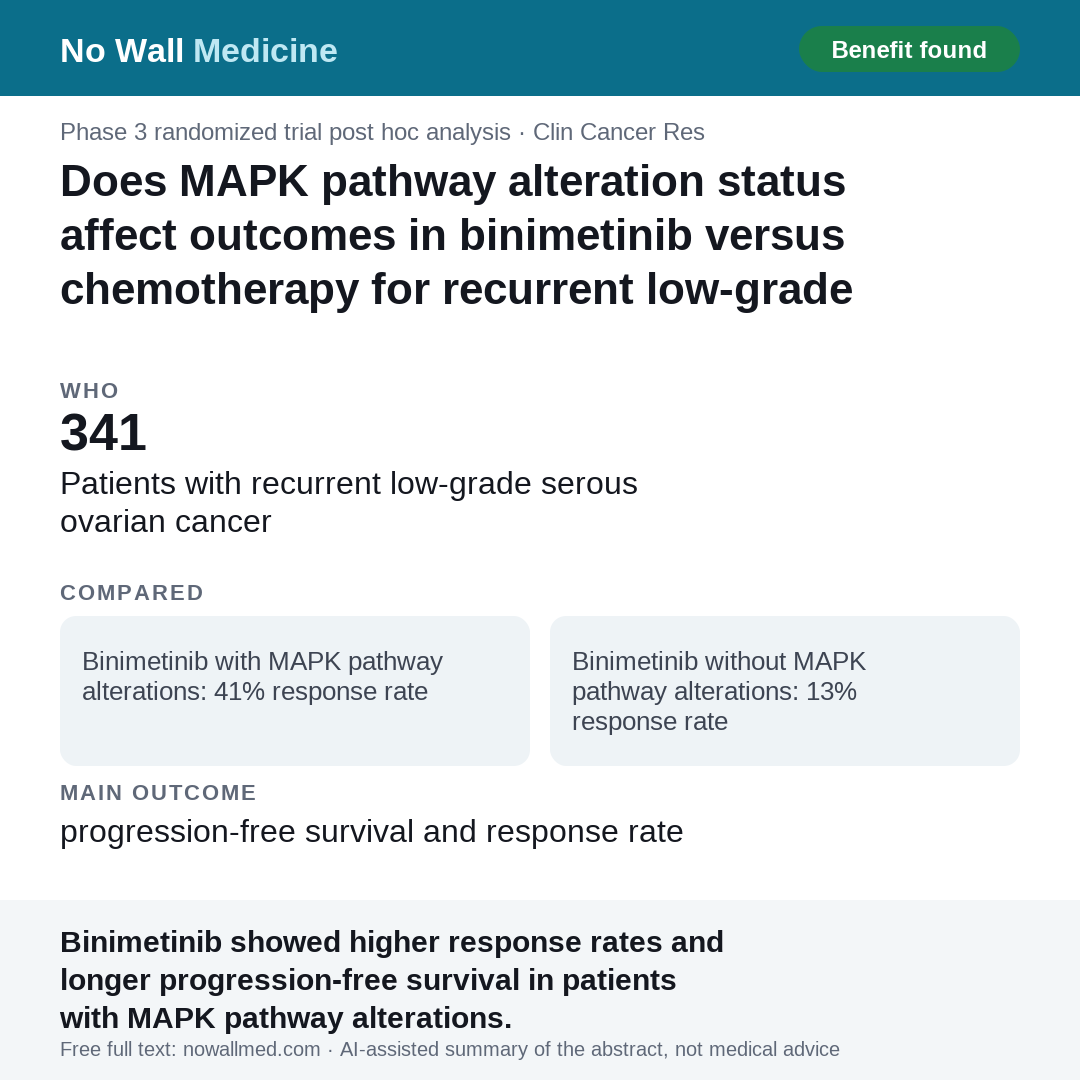
Does MAPK pathway alteration status affect outcomes in binimetinib versus chemotherapy for recurrent low-grade serous ovarian cancer?
Who
341
Patients with recurrent low-grade serous ovarian cancer
Compared
Binimetinib with MAPK pathway alterations: 41% response rate
Binimetinib without MAPK pathway alterations: 13% response rate
Main outcome
progression-free survival and response rate
Result: hazard ratio 0.5 (95% confidence interval 0.31-0.79)
Bottom line: Binimetinib showed higher response rates and longer progression-free survival in patients with MAPK pathway alterations.
Limitation: This hypothesis-generating analysis is limited by multiple testing.
Clin Cancer Res · 2023-08-15Download image
Clinical question: Does MAPK pathway alteration status affect outcomes in binimetinib versus chemotherapy for recurrent low-grade serous ovarian cancer?
Why it matters: It was unknown if specific genetic mutations in the MAPK signaling pathway could predict how patients with low-grade serous ovarian cancer respond to binimetinib.
Key points
- Researchers analyzed tissue from 341 patients with recurrent low-grade serous ovarian cancer randomized to receive binimetinib or physician's choice of chemotherapy.
- In patients receiving binimetinib, those with MAPK pathway alterations had a response rate of 41% compared to 13% in those without such alterations.
- Progression-free survival, the time until the disease worsens, was significantly longer in binimetinib patients with MAPK pathway alterations (HR, 0.5; 95% CI 0.31-0.79).
Limitation the authors note: This hypothesis-generating analysis is limited by multiple testing.
Headline and key points written with AI from the paper’s abstract, with every number checked against it. Read the paper before relying on them.
Was this summary helpful?
Subject terms
Cite this article
Grisham RN, Vergote I, Banerjee S, Drill E, Kalbacher E, Mirza MR. Molecular Results and Potential Biomarkers Identified from the Phase 3 MILO/ENGOT-ov11 Study of Binimetinib versus Physician Choice of Chemotherapy in Recurrent Low-Grade Serous Ovarian Cancer. Clin Cancer Res. 2023. doi:10.1158/1078-0432.CCR-23-0621
Spotted a mistake? Suggest a correction
Top studies every Monday
The week’s key trials and guidelines in your specialties, plus any topics you follow. By email, free.
Get the weekly digest