Mood, Activity Participation, and Leisure Engagement Satisfaction (MAPLES): results from a randomised controlled pilot feasibility trial for low mood in acquired brain injury
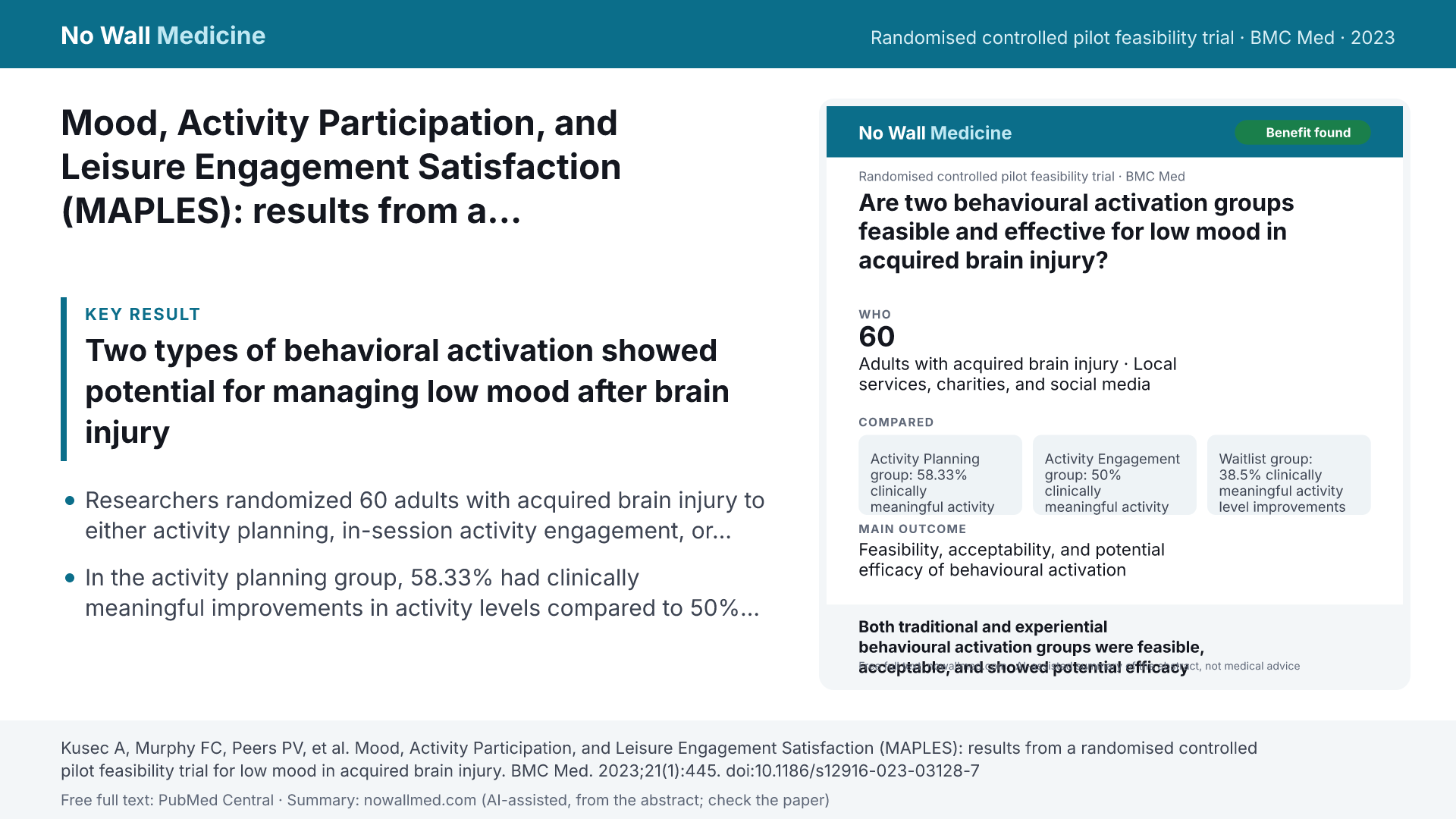
Key result: Two types of behavioral activation showed potential for managing low mood after brain injury
Randomised controlled pilot feasibility trialBenefit found
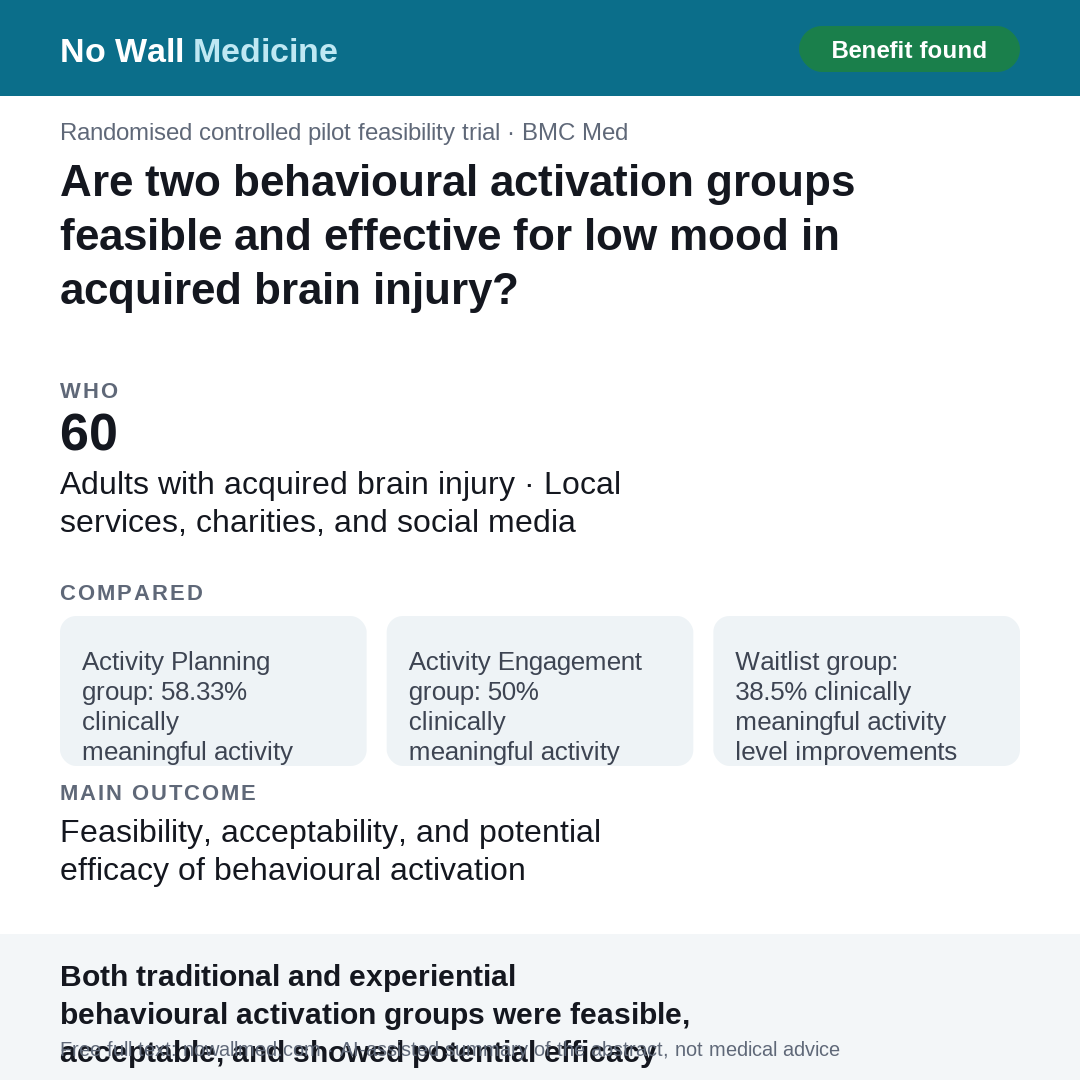
Are two behavioural activation groups feasible and effective for low mood in acquired brain injury?
Who
60
Adults with acquired brain injury · Local services, charities, and social media
Compared
Activity Planning group: 58.33% clinically meaningful activity level improvements
Activity Engagement group: 50% clinically meaningful activity level improvements
Waitlist group: 38.5% clinically meaningful activity level improvements
Main outcome
Feasibility, acceptability, and potential efficacy of behavioural activation
Bottom line: Both traditional and experiential behavioural activation groups were feasible, acceptable, and showed potential efficacy for acquired brain injury.
BMC Med · 2023-11-16Download image
Key points
- Researchers randomized 60 adults with acquired brain injury to either activity planning, in-session activity engagement, or a waitlist group.
- In the activity planning group, 58.33% had clinically meaningful improvements in activity levels compared to 50% in the engagement group and 38.5% in the waitlist group.
- Both behavioral activation groups showed depression reductions relative to the waitlist, but only the activity planning group showed anxiety reductions.
Why it matters: Existing therapies for depression following acquired brain injury, such as cognitive behavioral therapy, have shown mixed efficacy.
Discussion prompts
- Would these patients look like yours? Who was left out?
- Is the main outcome one that matters to patients?
- Is the difference large enough to change what you do?
Cite: Kusec A, Murphy FC, Peers PV, et al. Mood, Activity Participation, and Leisure Engagement Satisfaction (MAPLES): results from a randomised controlled pilot feasibility trial for low mood in acquired brain injury. BMC Med. 2023. doi:10.1186/s12916-023-03128-7
Free full text: PubMed Central · Summary and visual abstract: nowallmed.com/a/mood-activity-participation-and-leisure-engagement-satisfaction-j9hfaw/ (AI-assisted from the abstract; check the paper before relying on it).