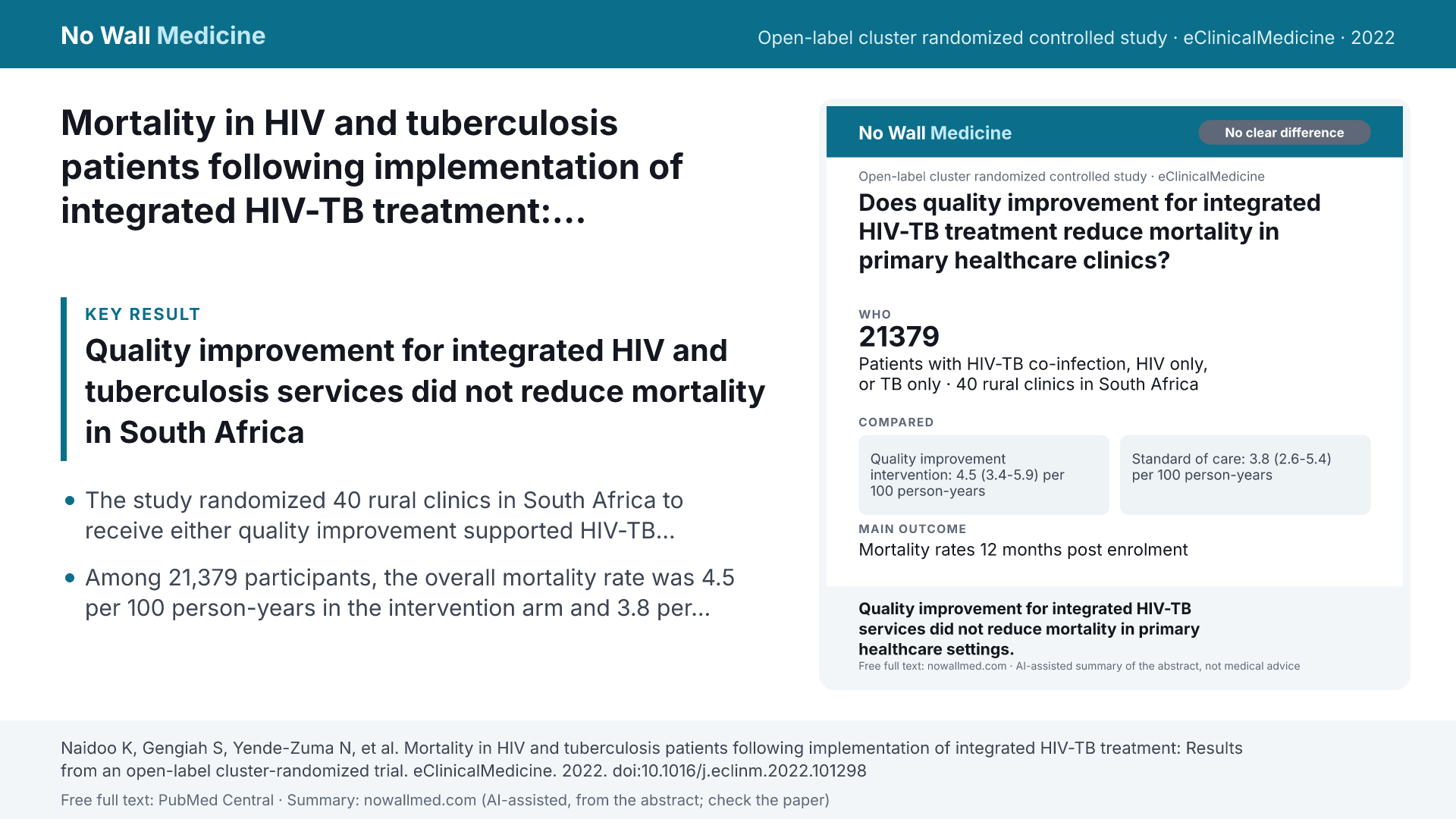
Quality improvement for integrated HIV and tuberculosis services did not reduce mortality in South Africa
Mortality in HIV and tuberculosis patients following implementation of integrated HIV-TB treatment: Results from an open-label cluster-randomized trial
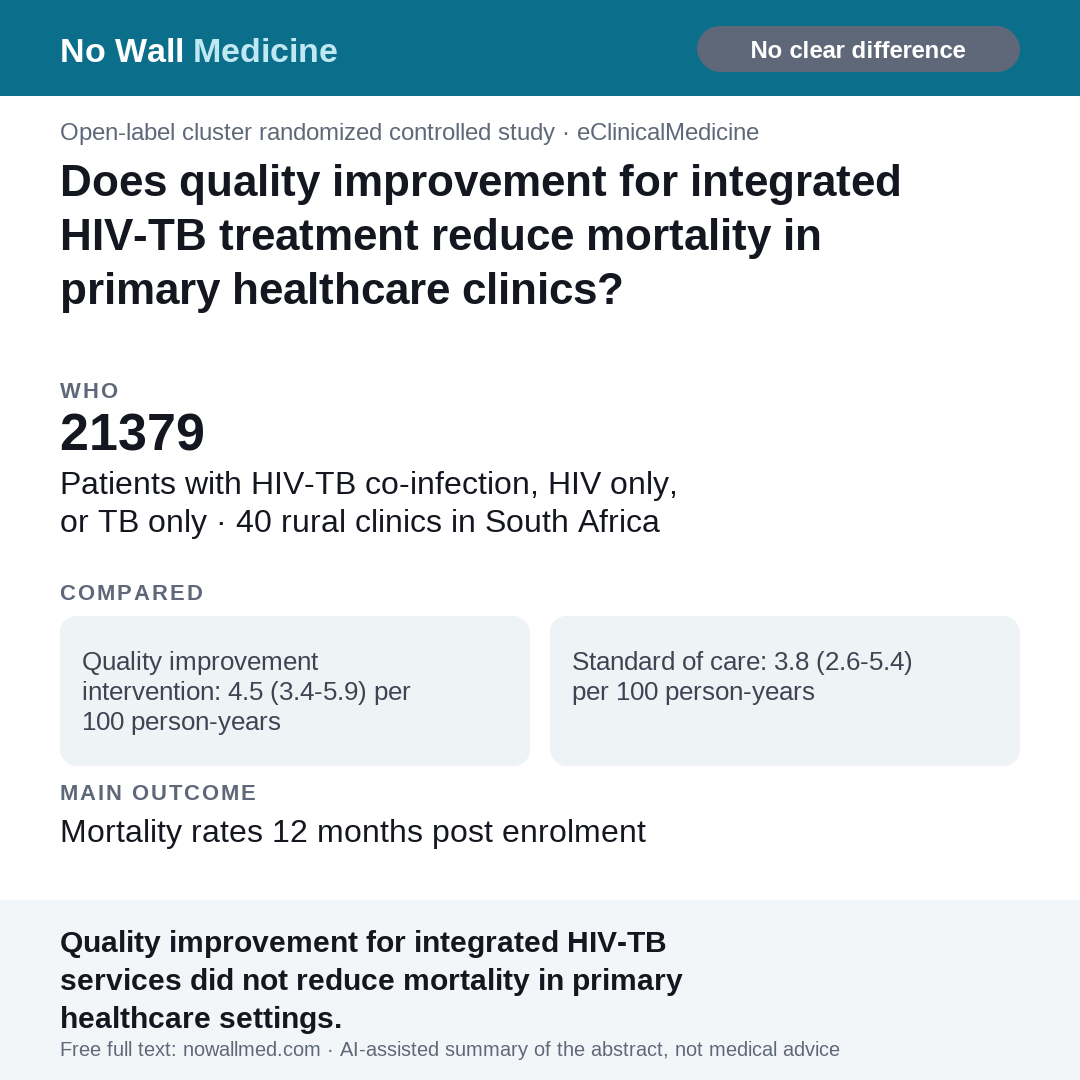
Open-label cluster randomized controlled studyNo clear difference
Does quality improvement for integrated HIV-TB treatment reduce mortality in primary healthcare clinics?
Who
21379
Patients with HIV-TB co-infection, HIV only, or TB only · 40 rural clinics in South Africa
Compared
Quality improvement intervention: 4.5 (3.4-5.9) per 100 person-years
Standard of care: 3.8 (2.6-5.4) per 100 person-years
Main outcome
Mortality rates 12 months post enrolment
Result: mortality rate ratio 1.19 (95% CI 0.79-1.80)
Bottom line: Quality improvement for integrated HIV-TB services did not reduce mortality in primary healthcare settings.
Limitation: The study was potentially underpowered to demonstrate the effect size.
Funded by: South African Medical Research Council and UK Government's Newton Fund
eClinicalMedicine · 2022-02-12Download image
Clinical question: Does quality improvement for integrated HIV-TB treatment reduce mortality in primary healthcare clinics?
Why it matters: It was unknown if quality improvement interventions for integrating HIV and tuberculosis services would reduce mortality in real-world primary healthcare settings.
Key points
- The study randomized 40 rural clinics in South Africa to receive either quality improvement supported HIV-TB integration or standard care.
- Among 21,379 participants, the overall mortality rate was 4.5 per 100 person-years in the intervention arm and 3.8 per 100 person-years in the control arm.
- Mortality rates for patients co-infected with HIV and tuberculosis were 10.1 per 100 person-years in the intervention group and 9.8 per 100 person-years in the control group.
Limitation the authors note: The study was potentially underpowered to demonstrate the effect size.
Headline and key points written with AI from the paper’s abstract, with every number checked against it. Read the paper before relying on them.
Was this summary helpful?
Cite this article
Naidoo K, Gengiah S, Yende-Zuma N, Mlobeli R, Ngozo J, Memela N. Mortality in HIV and tuberculosis patients following implementation of integrated HIV-TB treatment: Results from an open-label cluster-randomized trial. eClinicalMedicine. 2022. doi:10.1016/j.eclinm.2022.101298
Spotted a mistake? Suggest a correction
Top studies every Monday
The week’s key trials and guidelines in your specialties, plus any topics you follow. By email, free.
Get the weekly digest