Multi-Dimensional Dyspnea-Related Scales Validated in Individuals With Cardio-Respiratory and Cancer Diseases. A Systematic Review of Psychometric Properties
Systematic reviewUnclear result
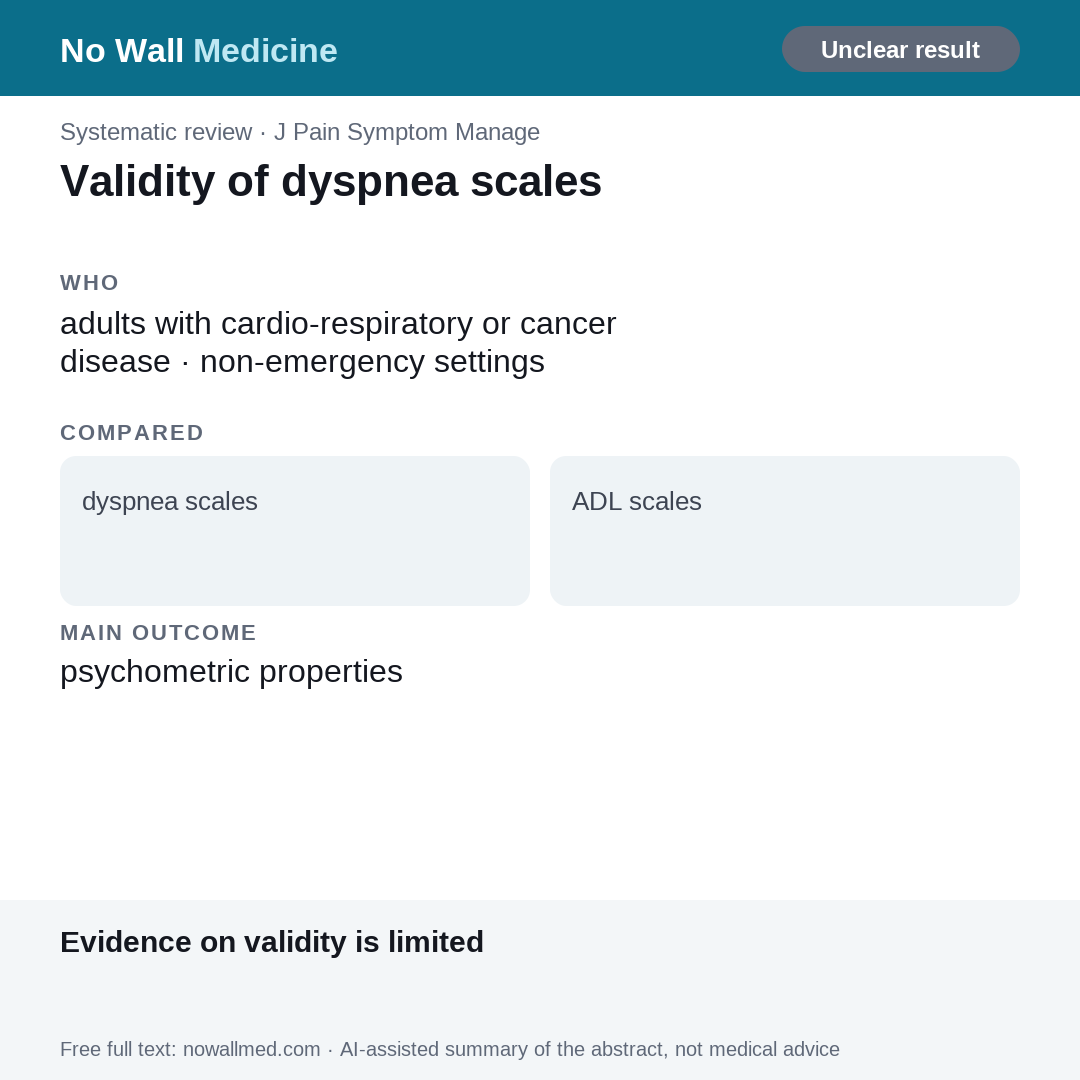
Validity of dyspnea scales
Who
adults with cardio-respiratory or cancer disease · non-emergency settings
Compared
dyspnea scales
ADL scales
Main outcome
psychometric properties
Bottom line: Evidence on validity is limited
Limitation: limited evidence on psychometric properties
J Pain Symptom Manage · 2021-08-03Download image
Abstract
Context
In order to examine the multi-dimensional nature of dyspnea and its impact on the activities of daily living (ADLs) in patients with cardio-respiratory and cancer diseases, validated measures are needed. Objectives
Our aim was to identify all the multi-dimensional clinical scales assessing dyspnea and its impact on ADLs in patients with cardio-respiratory and cancer diseases, and to critically appraise their psychometric properties. Methods
Five databases were systematically searched up to July 2020. Eligible criteria were: the examination of at least one psychometric property, and the recruitment of adults with a cardio-respiratory or cancer disease in non-emergency settings. The characteristics and psychometric properties of the studies included were presented through a narrative synthesis. The methodological quality of the studies and evidence synthesis were rated using the "COnsensus-based Standards for the selection of health Measurement INstruments (COSMIN)" criteria. Results
Forty-three studies, for which eight assessment scales had been identified, were included in the review. At the time of the review, three multi-dimensional assessment scales were available for assessing dyspnea symptoms, and five multi-dimensional scales were available to examine the impact of dyspnea on ADLs. Although the use of these scales has rapidly grown, evidence of psychometric properties has been reported as limited in most of the scales. Conclusion
Despite the potential of the identified scales, further studies are needed to strength evidence on the validity and reliability of the multi-dimensional dyspnea scales. Furthermore, more studies appraising the content validity and responsiveness of the scales are specifically recommended.
Subject terms
Cite this article
Tinti S, Parati M, De Maria B, Urbano N, Sardo V, Falcone G. Multi-Dimensional Dyspnea-Related Scales Validated in Individuals With Cardio-Respiratory and Cancer Diseases. A Systematic Review of Psychometric Properties. J Pain Symptom Manage. 2021. doi:10.1016/j.jpainsymman.2021.07.011
Spotted a mistake? Suggest a correction
Top studies every Monday
The week’s key trials and guidelines in your specialties, plus any topics you follow. By email, free.
Get the weekly digest