Multicenter Randomized Clinical Trial of a Mailed Outreach Strategy for Hepatocellular Carcinoma Surveillance
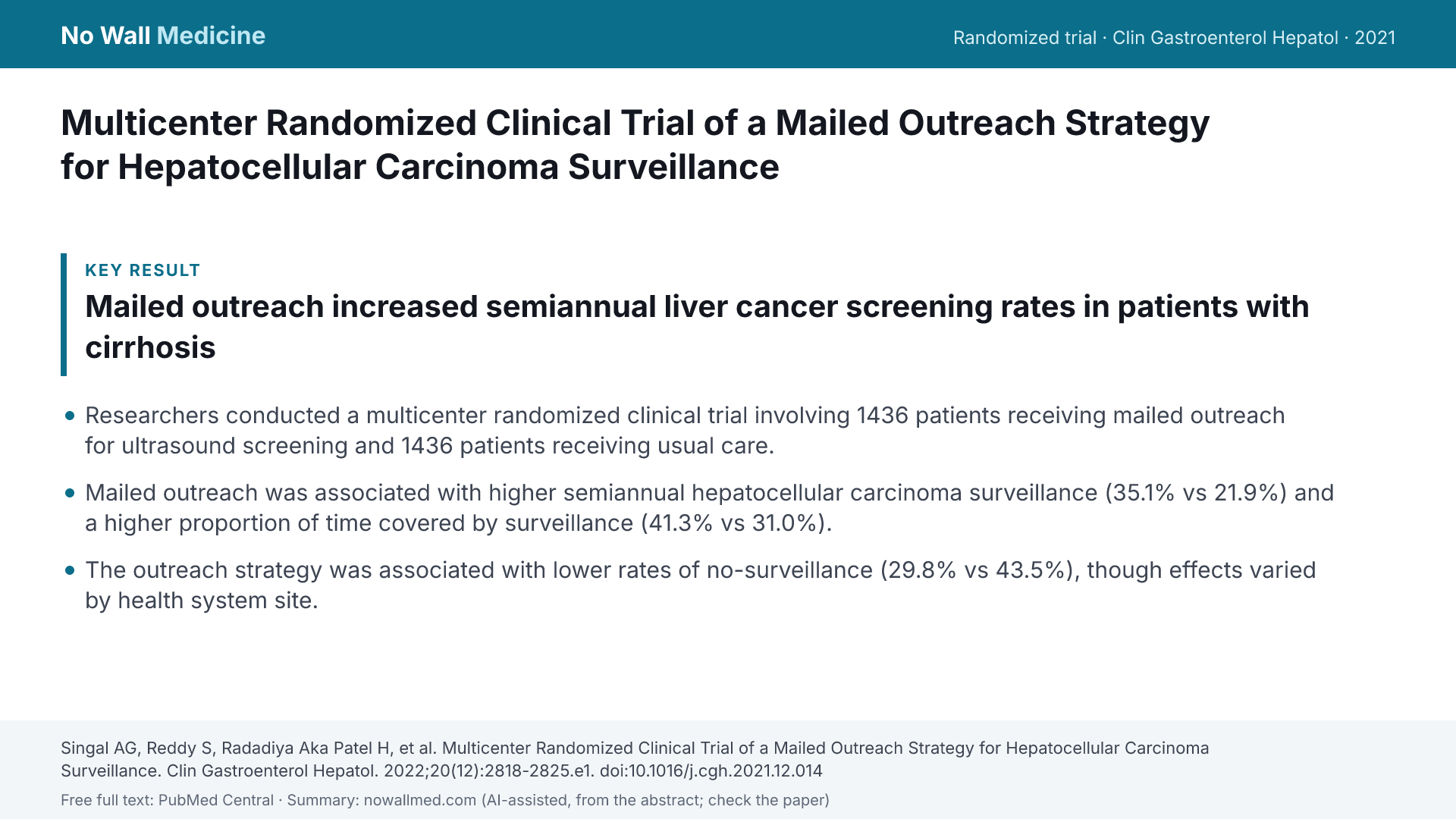
Key result: Mailed outreach increased semiannual liver cancer screening rates in patients with cirrhosis
Key points
- Researchers conducted a multicenter randomized clinical trial involving 1436 patients receiving mailed outreach for ultrasound screening and 1436 patients receiving usual care.
- Mailed outreach was associated with higher semiannual hepatocellular carcinoma surveillance (35.1% vs 21.9%) and a higher proportion of time covered by surveillance (41.3% vs 31.0%).
- The outreach strategy was associated with lower rates of no-surveillance (29.8% vs 43.5%), though effects varied by health system site.
Why it matters: Hepatocellular carcinoma surveillance, which is the regular screening for liver cancer, is often underused in clinical practice for patients with cirrhosis.
Discussion prompts
- Would these patients look like yours? Who was left out?
- Is the main outcome one that matters to patients?
- Is the difference large enough to change what you do?
Cite: Singal AG, Reddy S, Radadiya Aka Patel H, et al. Multicenter Randomized Clinical Trial of a Mailed Outreach Strategy for Hepatocellular Carcinoma Surveillance. Clin Gastroenterol Hepatol. 2022;20(12):2818-2825.e1. doi:10.1016/j.cgh.2021.12.014
Free full text: PubMed Central · Summary and visual abstract: nowallmed.com/a/multicenter-randomized-clinical-trial-of-a-mailed-outreach-strategy-69jx2g/ (AI-assisted from the abstract; check the paper before relying on it).