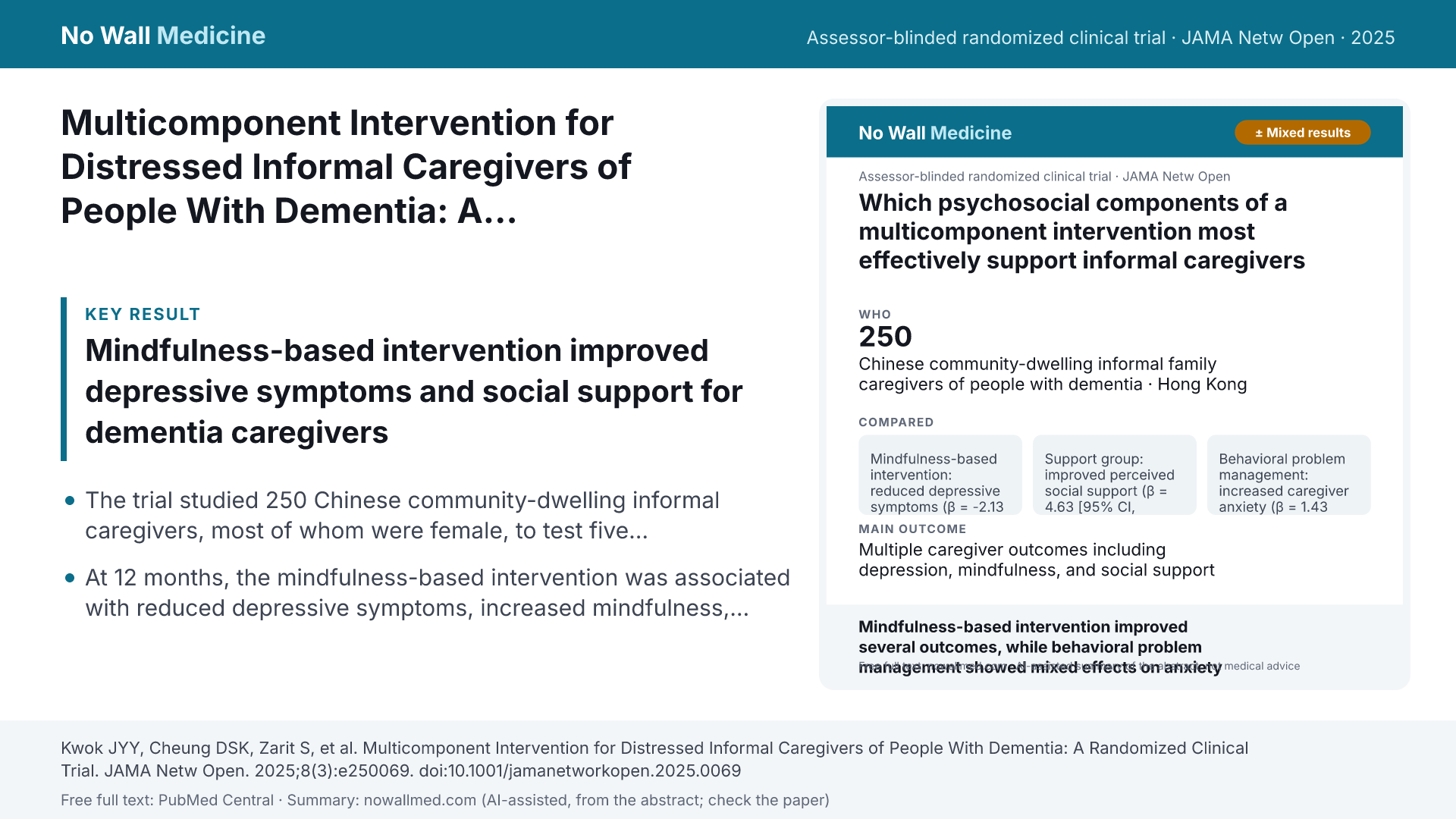
Mindfulness-based intervention improved depressive symptoms and social support for dementia caregivers
Multicomponent Intervention for Distressed Informal Caregivers of People With Dementia: A Randomized Clinical Trial
Assessor-blinded randomized clinical trialMixed results
Which psychosocial components of a multicomponent intervention most effectively support informal caregivers of people with dementia?
Who
250
Chinese community-dwelling informal family caregivers of people with dementia · Hong Kong
Compared
Mindfulness-based intervention: reduced depressive symptoms (β = -2.13 [95% CI, -2.85 to -1.38])
Support group: improved perceived social support (β = 4.63 [95% CI, 1.32-7.85])
Behavioral problem management: increased caregiver anxiety (β = 1.43 [95% CI, 0.43-2.42])
Main outcome
Multiple caregiver outcomes including depression, mindfulness, and social support
Bottom line: Mindfulness-based intervention improved several outcomes, while behavioral problem management showed mixed effects on anxiety and well-being.
JAMA Netw Open · 2025-03-03Download image
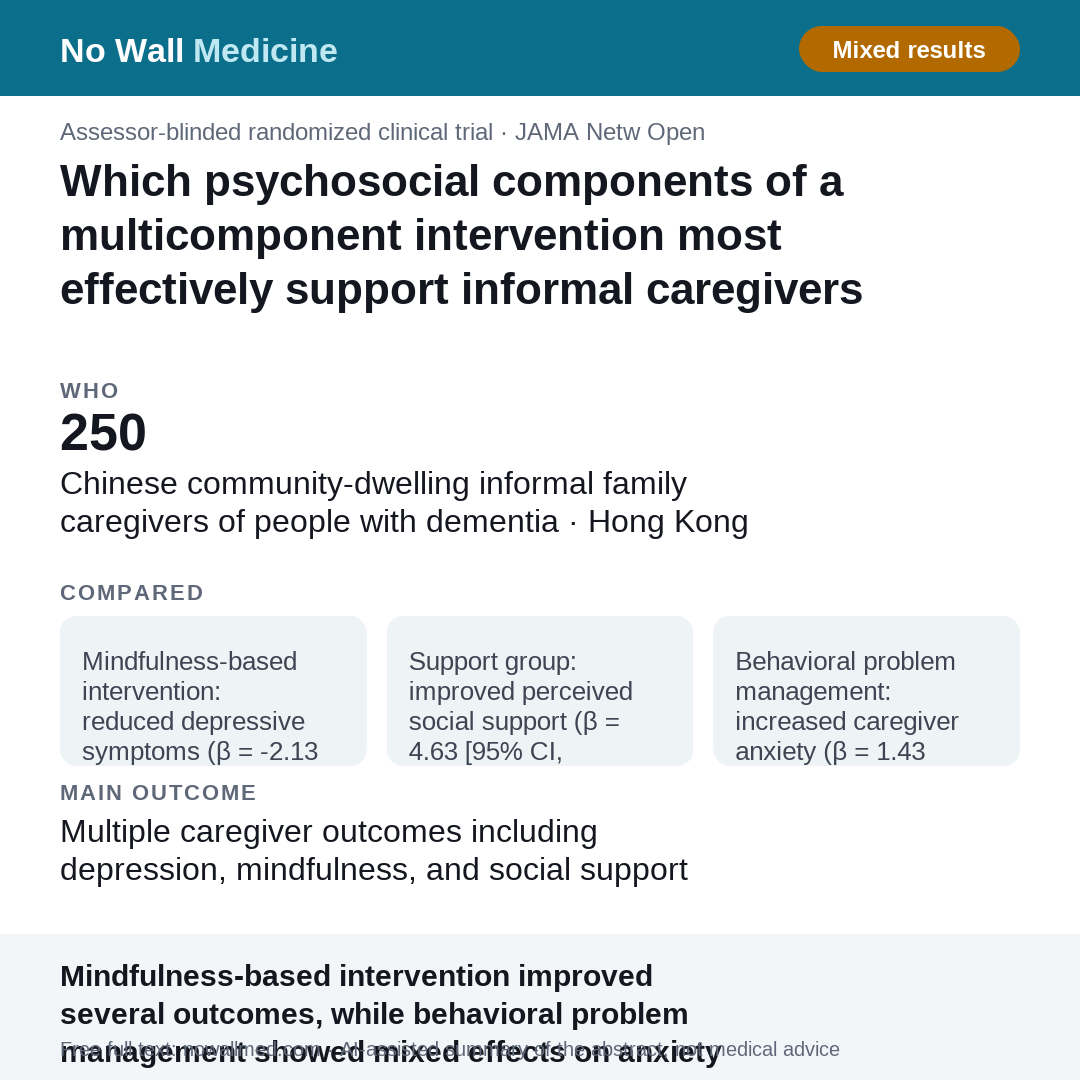
Clinical question: Which psychosocial components of a multicomponent intervention most effectively support informal caregivers of people with dementia?
Why it matters: It is unknown which specific psychosocial components of a multicomponent intervention are most effective for supporting informal caregivers of people with dementia.
Key points
- The trial studied 250 Chinese community-dwelling informal caregivers, most of whom were female, to test five psychosocial components of a support program.
- At 12 months, the mindfulness-based intervention was associated with reduced depressive symptoms, increased mindfulness, higher perceived social support, and better dementia care management.
- The support group component was associated with increased perceived social support at 12 months, while behavioral problem management initially increased anxiety and self-care risk at 6 months.
Headline and key points written with AI from the paper’s abstract, with every number checked against it. Read the paper before relying on them.
Was this summary helpful?
Subject terms
Cite this article
Kwok JYY, Cheung DSK, Zarit S, Cheung KS, Lau BHP, Lou VW. Multicomponent Intervention for Distressed Informal Caregivers of People With Dementia: A Randomized Clinical Trial. JAMA Netw Open. 2025. doi:10.1001/jamanetworkopen.2025.0069
Spotted a mistake? Suggest a correction