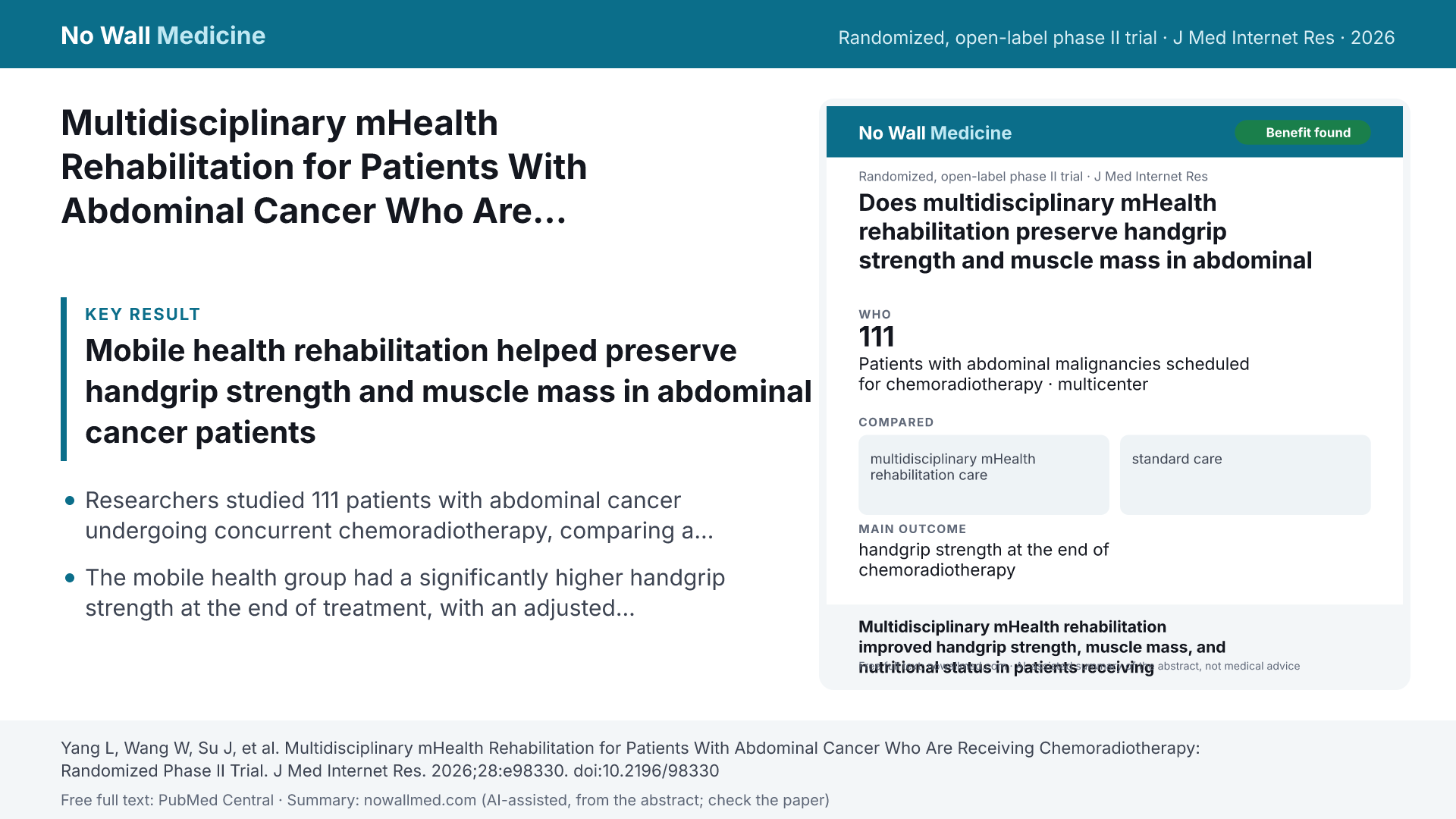
Multidisciplinary mHealth Rehabilitation for Patients With Abdominal Cancer Who Are Receiving Chemoradiotherapy: Randomized Phase II Trial
Key result: Mobile health rehabilitation helped preserve handgrip strength and muscle mass in abdominal cancer patients
Key points
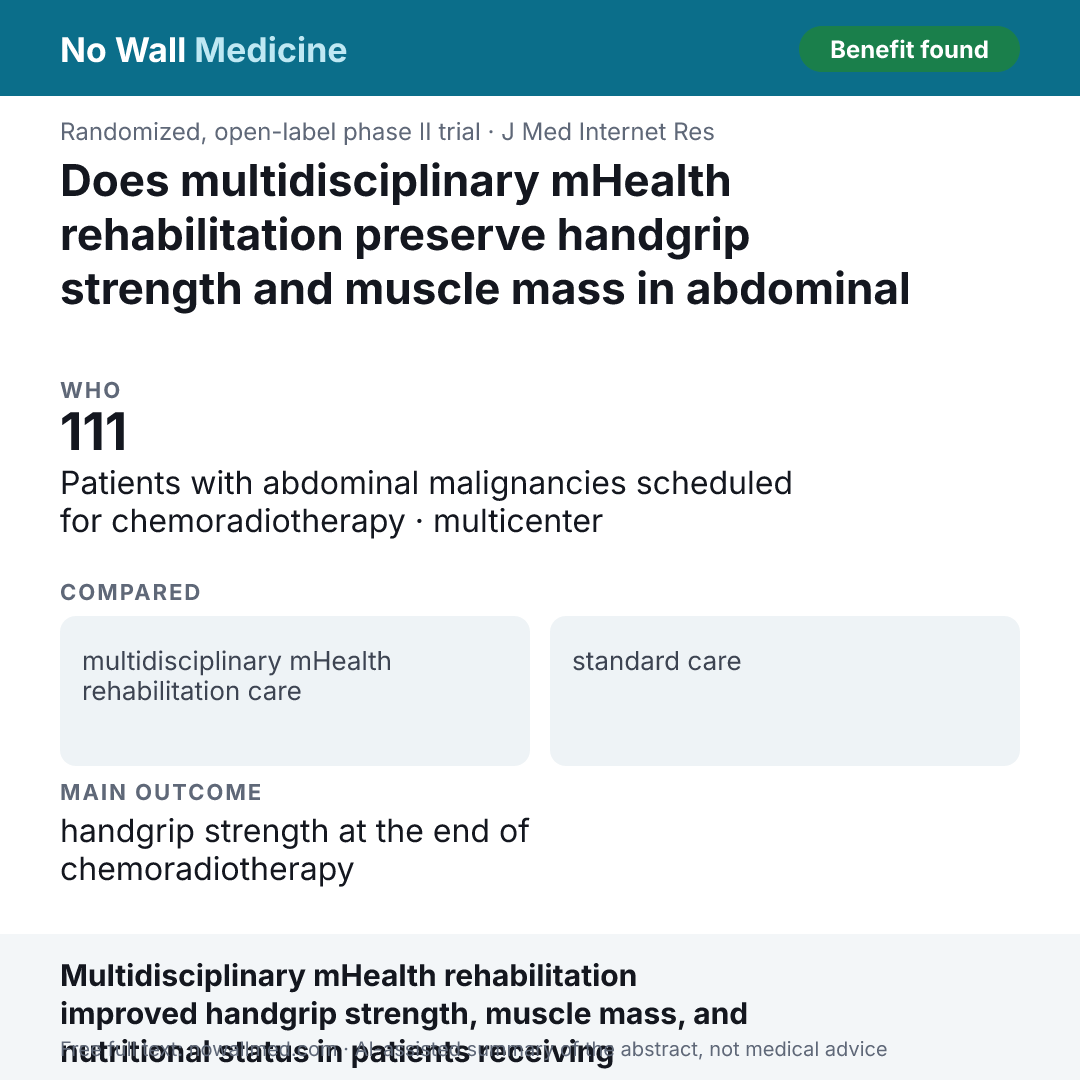
- Researchers studied 111 patients with abdominal cancer undergoing concurrent chemoradiotherapy, comparing a mobile health rehabilitation program to standard care.
- The mobile health group had a significantly higher handgrip strength at the end of treatment, with an adjusted mean difference of 4.87 kg.
- The mobile health group also showed better preservation of body weight, skeletal muscle mass, and nutritional scores compared to the standard care group.
Why it matters: Concurrent chemoradiotherapy for abdominal cancer often causes muscle loss, weight loss, and malnutrition in patients.
Limitation the authors note: The authors state that findings are limited by the open-label design, population heterogeneity, and short follow-up.
Discussion prompts
- Would these patients look like yours? Who was left out?
- Is the main outcome one that matters to patients?
- Is the difference large enough to change what you do?
Cite: Yang L, Wang W, Su J, et al. Multidisciplinary mHealth Rehabilitation for Patients With Abdominal Cancer Who Are Receiving Chemoradiotherapy: Randomized Phase II Trial. J Med Internet Res. 2026;28:e98330. doi:10.2196/98330
Free full text: PubMed Central · Summary and visual abstract: nowallmed.com/a/multidisciplinary-mhealth-rehabilitation-for-patients-with-abdominal-vtsbc2/ (AI-assisted from the abstract; check the paper before relying on it).