Multimodal Analysis of Secondary Cerebellar Alterations After Pediatric Traumatic Brain Injury
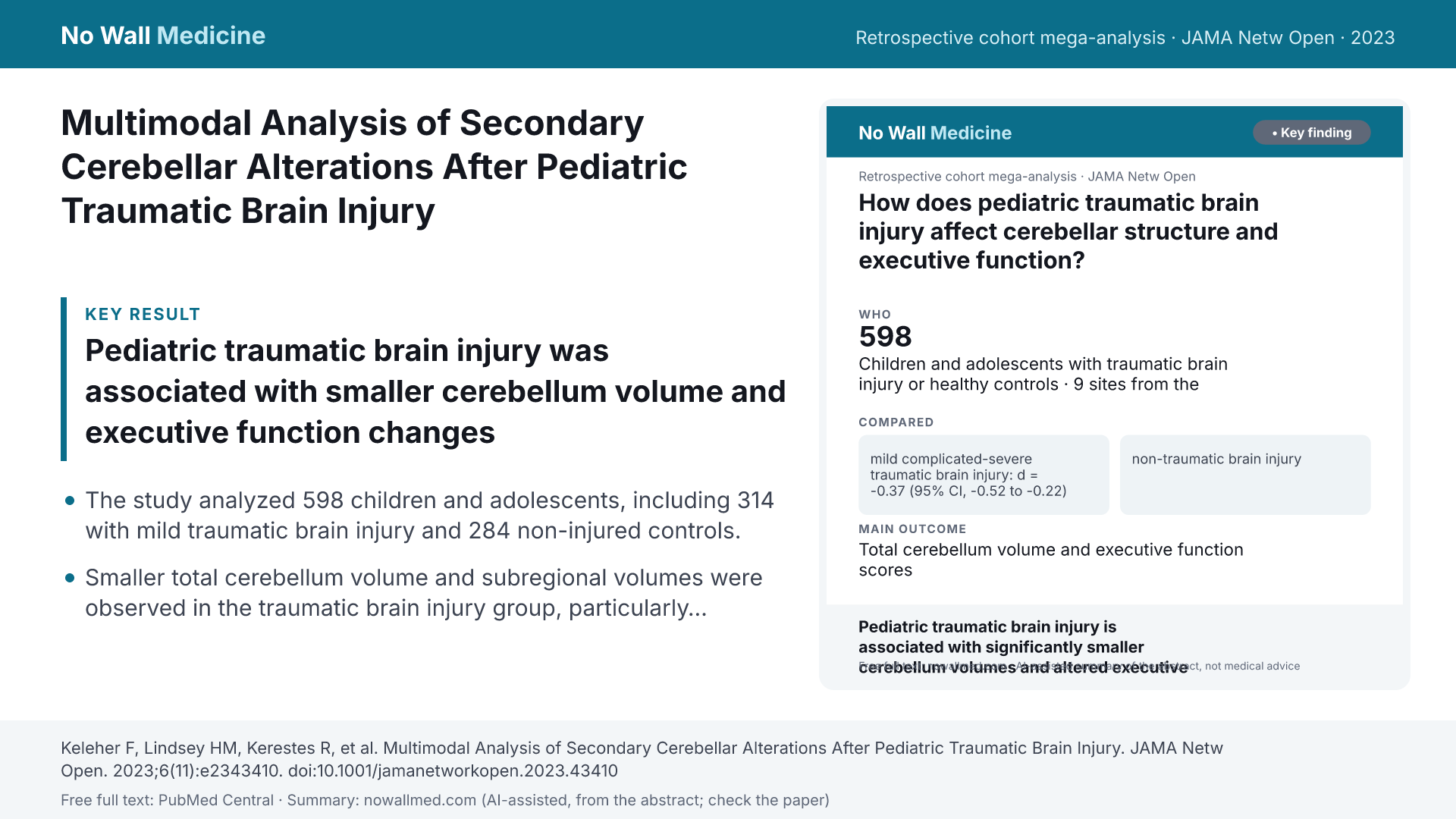
Key result: Pediatric traumatic brain injury was associated with smaller cerebellum volume and executive function changes
Retrospective cohort mega-analysisKey finding
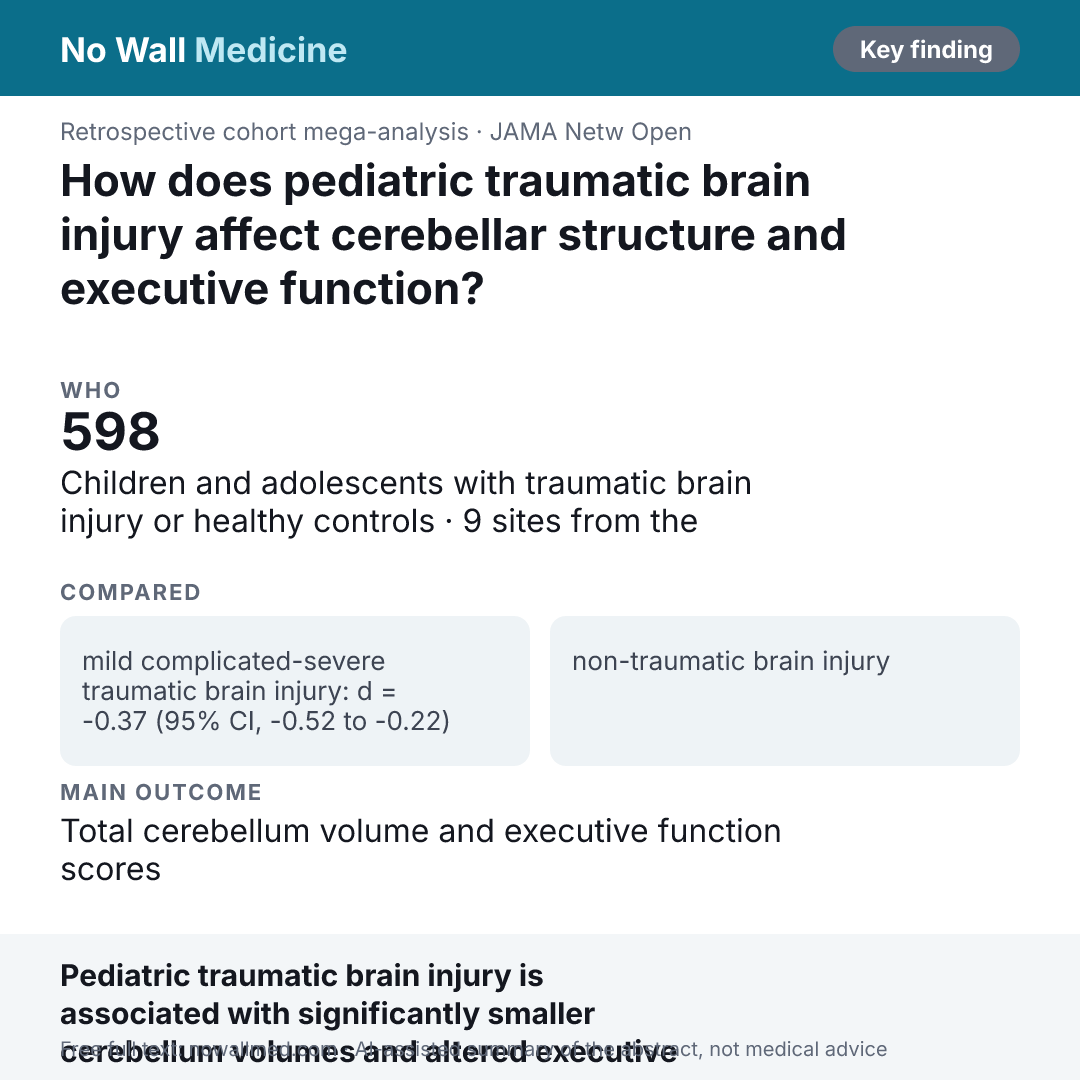
How does pediatric traumatic brain injury affect cerebellar structure and executive function?
Who
598
Children and adolescents with traumatic brain injury or healthy controls · 9 sites from the Enhancing Neuroimaging Genetics Through Meta-Analysis Consortium
Compared
mild complicated-severe traumatic brain injury: d = -0.37 (95% CI, -0.52 to -0.22)
non-traumatic brain injury
Main outcome
Total cerebellum volume and executive function scores
Result: d = -0.37 (95% CI, -0.52 to -0.22)
Bottom line: Pediatric traumatic brain injury is associated with significantly smaller cerebellum volumes and altered executive functioning.
JAMA Netw Open · 2023-11-01 · Save PNG
Key points
- The study analyzed 598 children and adolescents, including 314 with mild traumatic brain injury and 284 non-injured controls.
- Smaller total cerebellum volume and subregional volumes were observed in the traumatic brain injury group, particularly in the chronic phase after 6 months.
- Smaller cerebellum volumes were associated with higher scores on parent-reported executive function scales, including the Global Executive Composite and Metacognition Index.
Discussion prompts
- Would these patients look like yours? Who was left out?
- Is the main outcome one that matters to patients?
- Is the difference large enough to change what you do?
Cite: Keleher F, Lindsey HM, Kerestes R, et al. Multimodal Analysis of Secondary Cerebellar Alterations After Pediatric Traumatic Brain Injury. JAMA Netw Open. 2023;6(11):e2343410. doi:10.1001/jamanetworkopen.2023.43410
Free full text: PubMed Central · Summary and visual abstract: nowallmed.com/a/multimodal-analysis-of-secondary-cerebellar-alterations-after-juehmr/ (AI-assisted from the abstract; check the paper before relying on it).