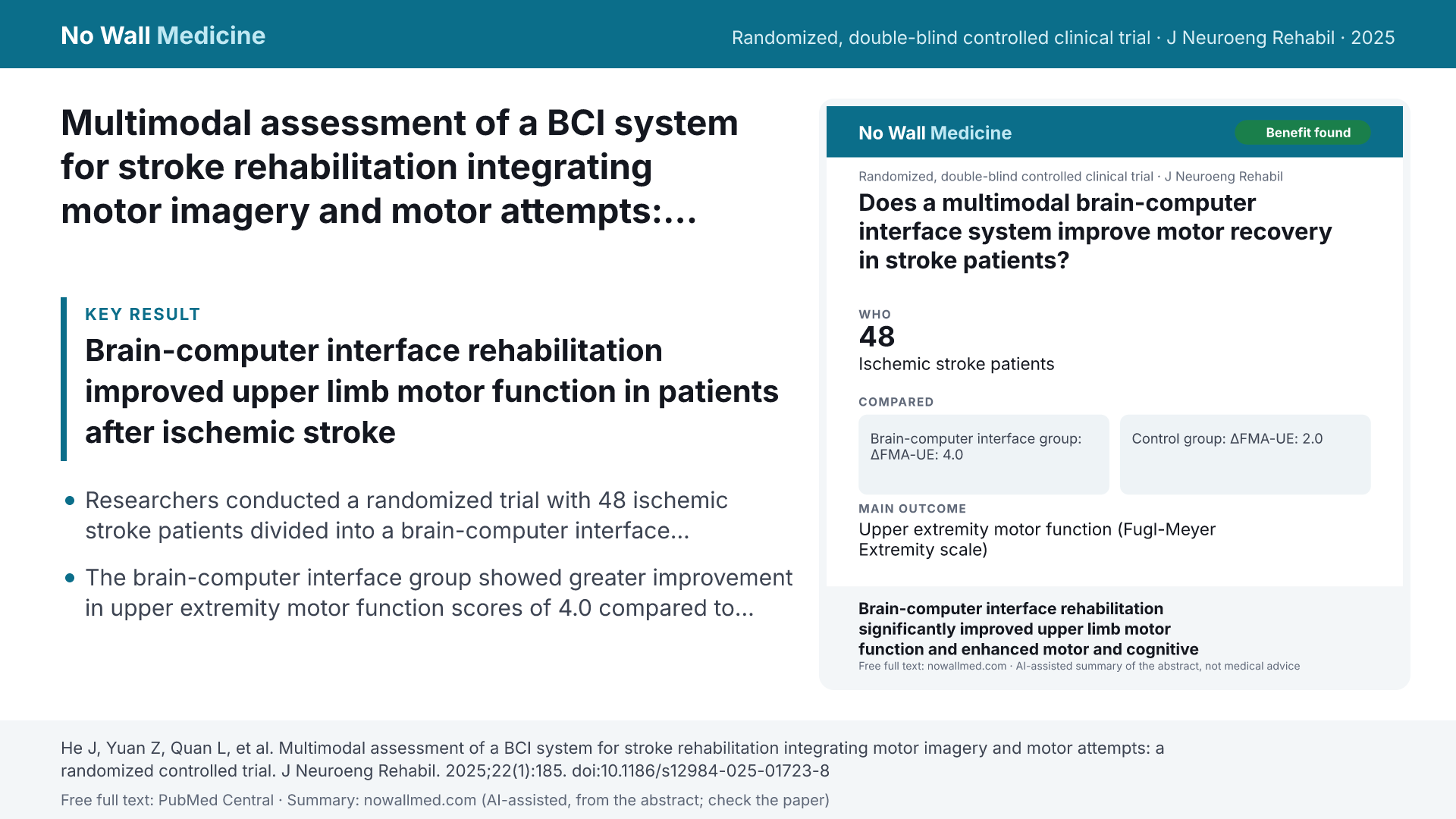
Brain-computer interface rehabilitation improved upper limb motor function in patients after ischemic stroke
Multimodal assessment of a BCI system for stroke rehabilitation integrating motor imagery and motor attempts: a randomized controlled trial
Randomized, double-blind controlled clinical trialBenefit found
Does a multimodal brain-computer interface system improve motor recovery in stroke patients?
Who
48
Ischemic stroke patients
Compared
Brain-computer interface group: ΔFMA-UE: 4.0
Control group: ΔFMA-UE: 2.0
Main outcome
Upper extremity motor function (Fugl-Meyer Extremity scale)
Bottom line: Brain-computer interface rehabilitation significantly improved upper limb motor function and enhanced motor and cognitive network activity.
J Neuroeng Rehabil · 2025-08-26 · Save PNG
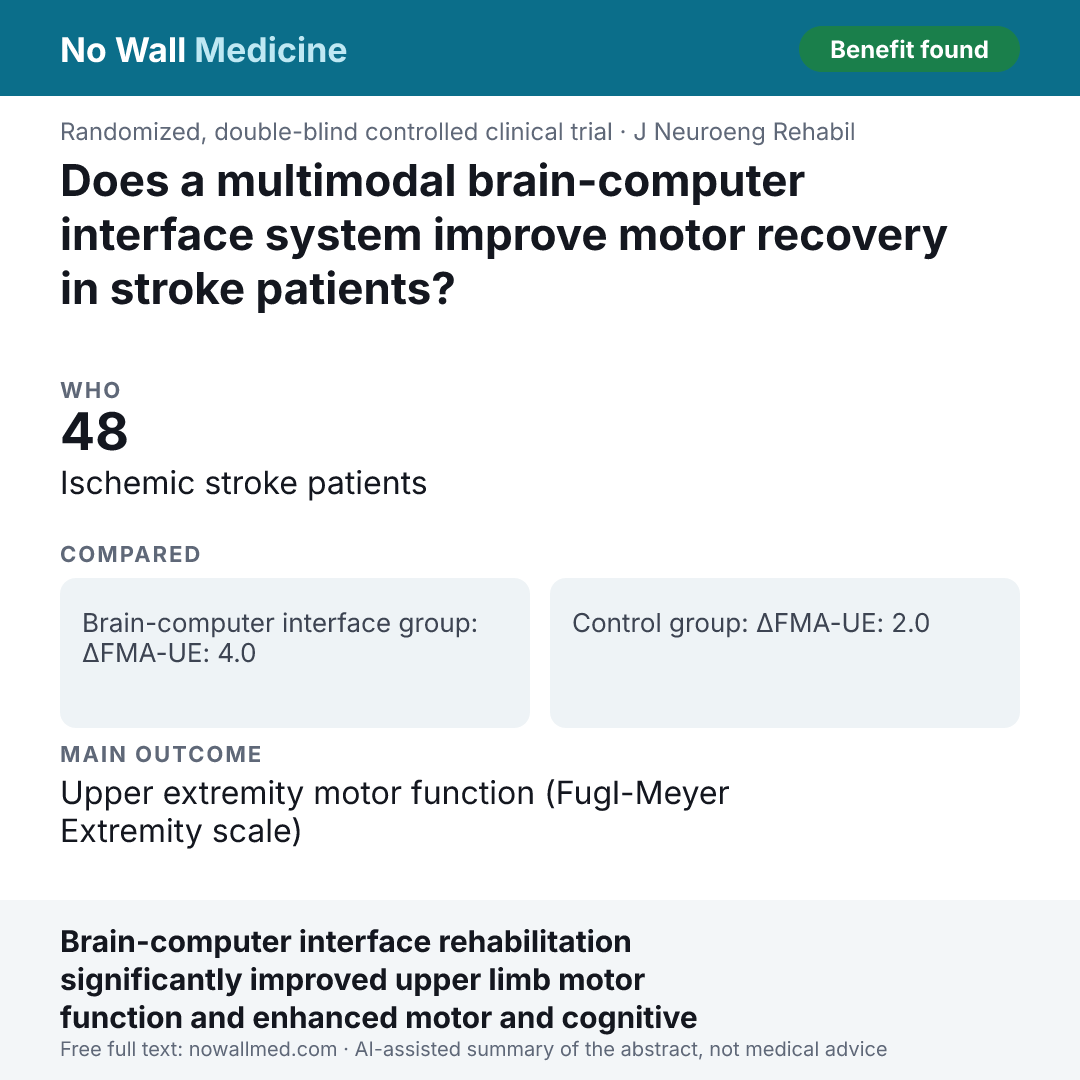
Clinical question: Does a multimodal brain-computer interface system improve motor recovery in stroke patients?
Key points
- Researchers conducted a randomized trial with 48 ischemic stroke patients divided into a brain-computer interface group of 25 and a control group of 23.
- The brain-computer interface group showed greater improvement in upper extremity motor function scores of 4.0 compared to 2.0 in the control group.
- Brain-computer interface training was associated with increased muscle activity in the deltoid and bicipital muscles and enhanced activation in motor-related brain regions.
Headline and key points written with AI from the paper’s abstract, with every number checked against it. Read the paper before relying on them.
Was this summary helpful?
Subject terms
Headline, design, result, key points, caveat and citation as plain text.
Cite this article
He J, Yuan Z, Quan L, et al. Multimodal assessment of a BCI system for stroke rehabilitation integrating motor imagery and motor attempts: a randomized controlled trial. J Neuroeng Rehabil. 2025;22(1):185. doi:10.1186/s12984-025-01723-8
Spotted a mistake? Suggest a correction