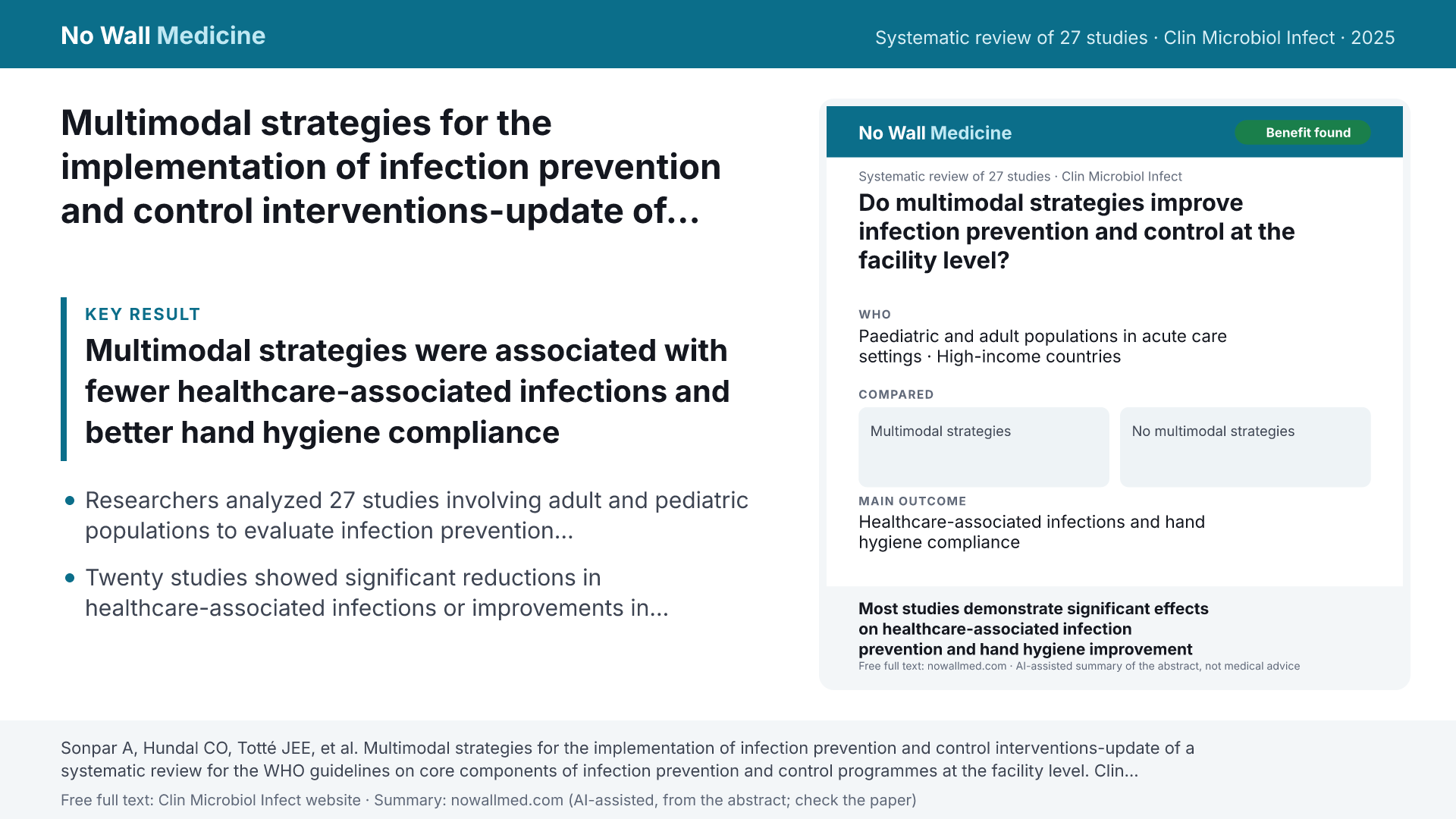
Multimodal strategies were associated with fewer healthcare-associated infections and better hand hygiene compliance
Multimodal strategies for the implementation of infection prevention and control interventions-update of a systematic review for the WHO guidelines on core components of infection prevention and control programmes at the facility level
Infectious DiseaseAdult and pediatric
Systematic review of 27 studiesBenefit found
Do multimodal strategies improve infection prevention and control at the facility level?
Who
Paediatric and adult populations in acute care settings · High-income countries
Compared
Multimodal strategies
No multimodal strategies
Main outcome
Healthcare-associated infections and hand hygiene compliance
Bottom line: Most studies demonstrate significant effects on healthcare-associated infection prevention and hand hygiene improvement using multimodal strategies.
Limitation: Quality of evidence is low to moderate with few studies from low-income or middle-income countries.
Clin Microbiol Infect · 2025-01-23Download image
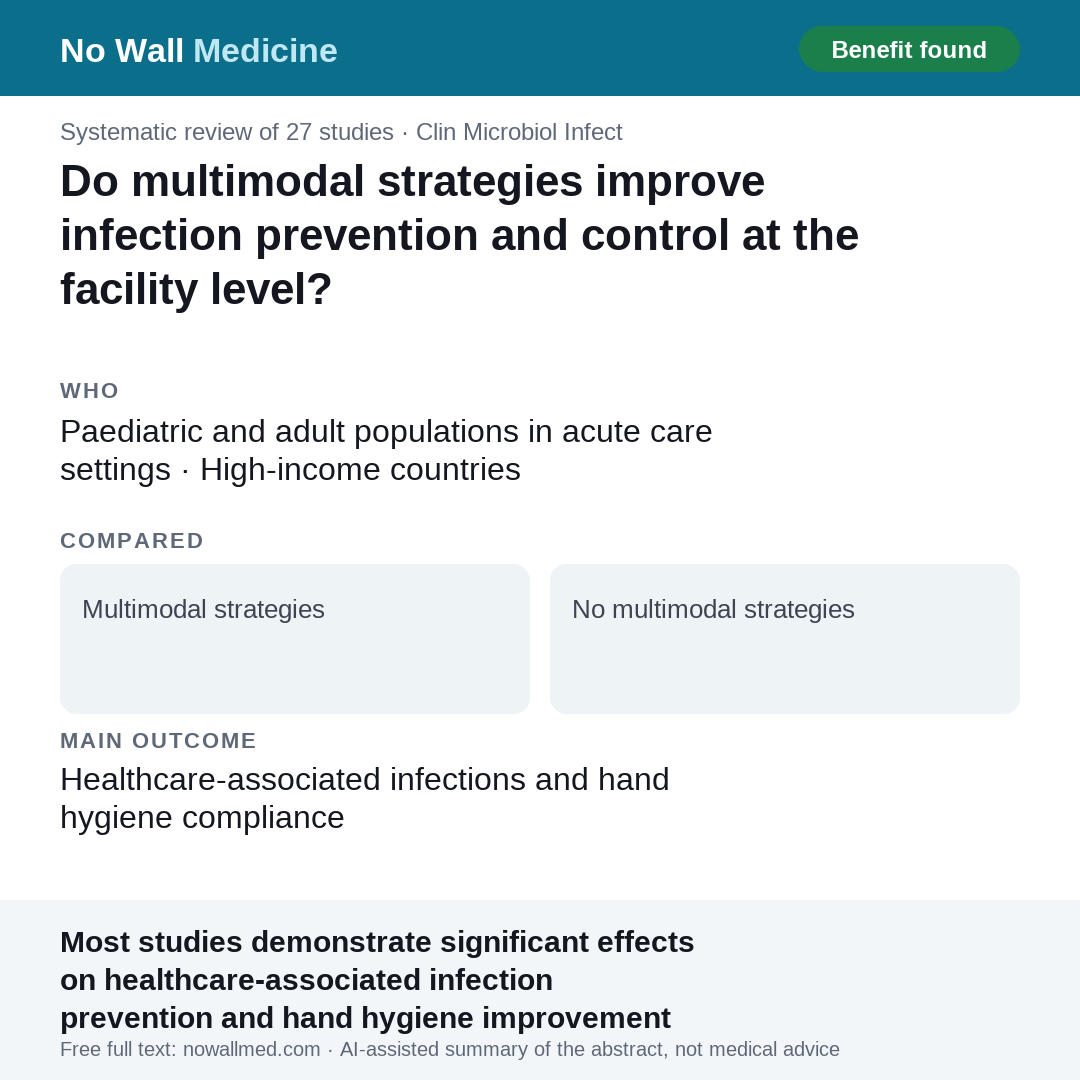
Clinical question: Do multimodal strategies improve infection prevention and control at the facility level?
Why it matters: It was unknown if updating the evidence on multimodal strategies would confirm their effectiveness for facility-level infection prevention and control programs.
Key points
- Researchers analyzed 27 studies involving adult and pediatric populations to evaluate infection prevention interventions using at least three World Health Organization elements.
- Twenty studies showed significant reductions in healthcare-associated infections or improvements in hand hygiene compliance.
- The analyzed studies included nine reports on device-associated infections, four on surgical site infections, eight on antimicrobial resistance, and six on hand hygiene.
Limitation the authors note: The quality of evidence was medium to low, and there were few studies from low-income or middle-income countries.
Headline and key points written with AI from the paper’s abstract, with every number checked against it. Read the paper before relying on them.
Was this summary helpful?
Subject terms
Cite this article
Sonpar A, Hundal CO, Totté JEE, et al. Multimodal strategies for the implementation of infection prevention and control interventions-update of a systematic review for the WHO guidelines on core components of infection prevention and control programmes at the facility level. Clin Microbiol Infect. 2025. doi:10.1016/j.cmi.2025.01.011
Spotted a mistake? Suggest a correction