Nasal high-flow oxygen was associated with lower shortness of breath in acute severe asthma patients
Nasal High-flow Oxygen Versus Conventional Oxygen Therapy for Acute Severe Asthma Patients: A Pilot Randomized Controlled Trial
Pilot nonblinded randomized controlled trialBenefit found
Does nasal high flow improve dyspnea compared to conventional oxygen therapy in acute severe asthma?
Who
37
Patients aged 18 years or older with acute severe asthma and hypoxemia · Emergency department in Bangkok, Thailand
Compared
3.3Conventional oxygen therapy (±2.5)
1.4Nasal high flow (±2.5)
Main outcome
Degree of dyspnea measured using the modified Borg scale
Result: mean difference = 1.9 (95% CI 0.2 to 3.8)
Bottom line: Nasal high flow reduced dyspnea severity and respiratory rate in hypoxemic acute severe asthma patients.
Acad Emerg Med · 2020-12-22Download image
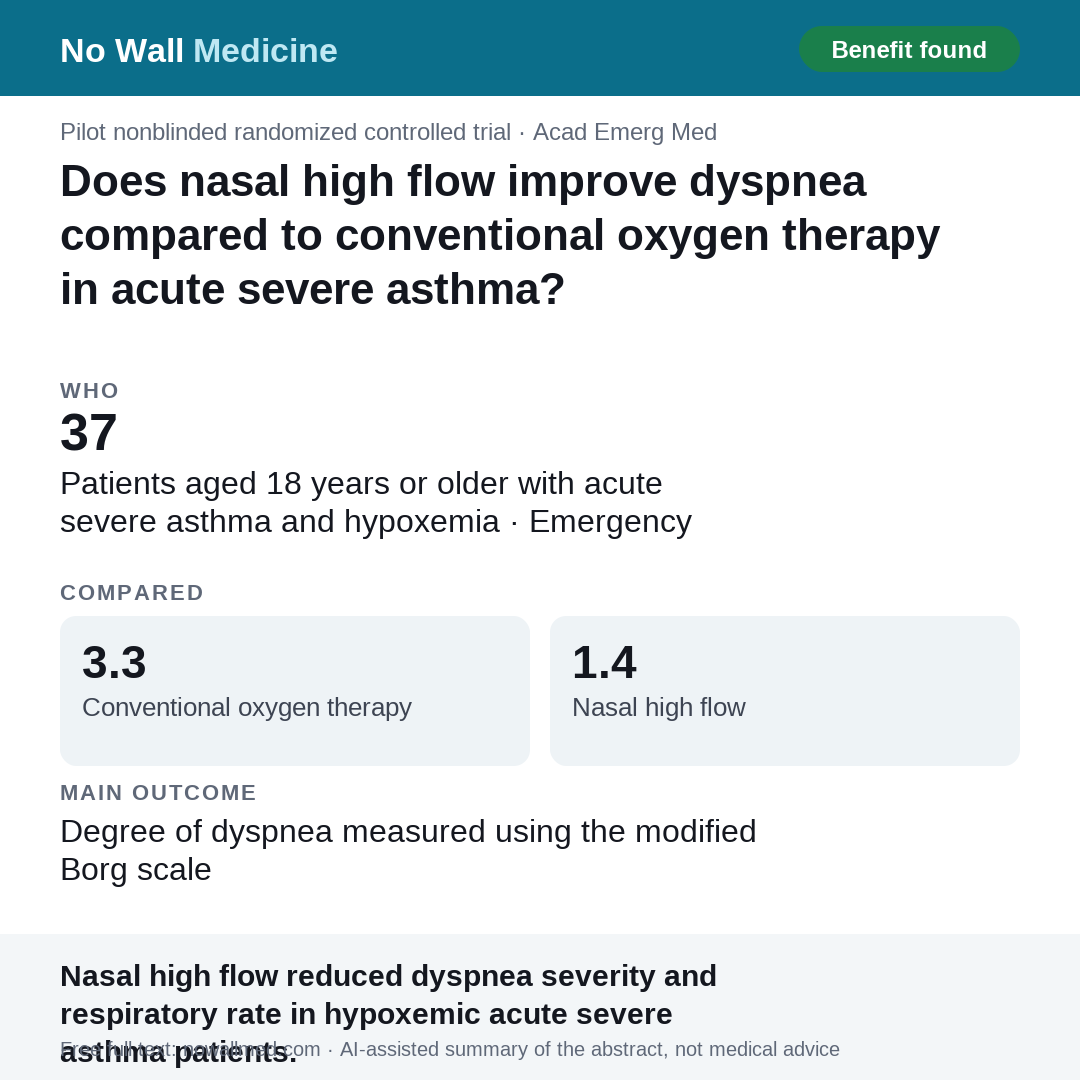
Clinical question: Does nasal high flow improve dyspnea compared to conventional oxygen therapy in acute severe asthma?
Why it matters: It was unknown if nasal high-flow oxygen is more effective than conventional oxygen therapy for relieving shortness of breath in patients with acute severe asthma.
Key points
- Researchers studied 37 patients with acute severe asthma and low blood oxygen levels in an emergency department.
- After 120 minutes, the modified Borg scale for shortness of breath was 3.3 in the conventional oxygen group and 1.4 in the nasal high-flow group.
- Patients receiving nasal high-flow oxygen had a lower mean respiratory rate with a mean difference of 4.7.
Headline and key points written with AI from the paper’s abstract, with every number checked against it. Read the paper before relying on them.
Was this summary helpful?
Subject terms
Cite this article
Ruangsomboon O, Limsuwat C, Praphruetkit N, Monsomboon A, Chakorn T. Nasal High-flow Oxygen Versus Conventional Oxygen Therapy for Acute Severe Asthma Patients: A Pilot Randomized Controlled Trial. Acad Emerg Med. 2020. doi:10.1111/acem.14187
Spotted a mistake? Suggest a correction
Top studies every Monday
The week’s key trials and guidelines in your specialties, plus any topics you follow. By email, free.
Get the weekly digest