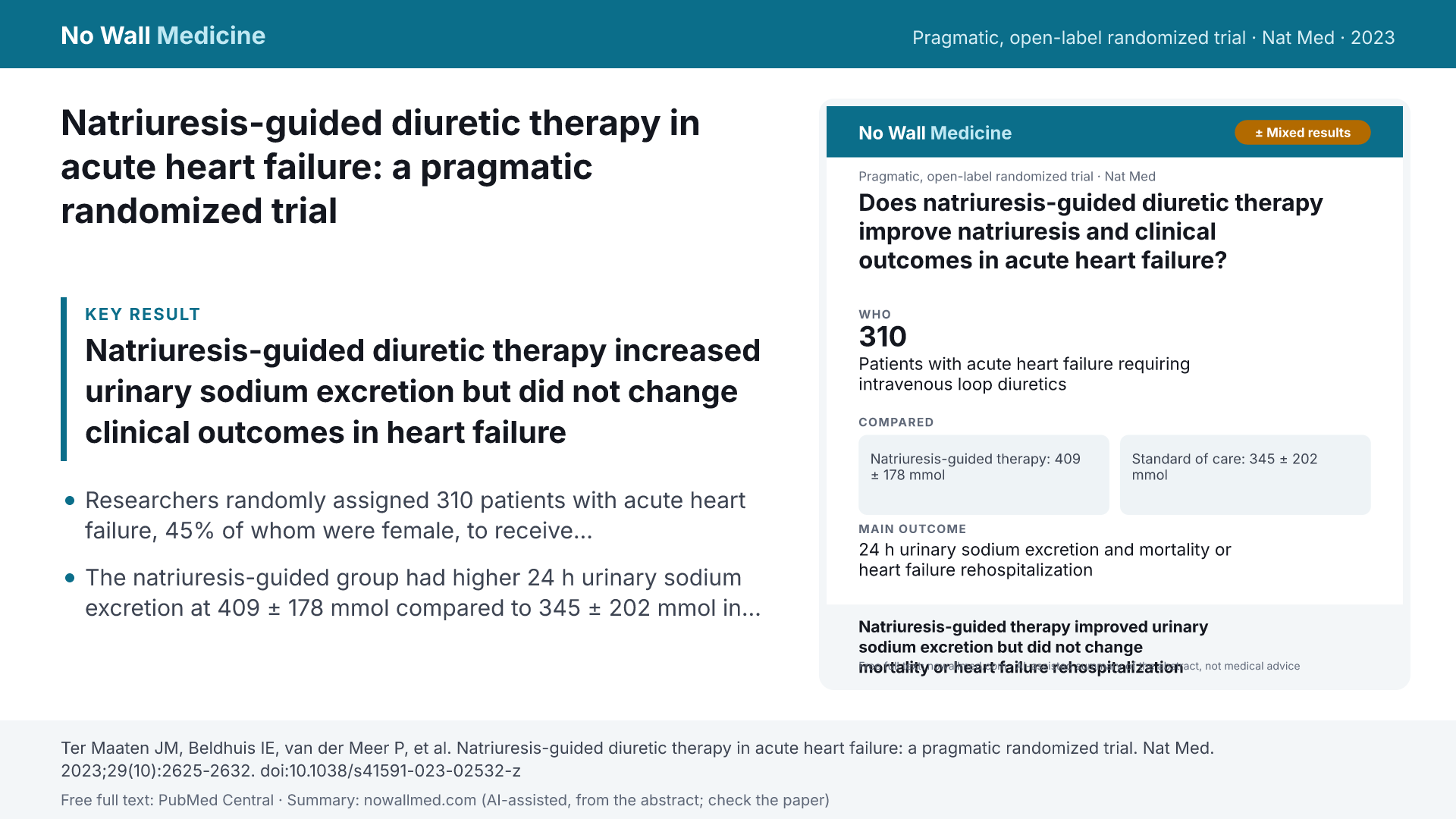
Natriuresis-guided diuretic therapy increased urinary sodium excretion but did not change clinical outcomes in heart failure
Natriuresis-guided diuretic therapy in acute heart failure: a pragmatic randomized trial
Pragmatic, open-label randomized trialMixed results
Does natriuresis-guided diuretic therapy improve natriuresis and clinical outcomes in acute heart failure?
Who
310
Patients with acute heart failure requiring intravenous loop diuretics
Compared
Natriuresis-guided therapy: 409 ± 178 mmol
Standard of care: 345 ± 202 mmol
Main outcome
24 h urinary sodium excretion and mortality or heart failure rehospitalization
Result: hazard ratio 0.92 (95% confidence interval 0.62-1.38)
Bottom line: Natriuresis-guided therapy improved urinary sodium excretion but did not change mortality or heart failure rehospitalization rates.
Nat Med · 2023-08-28Download image
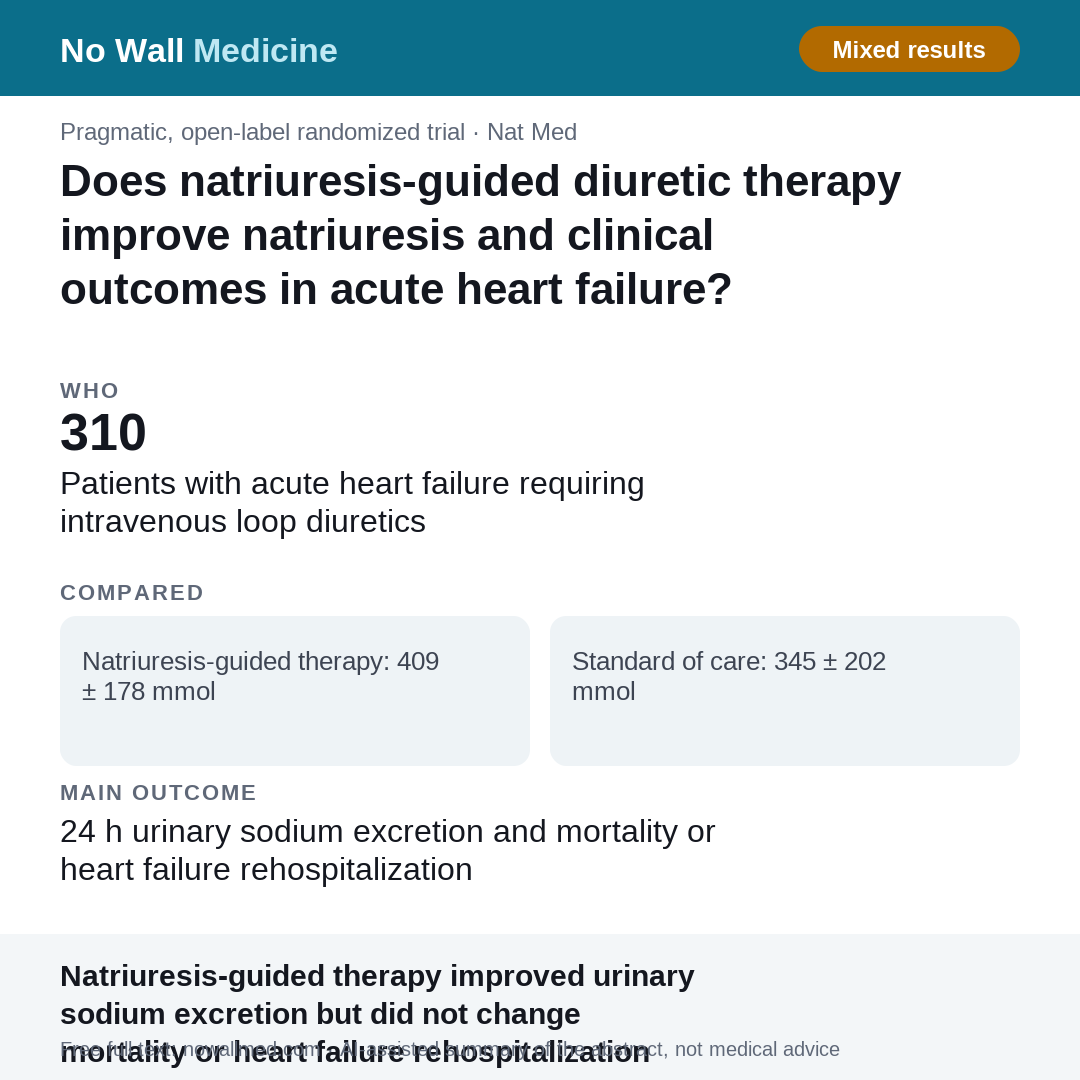
Clinical question: Does natriuresis-guided diuretic therapy improve natriuresis and clinical outcomes in acute heart failure?
Why it matters: It is unclear if using urinary sodium levels to guide diuretic treatment improves clinical outcomes for patients with acute heart failure.
Key points
- Researchers randomly assigned 310 patients with acute heart failure, 45% of whom were female, to receive either natriuresis-guided therapy or standard of care.
- The natriuresis-guided group had higher 24 h urinary sodium excretion at 409 ± 178 mmol compared to 345 ± 202 mmol in the standard care group.
- There were no significant differences in the combined endpoint of all-cause mortality or heart failure rehospitalization, which occurred in 31% of patients in both groups.
Headline and key points written with AI from the paper’s abstract, with every number checked against it. Read the paper before relying on them.
Was this summary helpful?
Subject terms
Cite this article
Ter Maaten JM, Beldhuis IE, van der Meer P, Krikken JA, Postmus D, Coster JE. Natriuresis-guided diuretic therapy in acute heart failure: a pragmatic randomized trial. Nat Med. 2023. doi:10.1038/s41591-023-02532-z
Spotted a mistake? Suggest a correction