Natural History of Afferent Baroreflex Failure in Adults
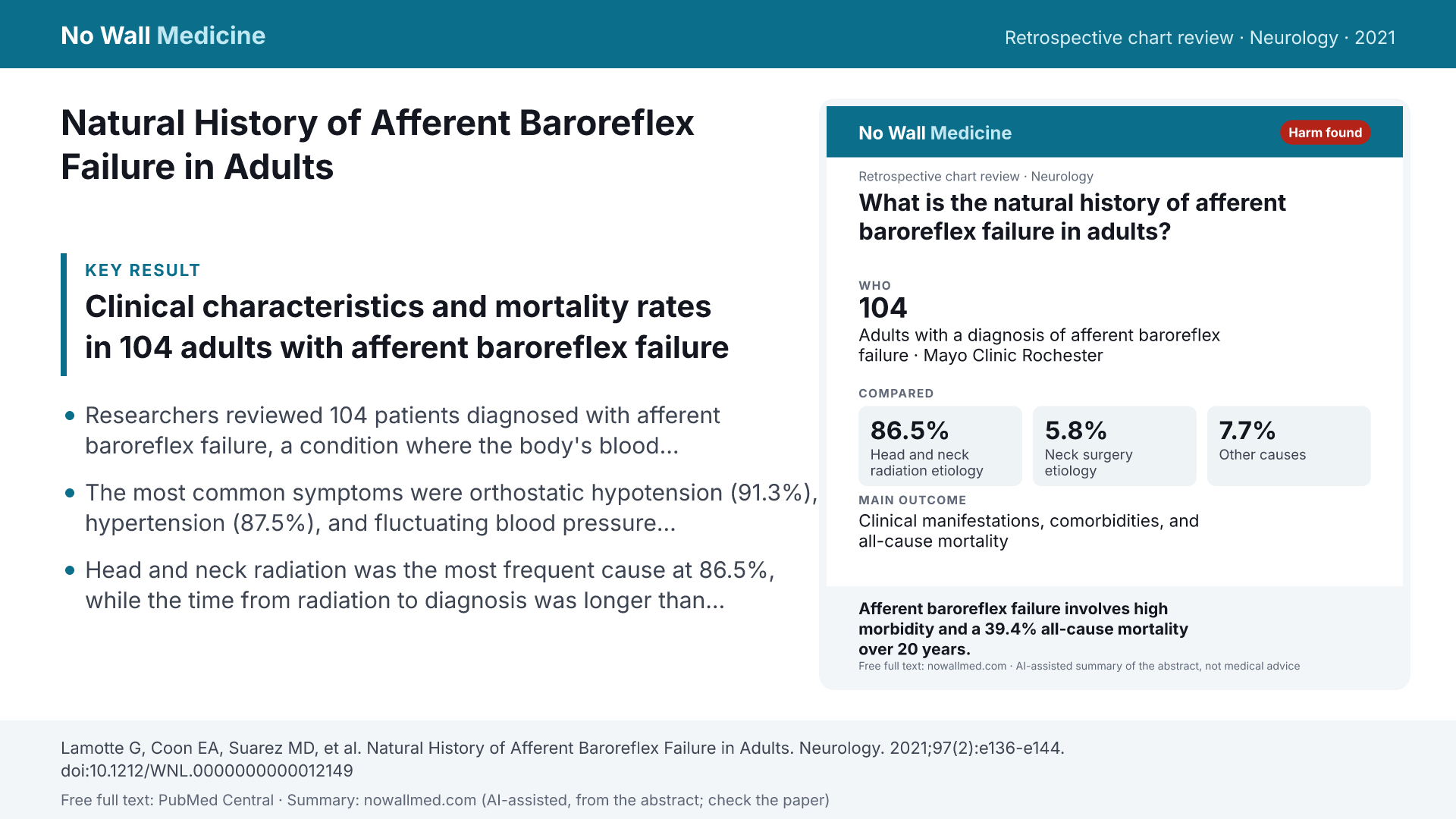
Key result: Clinical characteristics and mortality rates in 104 adults with afferent baroreflex failure
Retrospective chart reviewHarm found
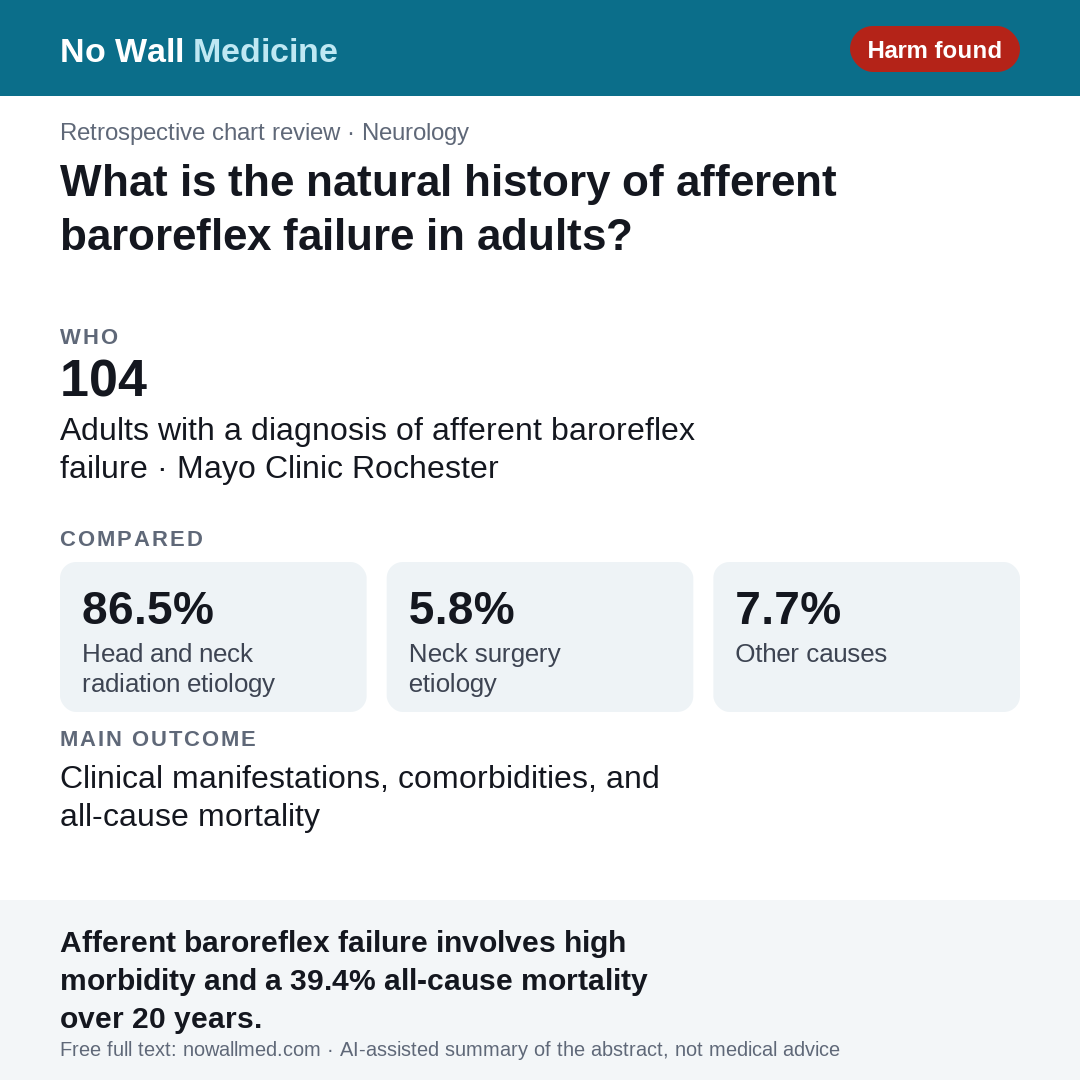
What is the natural history of afferent baroreflex failure in adults?
Who
104
Adults with a diagnosis of afferent baroreflex failure · Mayo Clinic Rochester
Compared
86.5%Head and neck radiation etiology
5.8%Neck surgery etiology
7.7%Other causes
Main outcome
Clinical manifestations, comorbidities, and all-cause mortality
Bottom line: Afferent baroreflex failure involves high morbidity and a 39.4% all-cause mortality over 20 years.
Neurology · 2021-05-04Download image
Key points
- Researchers reviewed 104 patients diagnosed with afferent baroreflex failure, a condition where the body's blood pressure sensors fail, between 2000 and 2020.
- The most common symptoms were orthostatic hypotension (91.3%), hypertension (87.5%), and fluctuating blood pressure (78.8%), with all-cause mortality at 39.4% over 20 years.
- Head and neck radiation was the most frequent cause at 86.5%, while the time from radiation to diagnosis was longer than the time from surgery.
Why it matters: The natural history and clinical manifestations of afferent baroreflex failure in adults were not previously described.
Discussion prompts
- Would these patients look like yours? Who was left out?
- Is the main outcome one that matters to patients?
- Is the difference large enough to change what you do?
Cite: Lamotte G, Coon EA, Suarez MD, et al. Natural History of Afferent Baroreflex Failure in Adults. Neurology. 2021. doi:10.1212/WNL.0000000000012149
Free full text: PubMed Central · Summary and visual abstract: nowallmed.com/a/natural-history-of-afferent-baroreflex-failure-in-e3cfnt/ (AI-assisted from the abstract; check the paper before relying on it).