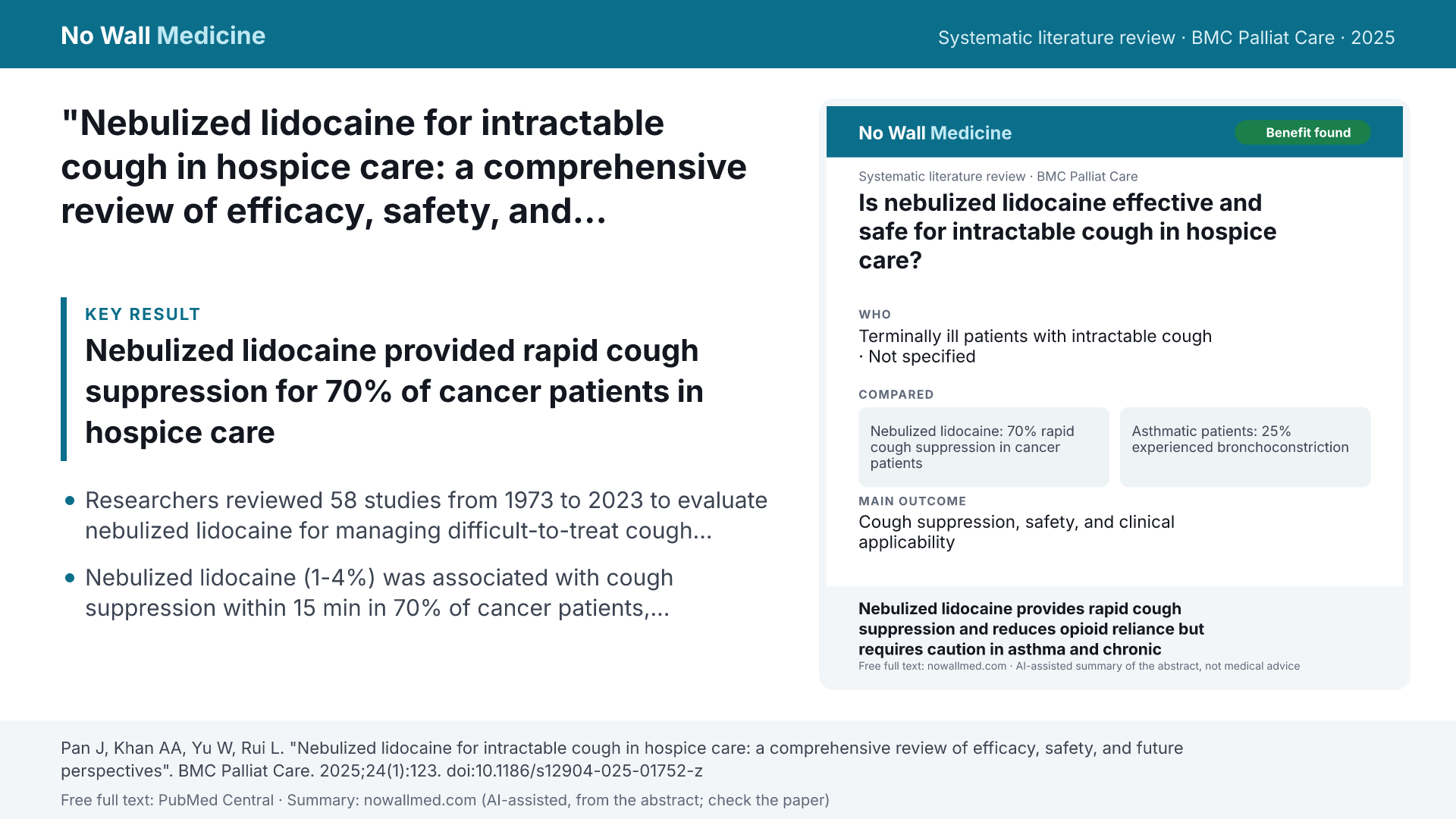
Nebulized lidocaine provided rapid cough suppression for 70% of cancer patients in hospice care
"Nebulized lidocaine for intractable cough in hospice care: a comprehensive review of efficacy, safety, and future perspectives"
Systematic literature reviewBenefit found
Is nebulized lidocaine effective and safe for intractable cough in hospice care?
Who
Terminally ill patients with intractable cough · Not specified
Compared
Nebulized lidocaine: 70% rapid cough suppression in cancer patients
Asthmatic patients: 25% experienced bronchoconstriction
Main outcome
Cough suppression, safety, and clinical applicability
Bottom line: Nebulized lidocaine provides rapid cough suppression and reduces opioid reliance but requires caution in asthma and chronic obstructive pulmonary disease.
Limitation: Variability in efficacy and limited benefits in severe chronic obstructive pulmonary disease with acute respiratory failure.
BMC Palliat Care · 2025-04-30 · Save PNG
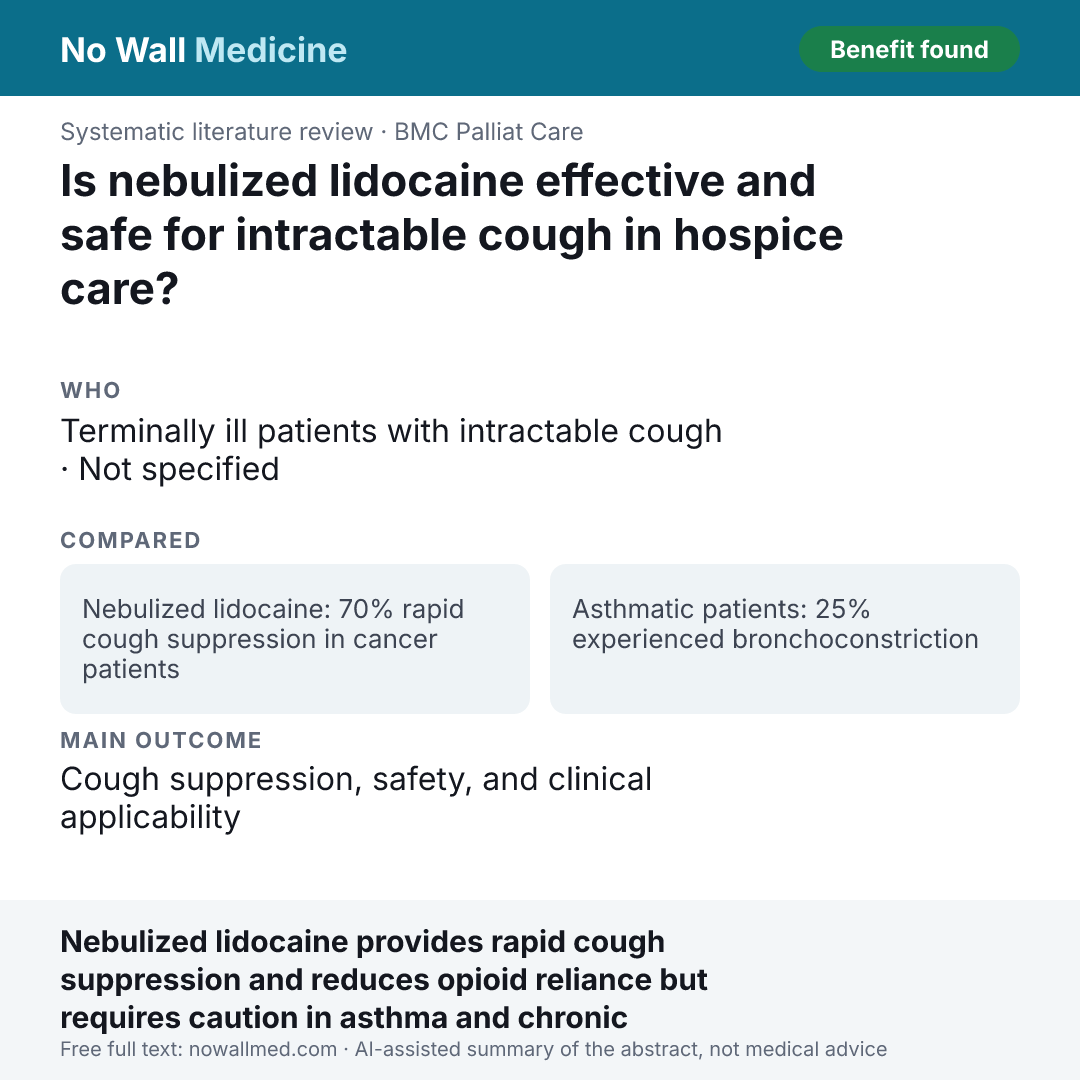
Clinical question: Is nebulized lidocaine effective and safe for intractable cough in hospice care?
Why it matters: Conventional therapies for intractable cough in terminally ill patients often fail due to inadequate efficacy or side effects that limit the dose.
Key points
- Researchers reviewed 58 studies from 1973 to 2023 to evaluate nebulized lidocaine for managing difficult-to-treat cough in palliative populations.
- Nebulized lidocaine (1-4%) was associated with cough suppression within 15 min in 70% of cancer patients, with effects lasting 2-4 h.
- While 80% of cases showed improved comfort, 25% of asthmatic patients experienced bronchoconstriction, defined as a decline in forced expiratory volume in 1 second of ≥15%.
Limitation the authors note: The authors note that future research should prioritize standardized dosing, long-term safety, and randomized controlled trials in diverse hospice populations.
Headline and key points written with AI from the paper’s abstract, with every number checked against it. Read the paper before relying on them.
Was this summary helpful?
Subject terms
Headline, design, result, key points, caveat and citation as plain text.
Cite this article
Pan J, Khan AA, Yu W, Rui L. "Nebulized lidocaine for intractable cough in hospice care: a comprehensive review of efficacy, safety, and future perspectives". BMC Palliat Care. 2025;24(1):123. doi:10.1186/s12904-025-01752-z
Spotted a mistake? Suggest a correction