Neoadjuvant radiotherapy did not improve survival for small hepatocellular carcinoma
Neoadjuvant intensity modulated radiotherapy for a single and small (≤5 cm) hepatitis B virus-related hepatocellular carcinoma predicted to have high risks of microvascular invasion: a randomized clinical trial
Randomized clinical trialNo clear difference
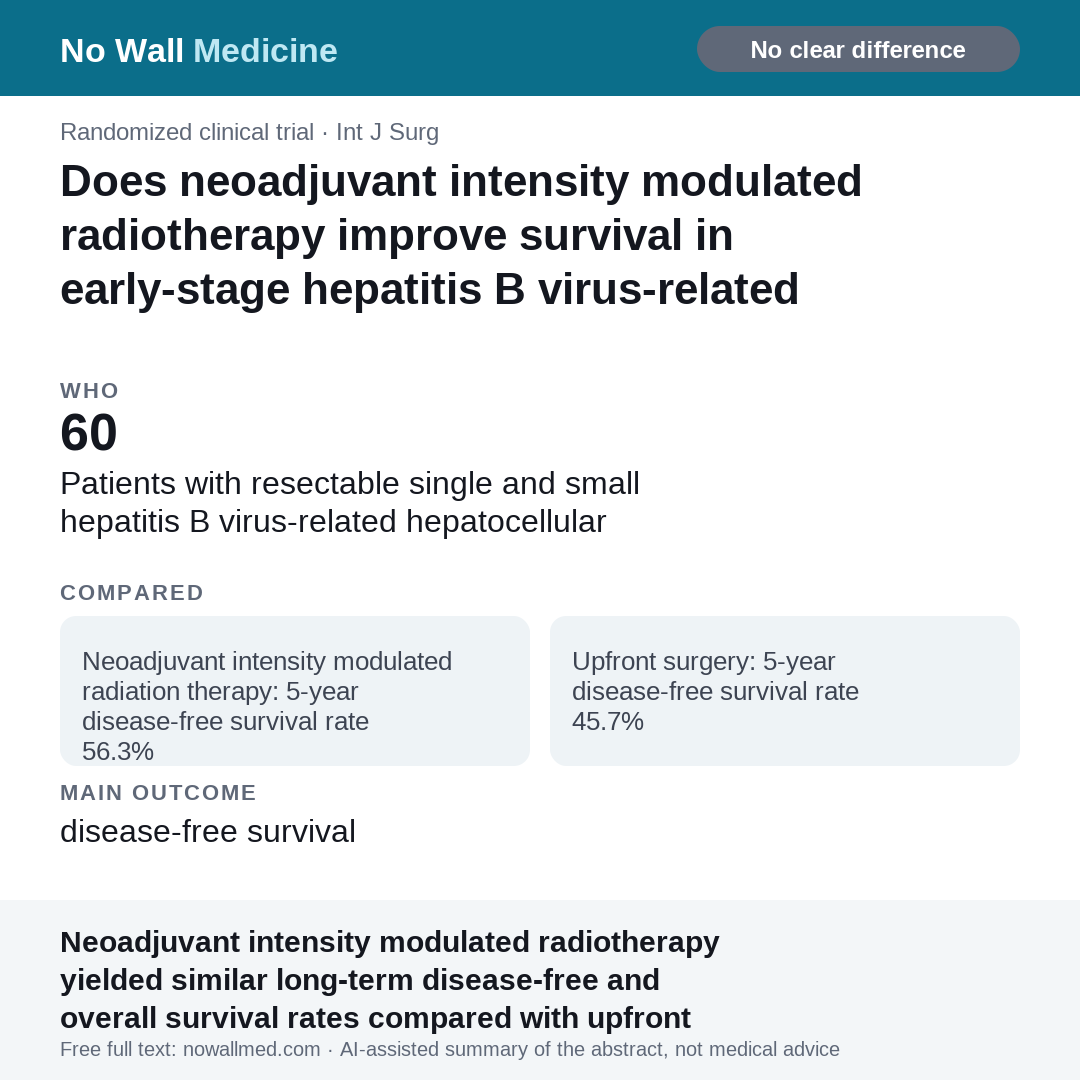
Does neoadjuvant intensity modulated radiotherapy improve survival in early-stage hepatitis B virus-related hepatocellular carcinoma?
Who
60
Patients with resectable single and small hepatitis B virus-related hepatocellular carcinoma
Compared
Neoadjuvant intensity modulated radiation therapy: 5-year disease-free survival rate 56.3%
Upfront surgery: 5-year disease-free survival rate 45.7%
Main outcome
disease-free survival
Bottom line: Neoadjuvant intensity modulated radiotherapy yielded similar long-term disease-free and overall survival rates compared with upfront surgery.
Int J Surg · 2023-10-01Download image
Clinical question: Does neoadjuvant intensity modulated radiotherapy improve survival in early-stage hepatitis B virus-related hepatocellular carcinoma?
Why it matters: The role of neoadjuvant radiotherapy in treating early-stage hepatocellular carcinoma with high risks of microvascular invasion was unknown
Key points
- 60 patients with small hepatitis B virus-related hepatocellular carcinoma were randomized to neoadjuvant radiotherapy or upfront surgery.
- The 5-year disease-free survival rates were 56.3% and 45.7% for neoadjuvant radiotherapy and upfront surgery, respectively.
- The 5-year overall survival rates were 72.7% and 60.7% for neoadjuvant radiotherapy and upfront surgery, respectively.
Limitation the authors note: The study had a small sample size of 60 patients
Headline and key points written with AI from the paper’s abstract, with every number checked against it. Read the paper before relying on them.
Topics
Cite this article
Wei X, Jiang Y, Feng S, Lu C, Huo L, Zhou B. Neoadjuvant intensity modulated radiotherapy for a single and small (≤5 cm) hepatitis B virus-related hepatocellular carcinoma predicted to have high risks of microvascular invasion: a randomized clinical trial. Int J Surg. 2023. doi:10.1097/JS9.0000000000000574
Spotted a mistake? Suggest a correction
Top studies every Monday
The week’s key trials and guidelines in your specialties, plus any topics you follow. By email, free.
Get the weekly digest