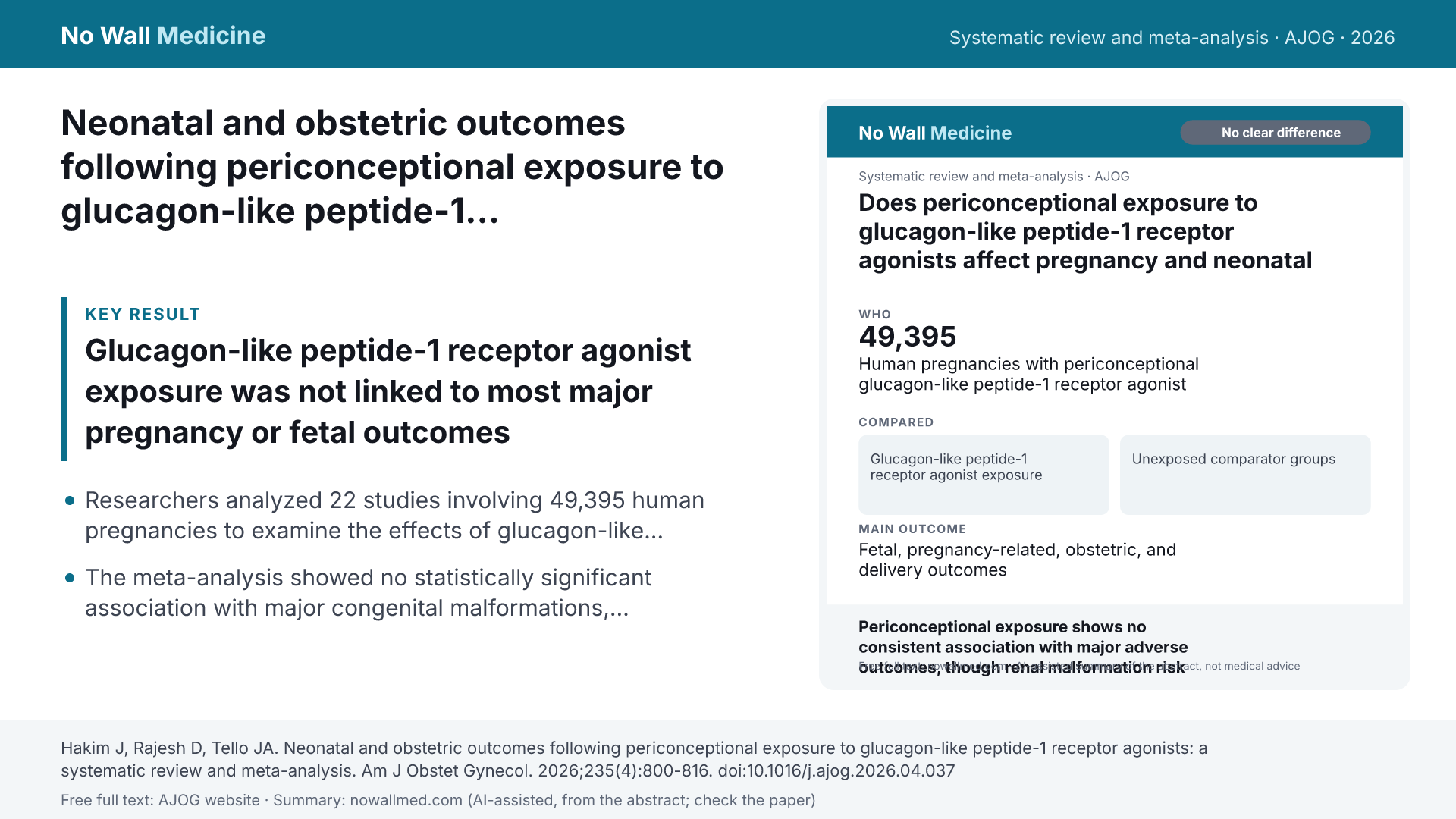
Glucagon-like peptide-1 receptor agonist exposure was not linked to most major pregnancy or fetal outcomes
Neonatal and obstetric outcomes following periconceptional exposure to glucagon-like peptide-1 receptor agonists: a systematic review and meta-analysis
Systematic review and meta-analysisNo clear difference
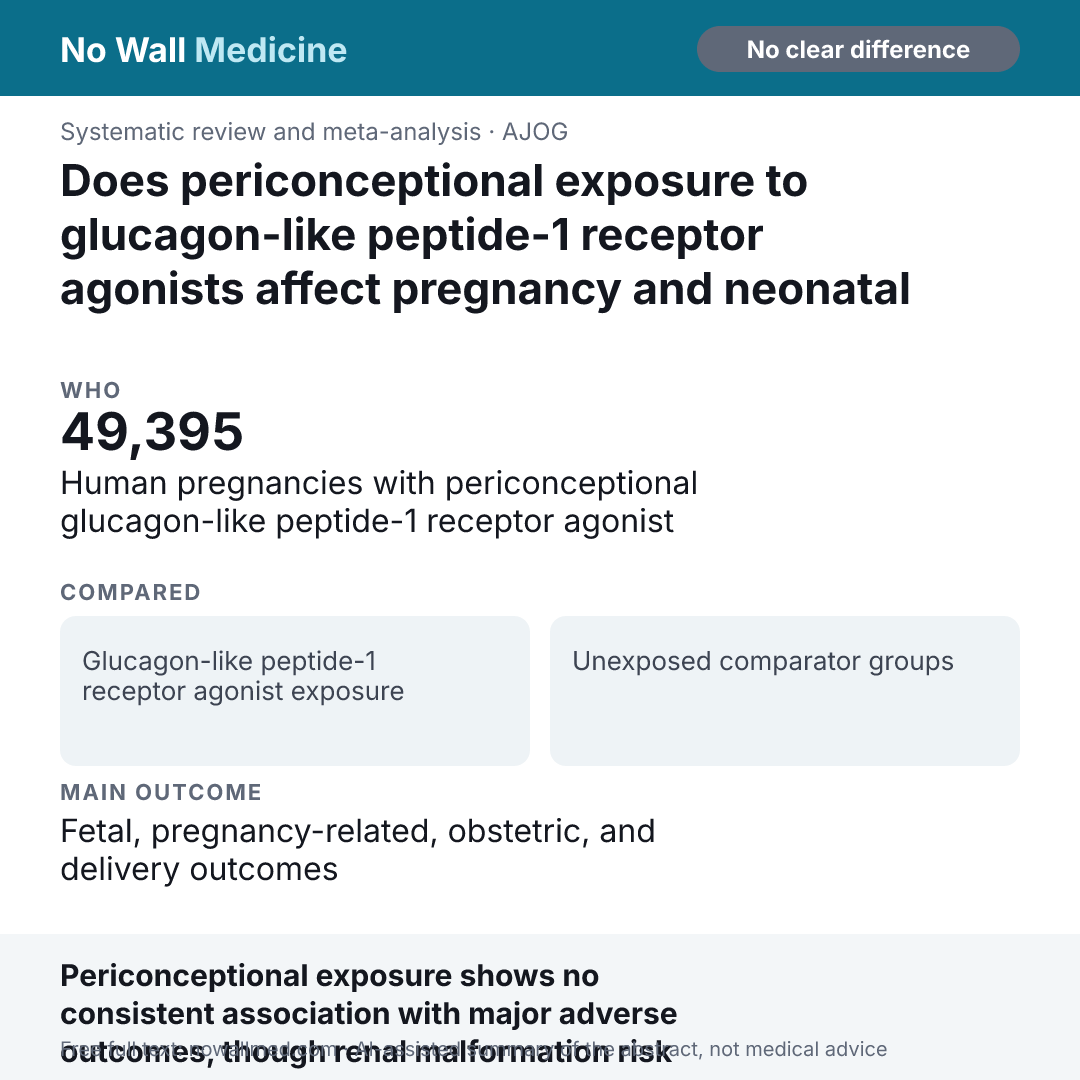
Does periconceptional exposure to glucagon-like peptide-1 receptor agonists affect pregnancy and neonatal outcomes?
Who
49,395
Human pregnancies with periconceptional glucagon-like peptide-1 receptor agonist exposure
Compared
Glucagon-like peptide-1 receptor agonist exposure
Unexposed comparator groups
Main outcome
Fetal, pregnancy-related, obstetric, and delivery outcomes
Result: odds ratio 1.23 (95% confidence interval 1.09-1.39) for renal malformations
Bottom line: Periconceptional exposure shows no consistent association with major adverse outcomes, though renal malformation risk requires cautious interpretation.
Limitation: Renal malformation risk likely reflects residual confounding by maternal disease severity.
AJOG · 2026-04-28 · Save PNG
Clinical question: Does periconceptional exposure to glucagon-like peptide-1 receptor agonists affect pregnancy and neonatal outcomes?
Key points
- Researchers analyzed 22 studies involving 49,395 human pregnancies to examine the effects of glucagon-like peptide-1 receptor agonist exposure around the time of conception.
- The meta-analysis showed no statistically significant association with major congenital malformations, preterm delivery, or spontaneous pregnancy loss.
- A small association with renal malformations, or kidney defects, was detected with an odds ratio of 1.23 (95% confidence interval, 1.09-1.39).
Limitation the authors note: The observed risk for renal malformations was largely driven by a single large cohort with substantial baseline imbalances and moderate to high heterogeneity.
Headline and key points written with AI from the paper’s abstract, with every number checked against it. Read the paper before relying on them.
Was this summary helpful?
Subject terms
Headline, design, result, key points, caveat and citation as plain text.
Cite this article
Hakim J, Rajesh D, Tello JA. Neonatal and obstetric outcomes following periconceptional exposure to glucagon-like peptide-1 receptor agonists: a systematic review and meta-analysis. Am J Obstet Gynecol. 2026;235(4):800-816. doi:10.1016/j.ajog.2026.04.037
Spotted a mistake? Suggest a correction