Neonatal encephalopathy: a systematic review of reported treatment outcomes
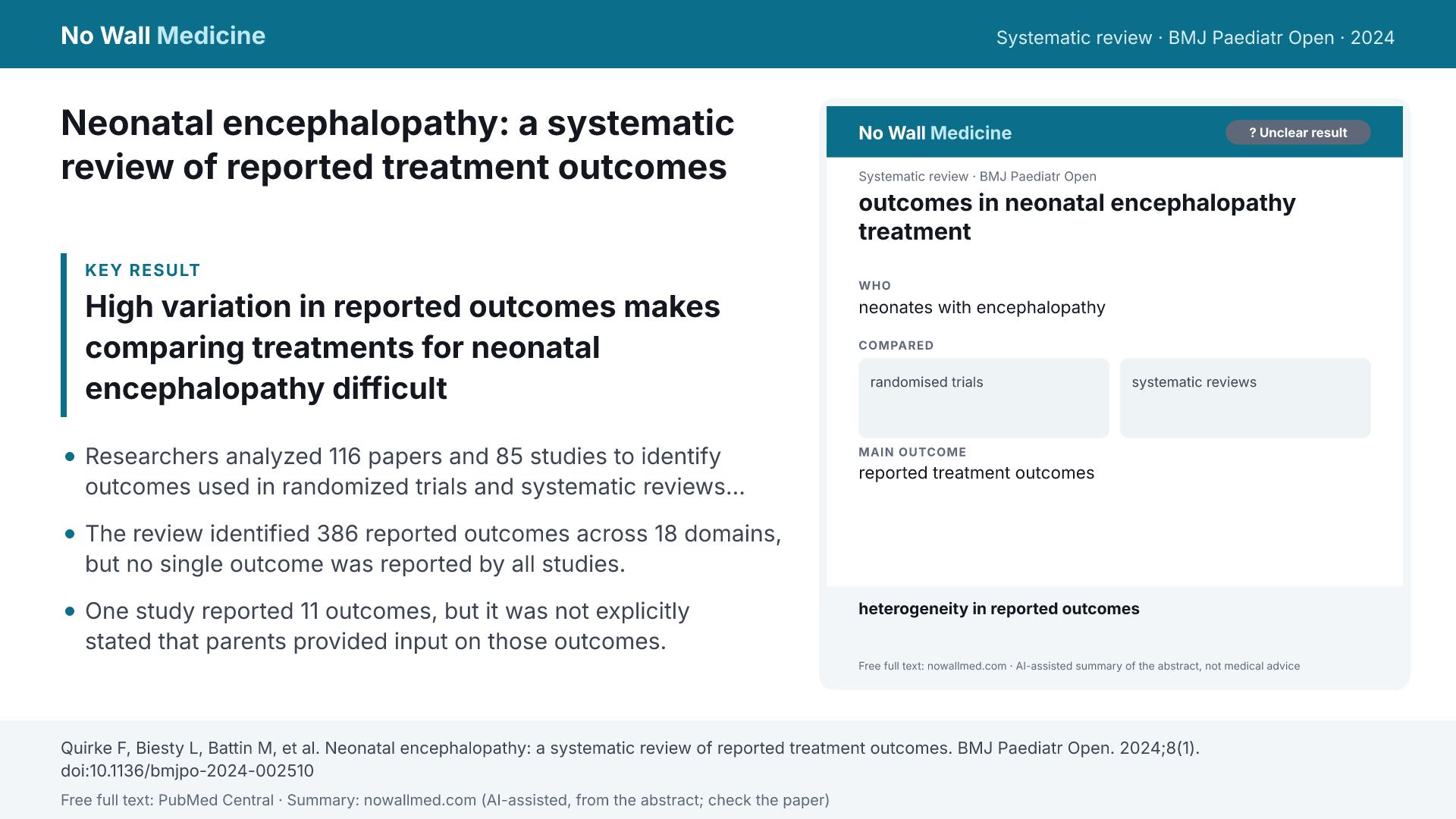
Key result: High variation in reported outcomes makes comparing treatments for neonatal encephalopathy difficult
Systematic reviewUnclear result
outcomes in neonatal encephalopathy treatment
Who
neonates with encephalopathy
Compared
randomised trials
systematic reviews
Main outcome
reported treatment outcomes
Bottom line: heterogeneity in reported outcomes
Limitation: heterogeneity in outcomes
BMJ Paediatr Open · 2024-09-25
Key points
- Researchers analyzed 116 papers and 85 studies to identify outcomes used in randomized trials and systematic reviews for neonatal encephalopathy treatments.
- The review identified 386 reported outcomes across 18 domains, but no single outcome was reported by all studies.
- One study reported 11 outcomes, but it was not explicitly stated that parents provided input on those outcomes.
Why it matters: Different studies use different measures to evaluate treatments for neonatal encephalopathy, which makes it difficult to compare results and synthesize data.
Discussion prompts
- Would these patients look like yours? Who was left out?
- Is the main outcome one that matters to patients?
- Is the difference large enough to change what you do?
Cite: Quirke F, Biesty L, Battin M, et al. Neonatal encephalopathy: a systematic review of reported treatment outcomes. BMJ Paediatr Open. 2024;8(1). doi:10.1136/bmjpo-2024-002510
Free full text: PubMed Central · Summary and visual abstract: nowallmed.com/a/neonatal-encephalopathy-a-systematic-review-of-reported-treatment-14pef3k/ (AI-assisted from the abstract; check the paper before relying on it).