Systematic reviewJournal of Clinical Endocrinology & Metabolism · Oct 7, 2021

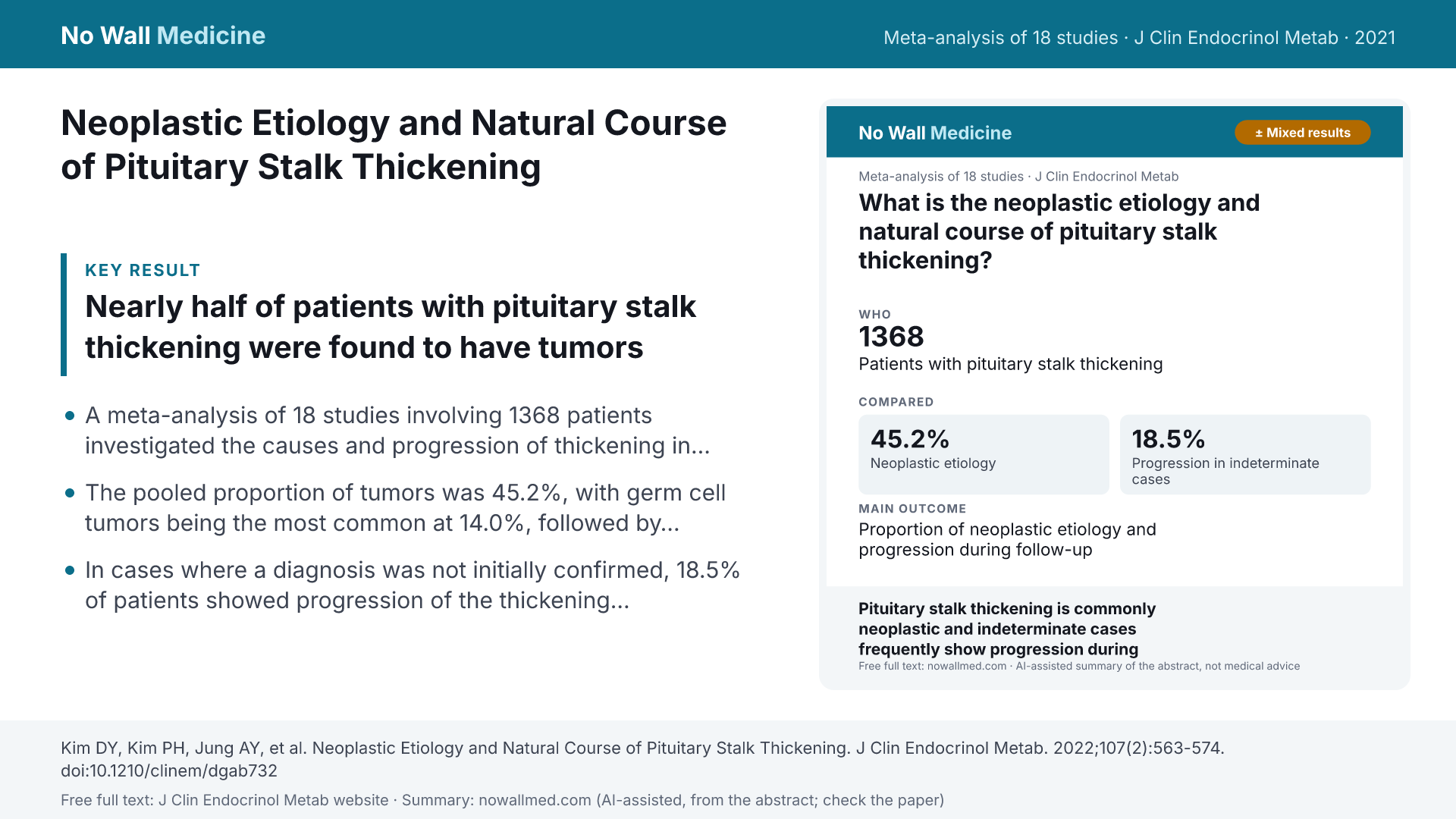
Nearly half of patients with pituitary stalk thickening were found to have tumors

Neoplastic Etiology and Natural Course of Pituitary Stalk Thickening

Kim DY, Kim PH, Jung AY, Choi JH, Cho YA, Yoon HM, et al
Endocrinology & DiabetesOncologyPediatric
Meta-analysis of 18 studiesMixed results
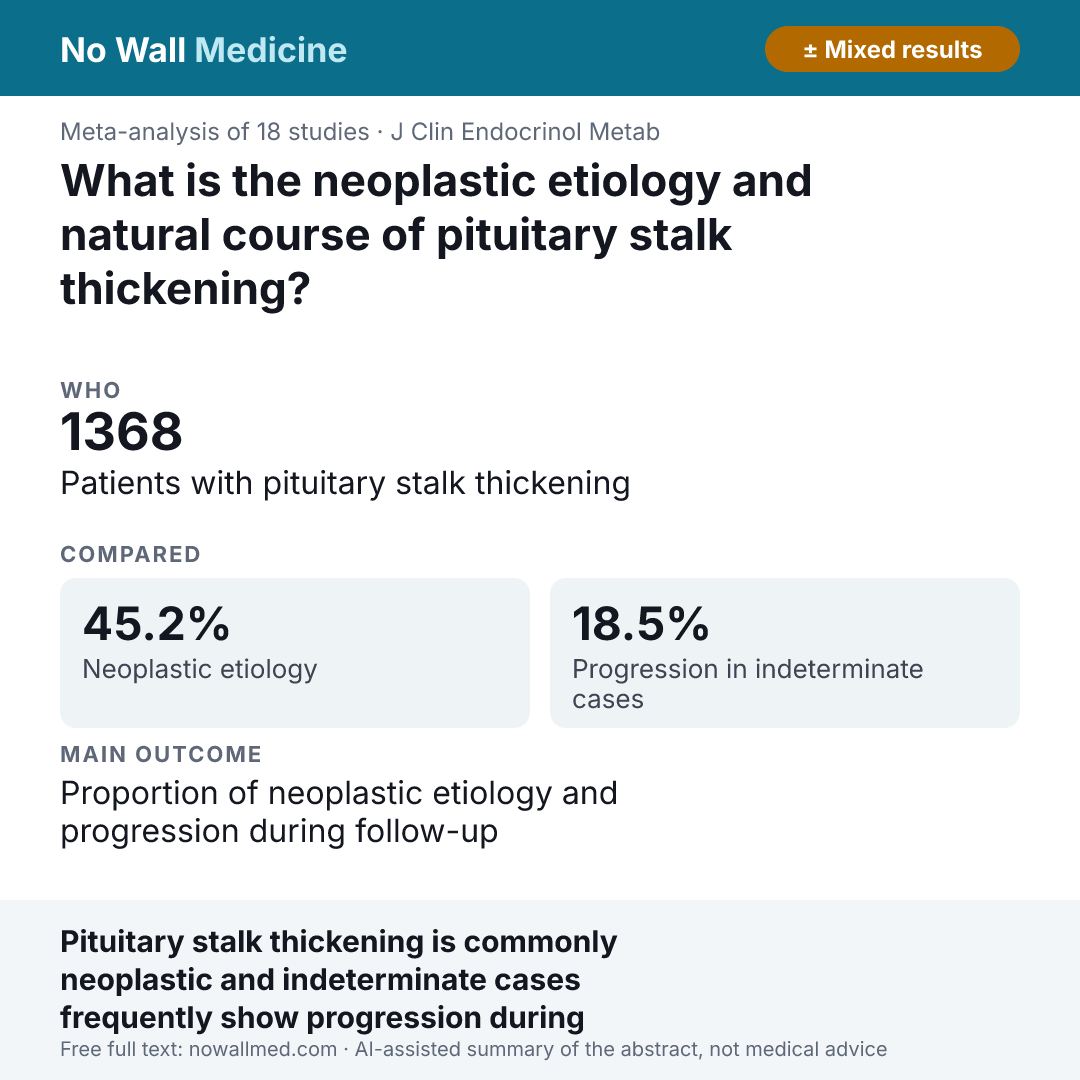
What is the neoplastic etiology and natural course of pituitary stalk thickening?
Who
1368
Patients with pituitary stalk thickening
Compared
45.2%Neoplastic etiology (95% CI, 33.3%-57.8%)
18.5%Progression in indeterminate cases (95% CI, 7.6%-38.3%)
Main outcome
Proportion of neoplastic etiology and progression during follow-up
Bottom line: Pituitary stalk thickening is commonly neoplastic and indeterminate cases frequently show progression during follow-up.
Limitation: substantial heterogeneity across studies (I2 = 93%)
J Clin Endocrinol Metab · 2021-10-07
Read the full paper free at the publisher ↗
Save PNG⬇ Slide🖨 Handout

Why it matters: The neoplastic etiology and natural course of pituitary stalk thickening are not fully understood, which is necessary to establish diagnostic and surveillance strategies.

Headline and visual abstract written with AI from the paper’s abstract, with every number checked against it. Read the paper before relying on them.

Was this summary helpful?

Subject terms

Diagnosis, Differential; Disease Progression; Follow-Up Studies; Humans; Hypopituitarism; Incidental Findings; Magnetic Resonance Imaging; Organ Size; Pituitary Gland; Pituitary Neoplasms

DOI: 10.1210/clinem/dgab732 · PubMed: 34614160

Cite this article

Kim DY, Kim PH, Jung AY, et al. Neoplastic Etiology and Natural Course of Pituitary Stalk Thickening. J Clin Endocrinol Metab. 2022;107(2):563-574. doi:10.1210/clinem/dgab732

RIS (EndNote, Zotero, Mendeley)BibTeX

Spotted a mistake? Suggest a correction

Top Endocrinology & Diabetes studies every Monday

The week’s key trials and guidelines, free to read, in one short email. No account; unsubscribe in one click.

Choose specialties and topics

Similar articles

Systematic review · J Neurosurg · Sep 3, 2021 · Neurosurgery, Endocrinology & Diabetes

Stereotactic radiosurgery shows high tumor control but lower hormone remission in secretory pituitary adenomas

Research · J Clin Endocrinol Metab · Apr 13, 2026 · Endocrinology & Diabetes

3D volume growth rate may open new perspectives for the classification of aggressive pituitary adenomas

Systematic review · Eur Radiol · Aug 12, 2024 · Radiology & Imaging, Oncology

Amide proton transfer imaging aids in distinguishing glioma progression from therapy-related changes

Clinical trial · NEJM · Jul 12, 2023 · Oncology

BRAF-MEK Inhibition in Newly Diagnosed Papillary Craniopharyngiomas

Research · NEJM · Jan 8, 2025 · Oncology, Obstetrics & Gynecology

Prenatal cfDNA Sequencing and Incidental Detection of Maternal Cancer