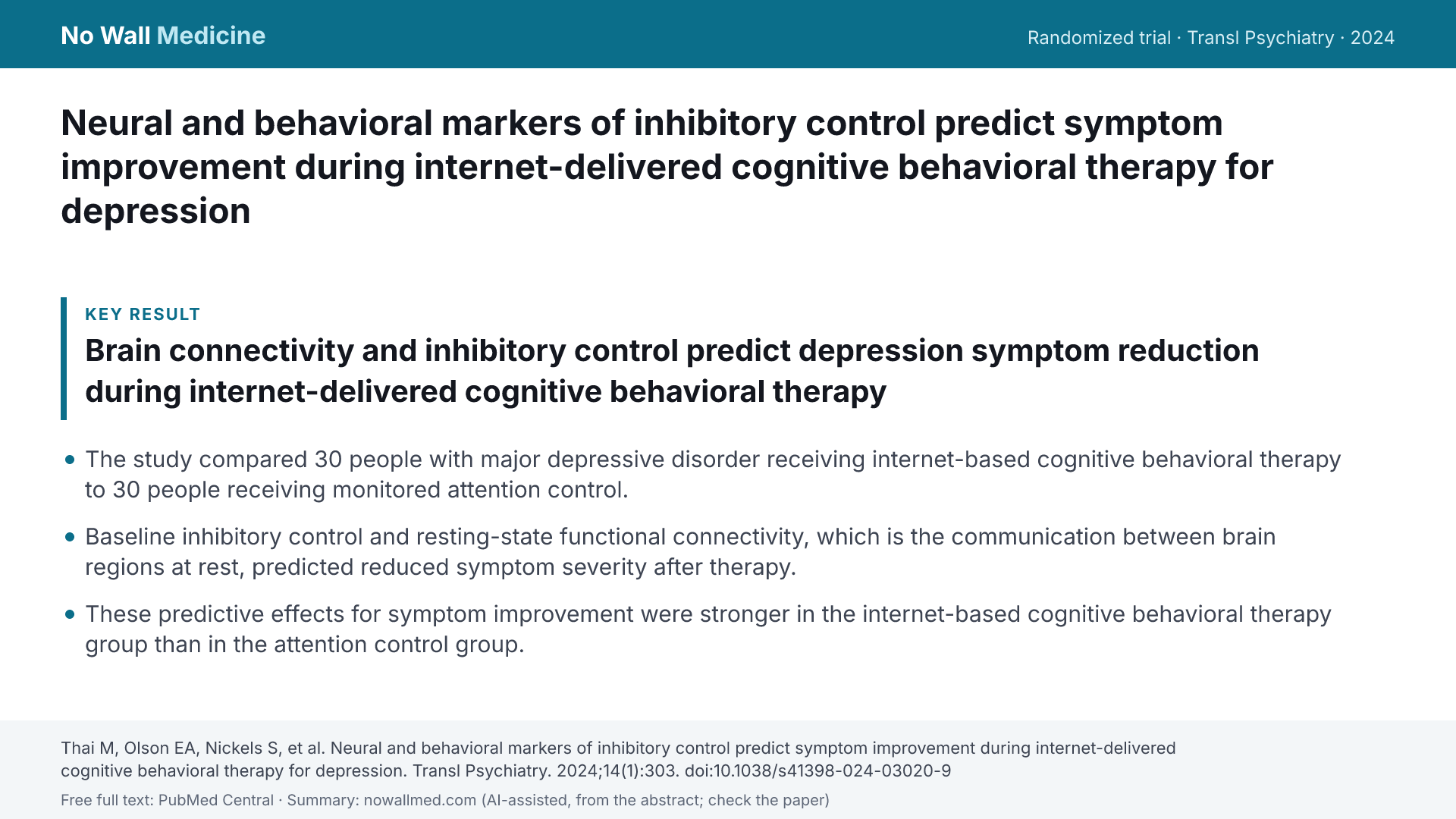
Brain connectivity and inhibitory control predict depression symptom reduction during internet-delivered cognitive behavioral therapy
Neural and behavioral markers of inhibitory control predict symptom improvement during internet-delivered cognitive behavioral therapy for depression
Why it matters: It was unknown if baseline inhibitory control or brain connectivity in specific regions could predict how patients respond to internet-delivered cognitive behavioral therapy for depression.
Key points
- The study compared 30 people with major depressive disorder receiving internet-based cognitive behavioral therapy to 30 people receiving monitored attention control.
- Baseline inhibitory control and resting-state functional connectivity, which is the communication between brain regions at rest, predicted reduced symptom severity after therapy.
- These predictive effects for symptom improvement were stronger in the internet-based cognitive behavioral therapy group than in the attention control group.
Headline and key points written with AI from the paper’s abstract, with every number checked against it. Read the paper before relying on them.
Was this summary helpful?
Subject terms
Cite this article
Thai M, Olson EA, Nickels S, Dillon DG, Webb CA, Ren B. Neural and behavioral markers of inhibitory control predict symptom improvement during internet-delivered cognitive behavioral therapy for depression. Transl Psychiatry. 2024. doi:10.1038/s41398-024-03020-9
Spotted a mistake? Suggest a correction
Top studies every Monday
The week’s key trials and guidelines in your specialties, plus any topics you follow. By email, free.
Get the weekly digest