Neurodevelopment of Children Whose Mothers Were Randomized to Low-Dose Aspirin During Pregnancy
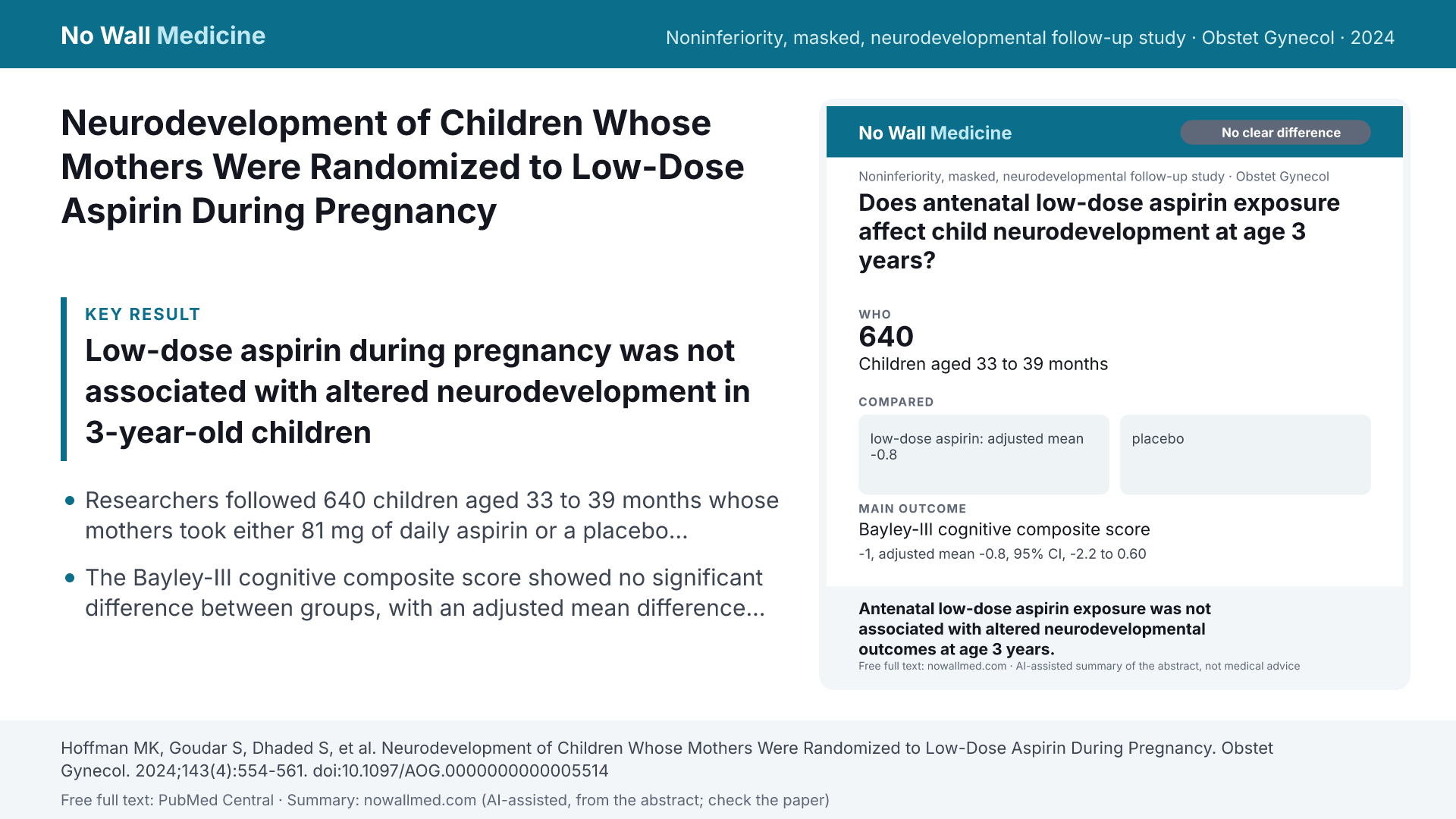
Key result: Low-dose aspirin during pregnancy was not associated with altered neurodevelopment in 3-year-old children
Noninferiority, masked, neurodevelopmental follow-up studyNo clear difference
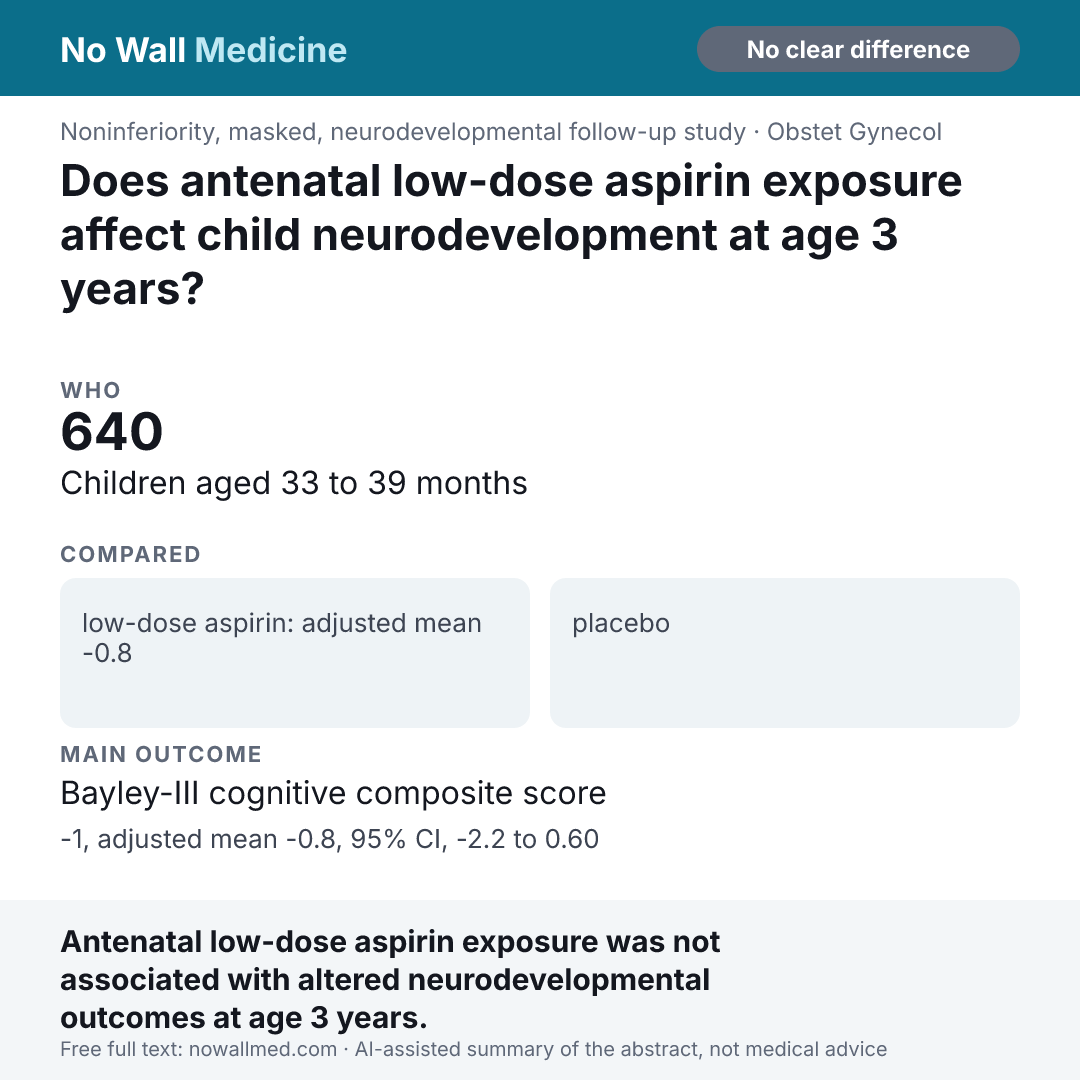
Does antenatal low-dose aspirin exposure affect child neurodevelopment at age 3 years?
Who
640
Children aged 33 to 39 months
Compared
low-dose aspirin: adjusted mean -0.8
placebo
Main outcome
Bayley-III cognitive composite score
Result: -1, adjusted mean -0.8, 95% CI, -2.2 to 0.60
Bottom line: Antenatal low-dose aspirin exposure was not associated with altered neurodevelopmental outcomes at age 3 years.
Obstet Gynecol · 2024-01-23 · Save PNG
Key points
- Researchers followed 640 children aged 33 to 39 months whose mothers took either 81 mg of daily aspirin or a placebo during early pregnancy.
- The Bayley-III cognitive composite score showed no significant difference between groups, with an adjusted mean difference of -0.8 (95% CI, -2.2 to 0.60).
- No significant differences were found in language, motor, or communication scores, nor in the proportion of children scoring below 70 on the Bayley-III.
Discussion prompts
- Would these patients look like yours? Who was left out?
- Is the main outcome one that matters to patients?
- Is the difference large enough to change what you do?
Cite: Hoffman MK, Goudar S, Dhaded S, et al. Neurodevelopment of Children Whose Mothers Were Randomized to Low-Dose Aspirin During Pregnancy. Obstet Gynecol. 2024;143(4):554-561. doi:10.1097/AOG.0000000000005514
Free full text: PubMed Central · Summary and visual abstract: nowallmed.com/a/neurodevelopment-of-children-whose-mothers-were-randomized-to-low-1fqhnfm/ (AI-assisted from the abstract; check the paper before relying on it).