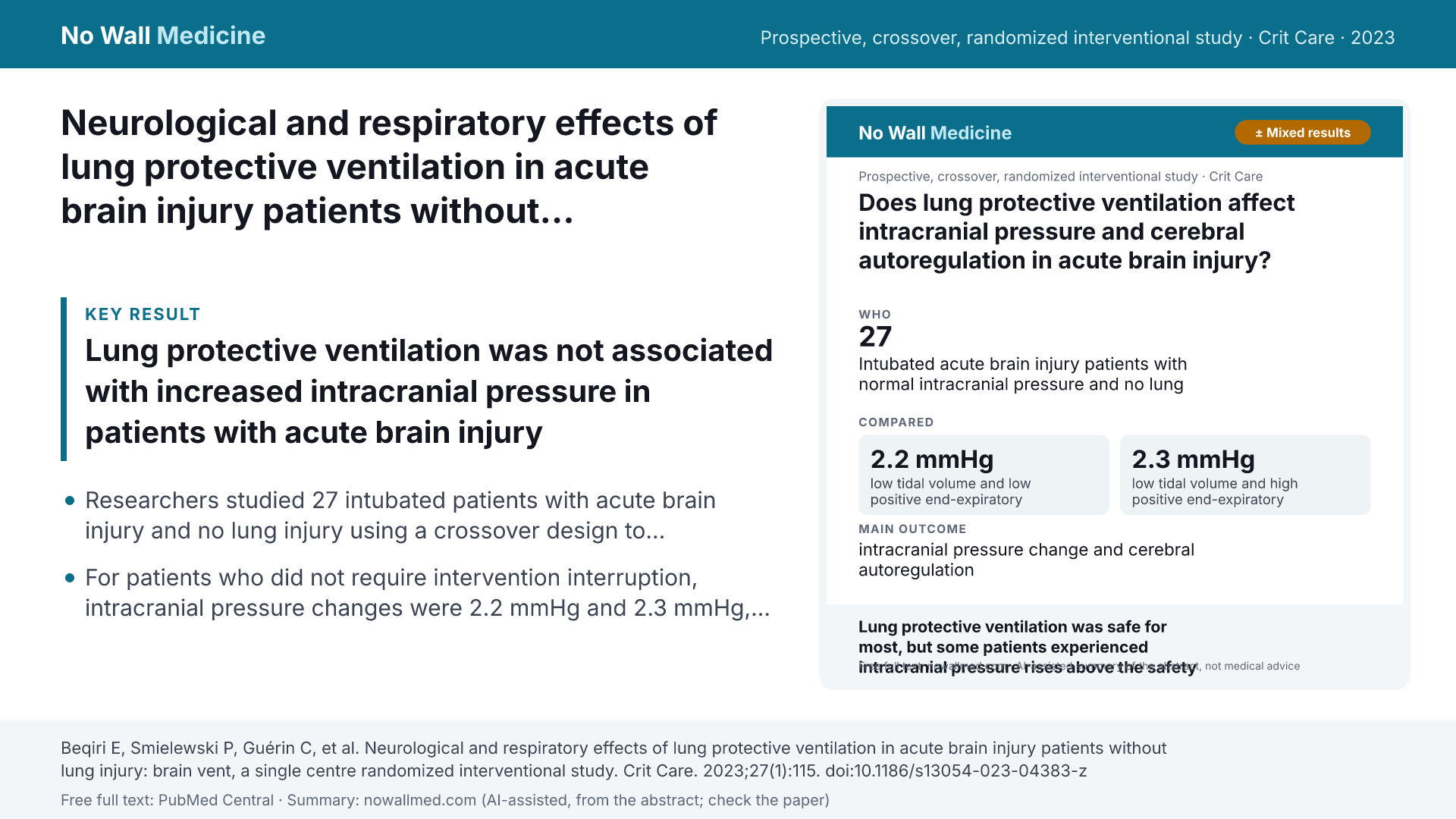
Lung protective ventilation was not associated with increased intracranial pressure in patients with acute brain injury
Neurological and respiratory effects of lung protective ventilation in acute brain injury patients without lung injury: brain vent, a single centre randomized interventional study
Prospective, crossover, randomized interventional studyMixed results
Does lung protective ventilation affect intracranial pressure and cerebral autoregulation in acute brain injury?
Who
27
Intubated acute brain injury patients with normal intracranial pressure and no lung injury
Compared
2.2 mmHglow tidal volume and low positive end-expiratory pressure
2.3 mmHglow tidal volume and high positive end-expiratory pressure
Main outcome
intracranial pressure change and cerebral autoregulation
Bottom line: Lung protective ventilation was safe for most, but some patients experienced intracranial pressure rises above the safety limit.
Limitation: Six patients reached the safety limit requiring interruption of at least one intervention.
Crit Care · 2023-03-20Download image
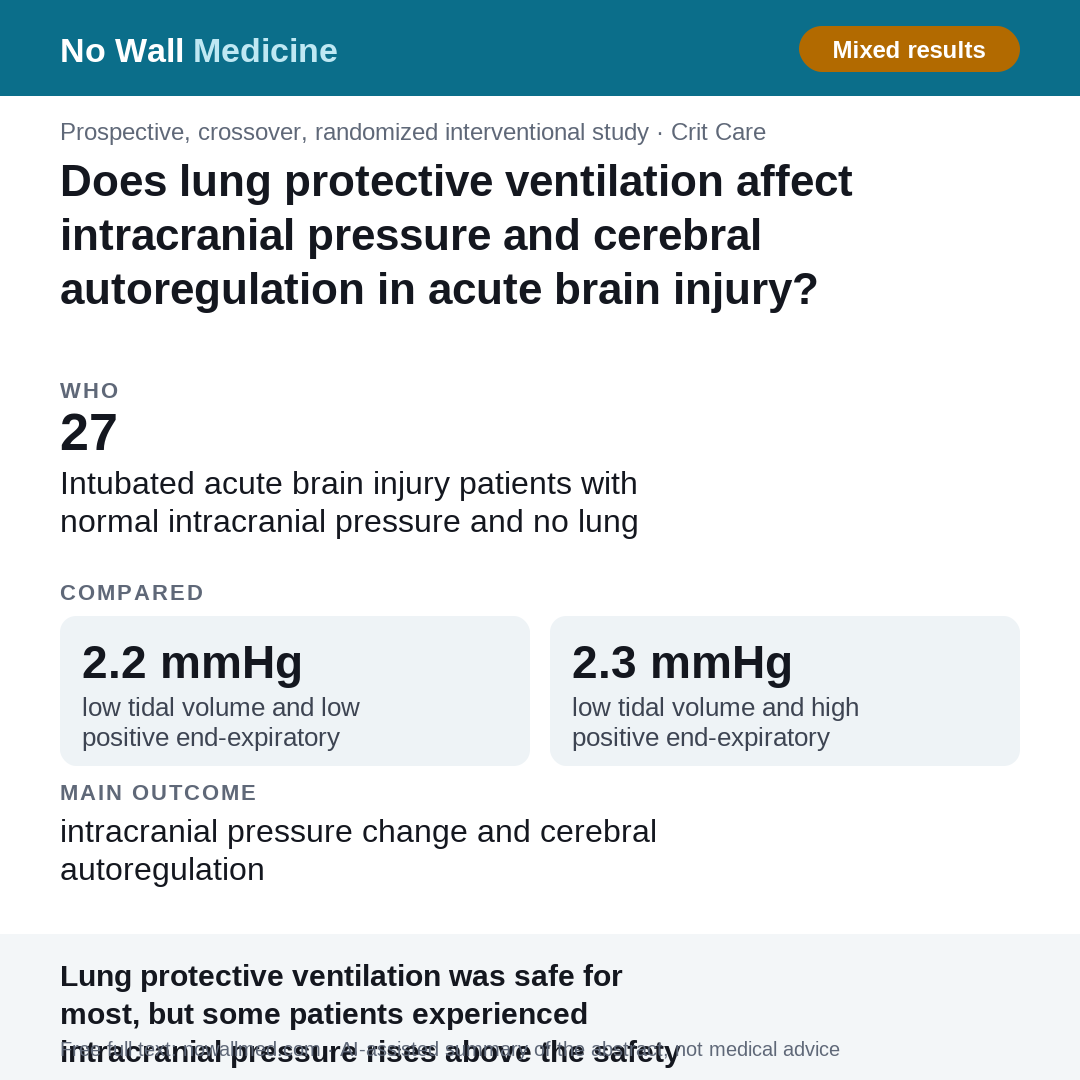
Clinical question: Does lung protective ventilation affect intracranial pressure and cerebral autoregulation in acute brain injury?
Key points
- Researchers studied 27 intubated patients with acute brain injury and no lung injury using a crossover design to compare low tidal volume with low or high positive end-expiratory pressure.
- For patients who did not require intervention interruption, intracranial pressure changes were 2.2 mmHg and 2.3 mmHg, and neither intervention significantly affected cerebral autoregulation or oxygenation.
- Interruption of the ventilation settings was associated with high baseline intracranial pressure, low brain compensatory reserve, and mechanical power.
Headline and key points written with AI from the paper’s abstract, with every number checked against it. Read the paper before relying on them.
Was this summary helpful?
Subject terms
Headline, design, result, key points, caveat and citation as plain text.
Cite this article
Beqiri E, Smielewski P, Guérin C, et al. Neurological and respiratory effects of lung protective ventilation in acute brain injury patients without lung injury: brain vent, a single centre randomized interventional study. Crit Care. 2023. doi:10.1186/s13054-023-04383-z
Spotted a mistake? Suggest a correction