Neutrophil elastase degradation of plasminogen is linked to failure of intrapleural fibrinolysis in pleural infections
Neutrophil-Mediated Inflammatory Plasminogen Degradation, Rather Than High Plasminogen-Activator Inhibitor-1, May Underly Failures and Inefficiencies of Intrapleural Fibrinolysis
Randomized trial analysisBenefit found
Does neutrophil elastase degradation of plasminogen contribute to intrapleural fibrinolytic failure?
Who
10
Hospitalized adults with pleural space infection
Compared
Pleural fluid: 9 of 10 patients unable to generate significant fibrinolytic response
Pleural fluid with plasminogen supplementation: rescued fibrinolysis in all patients
Main outcome
Fibrinolytic response to tissue plasminogen activator
Bottom line: Inflammatory plasminogen deficiency, rather than high inhibitor activity, contributes to intrapleural fibrinolytic failure.
Chest · 2024-05-06Download image
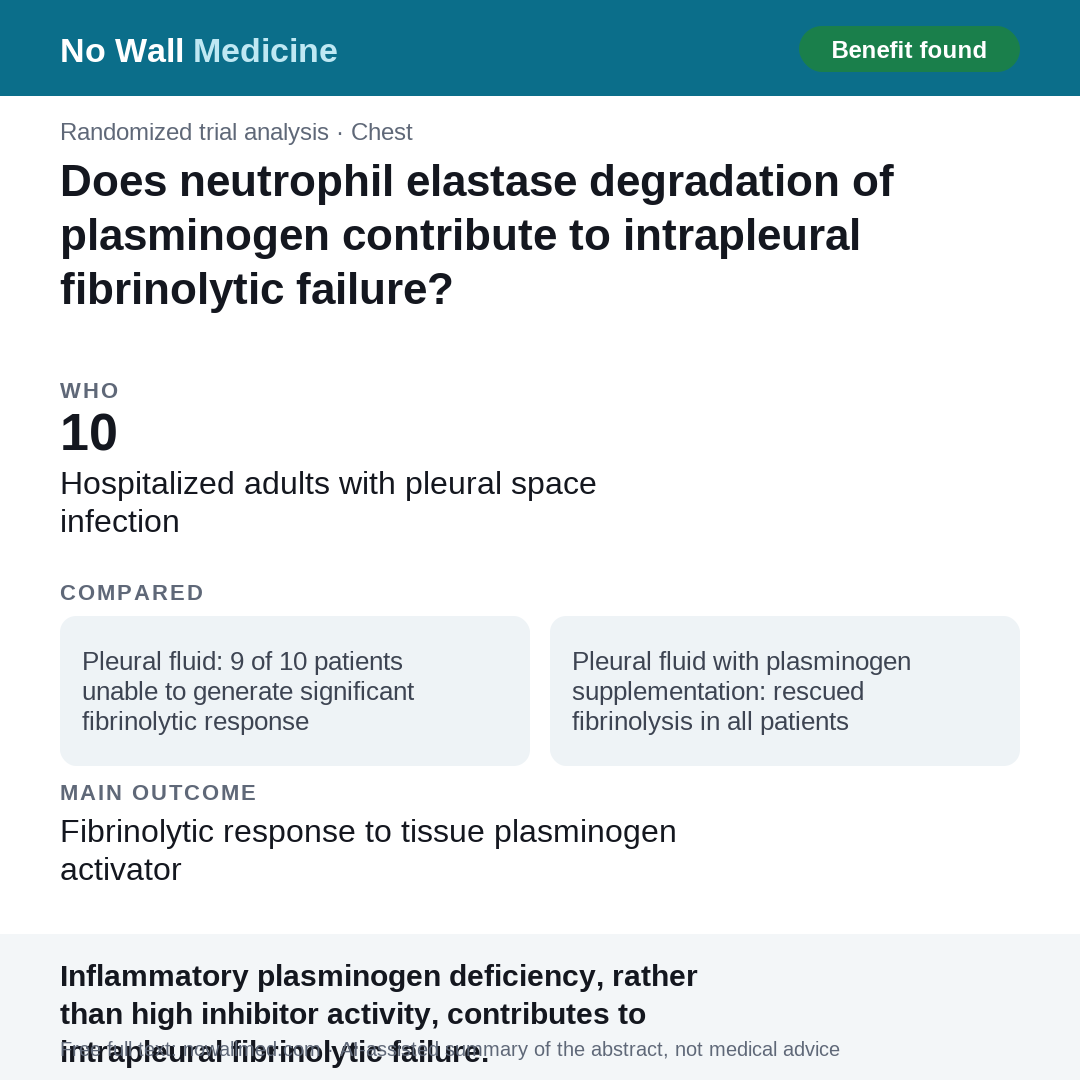
Clinical question: Does neutrophil elastase degradation of plasminogen contribute to intrapleural fibrinolytic failure?
Why it matters: It is unknown whether high levels of plasminogen-activator inhibitor-1 or neutrophil elastase degradation of plasminogen causes the failure of intrapleural fibrinolysis treatments.
Key points
- Researchers studied 10 hospitalized adults with pleural space infections by measuring elastase activity and plasminogen levels in pleural fluid and plasma.
- Pleural fluid elastase activity was more than fourfold higher and plasminogen antigen levels were more than threefold lower than in plasma.
- Pleural fluid from 9 of 10 patients failed to generate a significant fibrinolytic response to tissue plasminogen activator unless supplemented with plasminogen.
Headline and key points written with AI from the paper’s abstract, with every number checked against it. Read the paper before relying on them.
Was this summary helpful?
Subject terms
Cite this article
Barrett CD, Moore PK, Moore EE, Moore HB, Chandler JG, Siddiqui H. Neutrophil-Mediated Inflammatory Plasminogen Degradation, Rather Than High Plasminogen-Activator Inhibitor-1, May Underly Failures and Inefficiencies of Intrapleural Fibrinolysis. Chest. 2024. doi:10.1016/j.chest.2024.04.005
Spotted a mistake? Suggest a correction
Top studies every Monday
The week’s key trials and guidelines in your specialties, plus any topics you follow. By email, free.
Get the weekly digest