Nasal high flow reduced carbon dioxide levels during sleep in patients with severe COPD
Nocturnal respiratory support with nasal high flow in hypercapnic COPD: a randomised, crossover trial
Randomized, crossover trialBenefit found
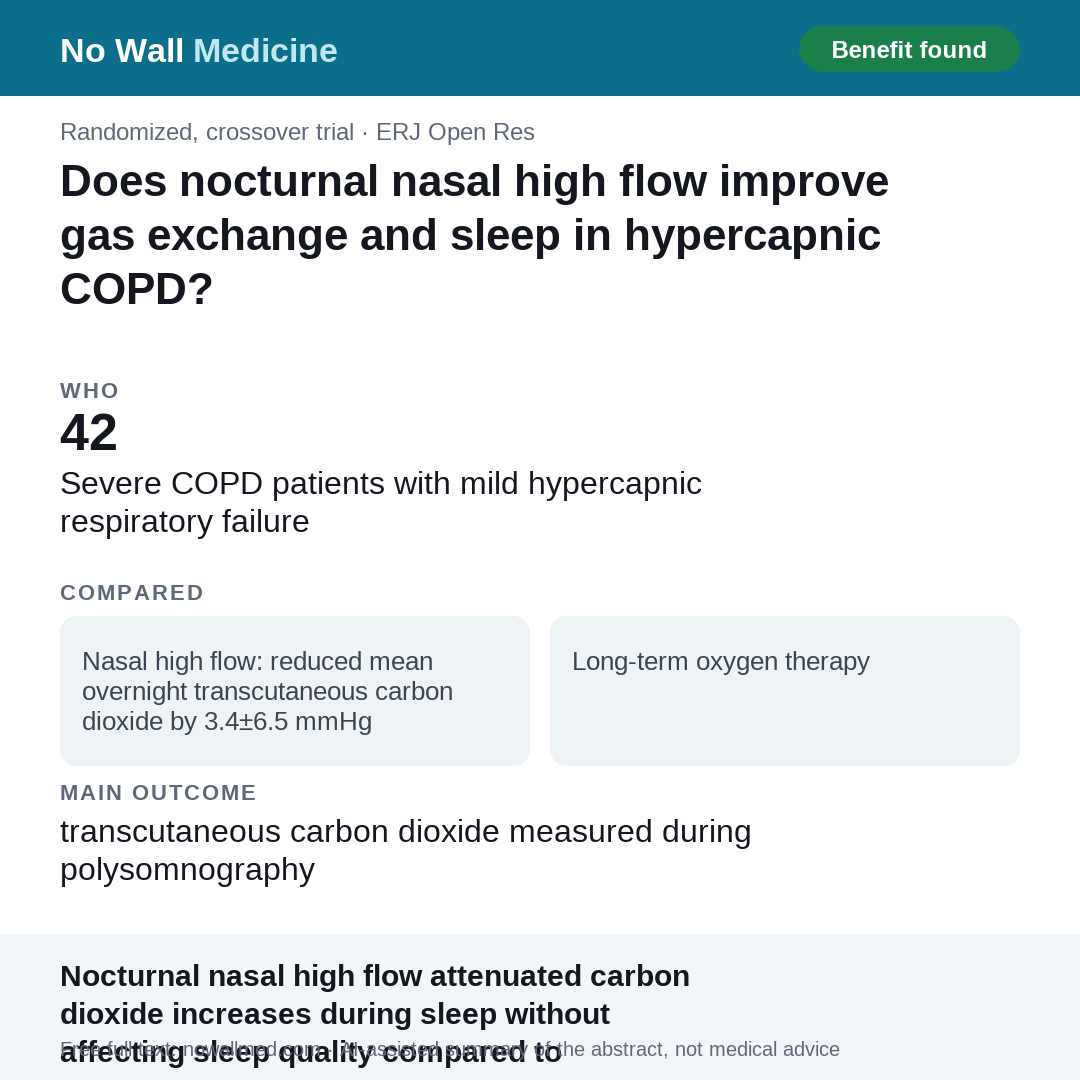
Does nocturnal nasal high flow improve gas exchange and sleep in hypercapnic COPD?
Who
42
Severe COPD patients with mild hypercapnic respiratory failure
Compared
Nasal high flow: reduced mean overnight transcutaneous carbon dioxide by 3.4±6.5 mmHg
Long-term oxygen therapy
Main outcome
transcutaneous carbon dioxide measured during polysomnography
Bottom line: Nocturnal nasal high flow attenuated carbon dioxide increases during sleep without affecting sleep quality compared to long-term oxygen therapy.
ERJ Open Res · 2025-06-30Download image
Clinical question: Does nocturnal nasal high flow improve gas exchange and sleep in hypercapnic COPD?
Why it matters: It is unclear how nasal high flow impacts gas exchange, breathing patterns, and sleep quality in patients with severe COPD and mild hypercapnic respiratory failure.
Key points
- Researchers studied 42 patients with severe chronic obstructive pulmonary disease and mild hypercapnic respiratory failure using a crossover trial design.
- Nasal high flow reduced mean overnight transcutaneous carbon dioxide by 3.4±6.5 mmHg compared to long-term oxygen therapy.
- Nasal high flow did not significantly change sleep efficiency of 72.8±16.4% or the sleep fragmentation index of 26.6±11.2 compared to oxygen therapy.
Headline and key points written with AI from the paper’s abstract, with every number checked against it. Read the paper before relying on them.
Cite this article
Nilius G, Schroeder M, Domanski U, Khalaf M, Tatkov S. Nocturnal respiratory support with nasal high flow in hypercapnic COPD: a randomised, crossover trial. ERJ Open Res. 2025. doi:10.1183/23120541.01063-2024
Spotted a mistake? Suggest a correction
Top studies every Monday
The week’s key trials and guidelines in your specialties, by email. Free.
Get the weekly digest