Non-enzymatic function of phosphogluconate dehydrogenase promotes antitumor immunity through TRIM32-mediated STING activation in esophageal squamous cell carcinoma
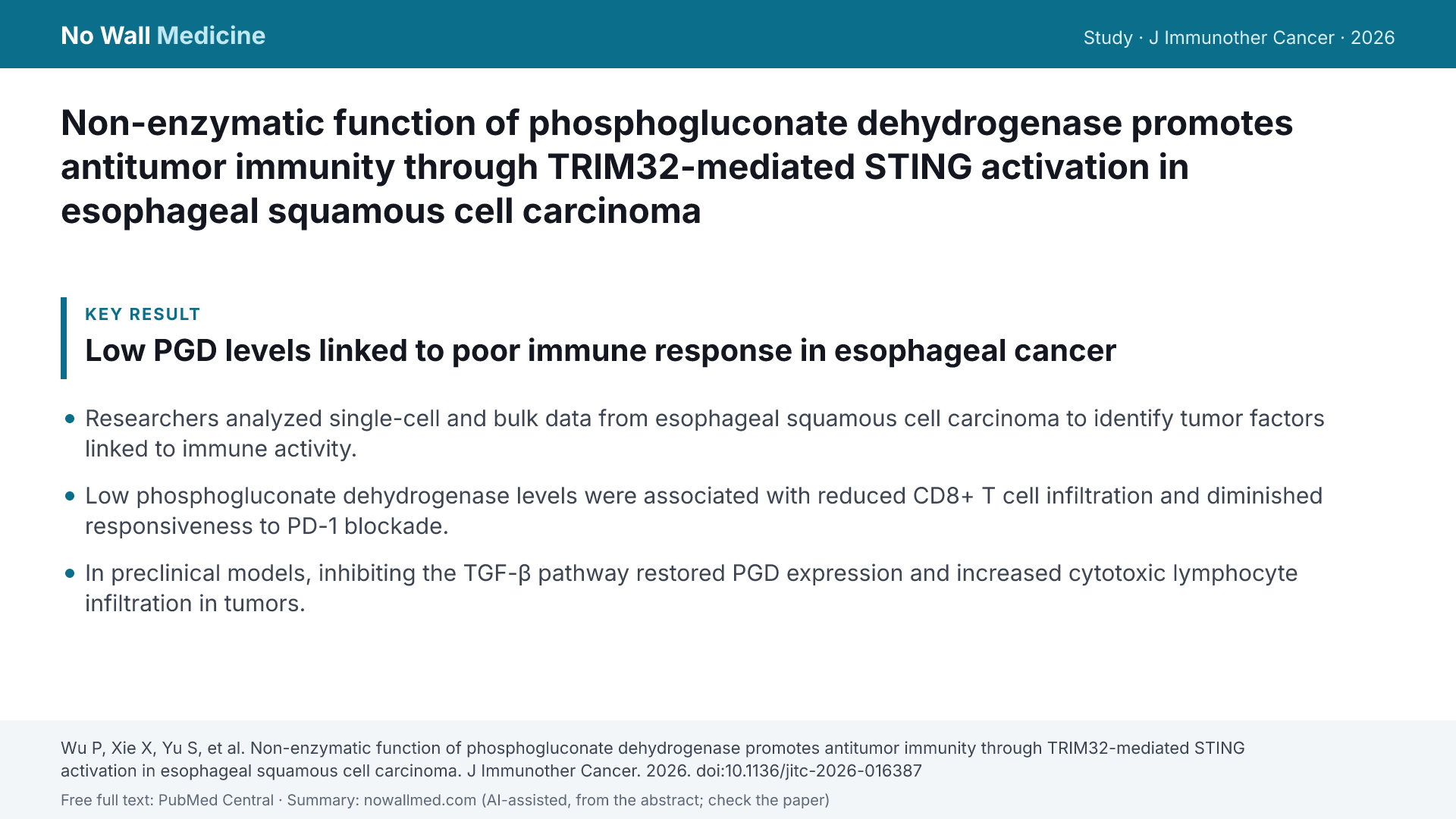
Key result: Low PGD levels linked to poor immune response in esophageal cancer
Key points
- Researchers analyzed single-cell and bulk data from esophageal squamous cell carcinoma to identify tumor factors linked to immune activity.
- Low phosphogluconate dehydrogenase levels were associated with reduced CD8+ T cell infiltration and diminished responsiveness to PD-1 blockade.
- In preclinical models, inhibiting the TGF-β pathway restored PGD expression and increased cytotoxic lymphocyte infiltration in tumors.
Why it matters: Applies to esophageal squamous cell carcinoma; links low PGD expression to an immune-cold state and reduced anti-PD-1 therapy response.
Discussion prompts
- Would these patients look like yours? Who was left out?
- Is the main outcome one that matters to patients?
- Is the difference large enough to change what you do?
Cite: Wu P, Xie X, Yu S, et al. Non-enzymatic function of phosphogluconate dehydrogenase promotes antitumor immunity through TRIM32-mediated STING activation in esophageal squamous cell carcinoma. J Immunother Cancer. 2026. doi:10.1136/jitc-2026-016387
Free full text: PubMed Central · Summary and visual abstract: nowallmed.com/a/non-enzymatic-function-of-phosphogluconate-dehydrogenase-promotes-1lil03j/ (AI-assisted from the abstract; check the paper before relying on it).