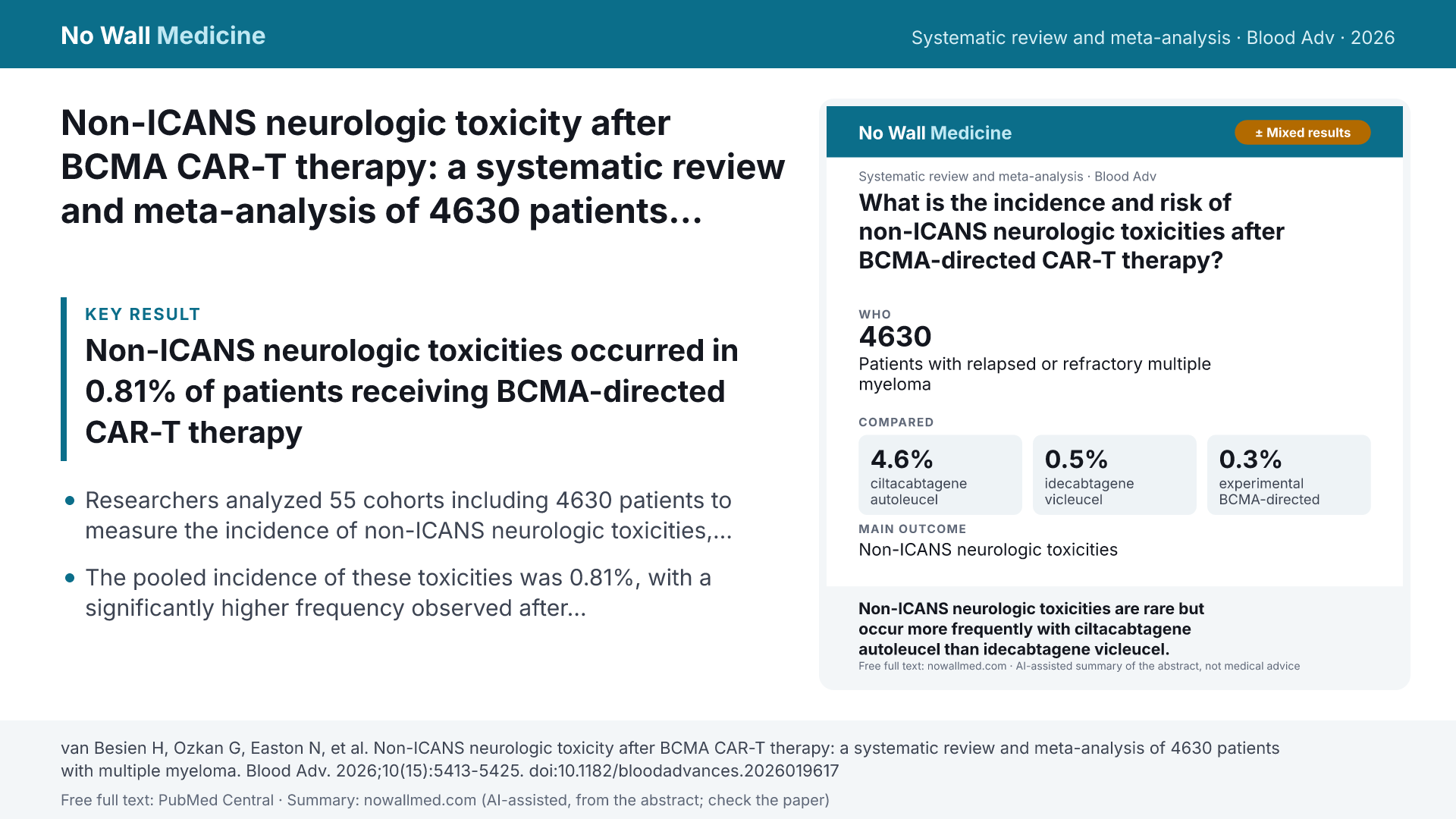
Non-ICANS neurologic toxicities occurred in 0.81% of patients receiving BCMA-directed CAR-T therapy
Non-ICANS neurologic toxicity after BCMA CAR-T therapy: a systematic review and meta-analysis of 4630 patients with multiple myeloma
Systematic review and meta-analysisMixed results
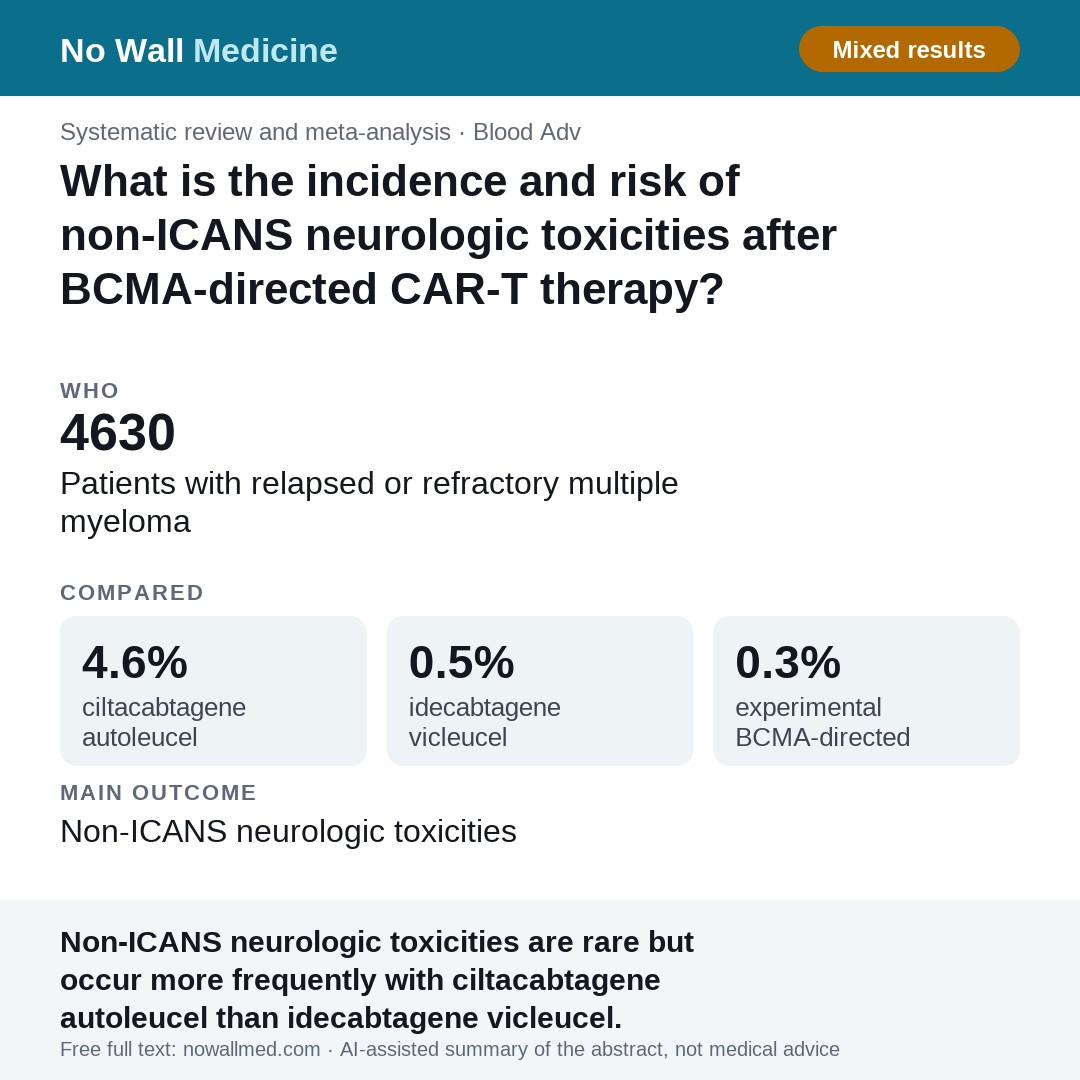
What is the incidence and risk of non-ICANS neurologic toxicities after BCMA-directed CAR-T therapy?
Who
4630
Patients with relapsed or refractory multiple myeloma
Compared
4.6%ciltacabtagene autoleucel
0.5%idecabtagene vicleucel
0.3%experimental BCMA-directed constructs
Main outcome
Non-ICANS neurologic toxicities
Result: 0.81% (95% confidence interval, 0.37%-1.77%)
Bottom line: Non-ICANS neurologic toxicities are rare but occur more frequently with ciltacabtagene autoleucel than idecabtagene vicleucel.
Limitation: Standardized definitions and improved reporting of non-ICANS neurologic toxicities are needed.
Blood Adv · 2026-03-26Download image
Clinical question: What is the incidence and risk of non-ICANS neurologic toxicities after BCMA-directed CAR-T therapy?
Why it matters: The incidence and risk factors for non-ICANS neurologic toxicities after BCMA-directed chimeric antigen receptor T-cell therapy remain poorly defined.
Key points
- Researchers analyzed 55 cohorts including 4630 patients to measure the incidence of non-ICANS neurologic toxicities, which are neurological side effects not related to immune effector cell-associated neurotoxicity syndrome.
- The pooled incidence of these toxicities was 0.81%, with a significantly higher frequency observed after ciltacabtagene autoleucel compared to idecabtagene vicleucel (4.6% vs 0.5%).
- Cranial nerve palsies were the most common type of toxicity at 32.3%, followed by movement and neurocognitive events at 12% and peripheral neuropathies at 7.5%.
Headline and key points written with AI from the paper’s abstract, with every number checked against it. Read the paper before relying on them.
Was this summary helpful?
Abstract
B-cell maturation antigen (BCMA)-directed chimeric antigen receptor T-cell (CAR-T) therapies have drastically improved outcomes for patients with relapsed or refractory multiple myeloma. Although CAR-T-associated cytokine release syndrome and immune effector cell-associated neurotoxicity syndrome (ICANS) are well characterized, non-ICANS neurologic toxicities (NINTs) remain poorly defined, with limited data regarding incidence and risk factors. We performed a systematic review and meta-analysis of prospective clinical trials and real-world studies reporting neurologic toxicities after BCMA-directed CAR-T therapy, following PRISMA (preferred reporting items for systematic reviews and meta-analyses) guidelines. Random-effects meta-analysis was used to calculate a pooled point estimate of NINTs. Meta-regression was conducted to evaluate treatment-related predictors of risk. Reported NINTs were categorized by clinical phenotype when sufficient detail was available. Fifty-five cohorts comprising 4630 treated patients were included. The pooled point estimate for NINTs was 0.81% (95% confidence interval, 0.37%-1.77%). Incidence differed significantly by product, with a significantly higher frequency of NINTs after ciltacabtagene autoleucel (cilta-cel) than idecabtagene vicleucel (ide-cel; 4.6% vs 0.5%; P = .001) and experimental BCMA-directed constructs (4.6% vs 0.3%; P = .02). Additionally, meta-regression identified cilta-cel as independently associated with increased NINT risk compared with ide-cel. Cranial nerve palsies were the most frequently reported phenotype (32.3%, 43 events), followed by movement and neurocognitive treatment-emergent adverse events (12%, 16 events), then peripheral neuropathies (7.5%, 10 events). This meta-analysis establishes that NINTs are a rare but important toxicity after BCMA-directed CAR-T therapy, particularly cilta-cel. Standardized definitions and improved reporting of NINTs are needed to better characterize risk and inform surveillance strategies.
Abstract reproduced under the article’s CC BY NC ND licence.
Subject terms
Cite this article
van Besien H, Ozkan G, Easton N, et al. Non-ICANS neurologic toxicity after BCMA CAR-T therapy: a systematic review and meta-analysis of 4630 patients with multiple myeloma. Blood Adv. 2026. doi:10.1182/bloodadvances.2026019617
Spotted a mistake? Suggest a correction