Non-invasive vagus nerve stimulation and exercise capacity in healthy volunteers: a randomized trial
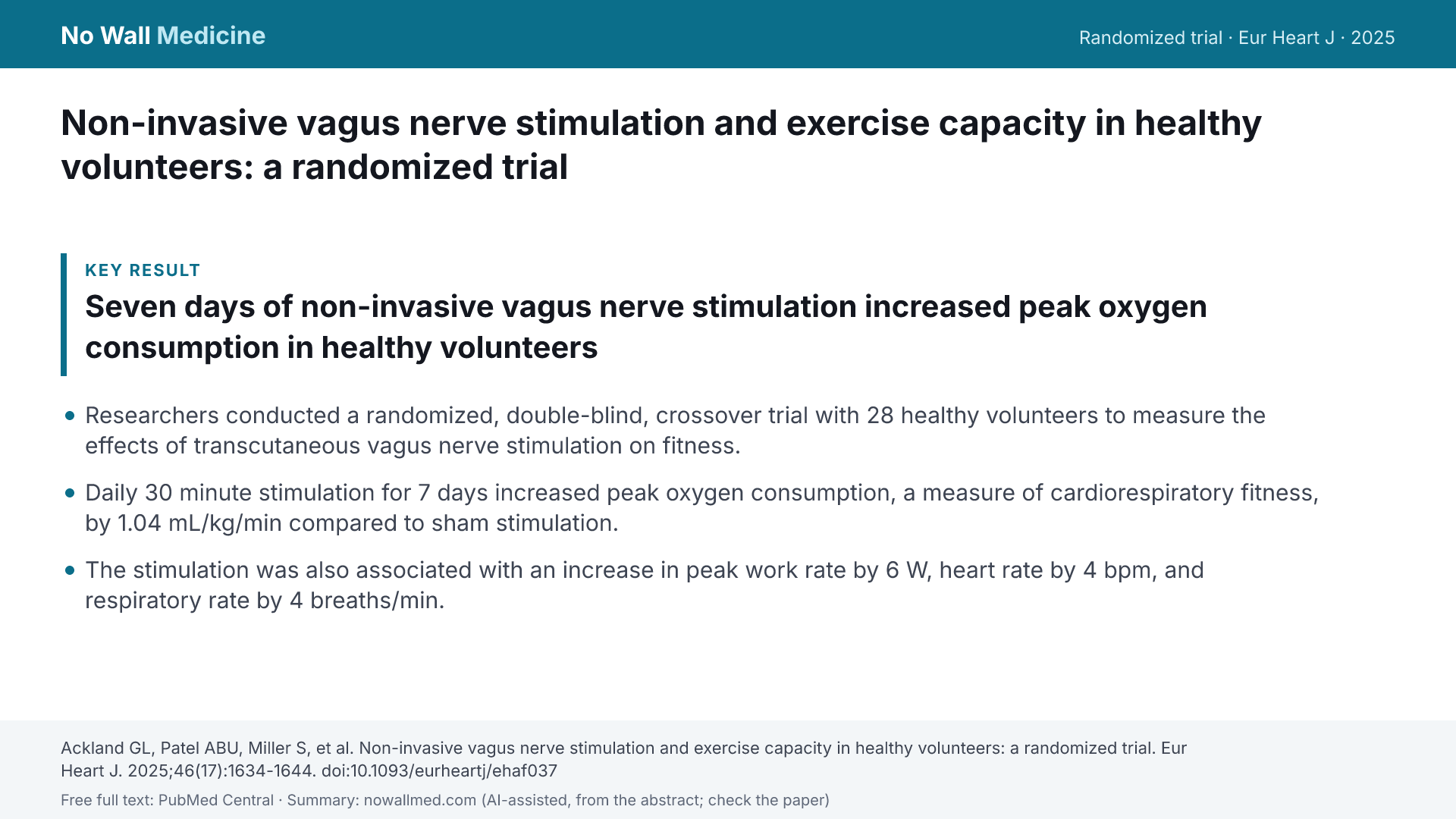
Key result: Seven days of non-invasive vagus nerve stimulation increased peak oxygen consumption in healthy volunteers
Key points
- Researchers conducted a randomized, double-blind, crossover trial with 28 healthy volunteers to measure the effects of transcutaneous vagus nerve stimulation on fitness.
- Daily 30 minute stimulation for 7 days increased peak oxygen consumption, a measure of cardiorespiratory fitness, by 1.04 mL/kg/min compared to sham stimulation.
- The stimulation was also associated with an increase in peak work rate by 6 W, heart rate by 4 bpm, and respiratory rate by 4 breaths/min.
Limitation the authors note: This was a single-centre trial.
Discussion prompts
- Would these patients look like yours? Who was left out?
- Is the main outcome one that matters to patients?
- Is the difference large enough to change what you do?
Cite: Ackland GL, Patel ABU, Miller S, et al. Non-invasive vagus nerve stimulation and exercise capacity in healthy volunteers: a randomized trial. Eur Heart J. 2025;46(17):1634-1644. doi:10.1093/eurheartj/ehaf037
Free full text: PubMed Central · Summary and visual abstract: nowallmed.com/a/non-invasive-vagus-nerve-stimulation-and-exercise-capacity-in-healthy-bhb5kx/ (AI-assisted from the abstract; check the paper before relying on it).